- Insights This article was written by a TIA community member. Insights pieces undergo the same rigorous editorial process that newsroom-produced articles have.
 Nicolette Tan · · 8 min read
How this startup expanded to 5 markets with only 34 people

Peatix Singapore celebrated their 3rd anniversary in August 2016.
For the first part of this series of interviews, we interviewed Wantedly’s regional launcher Joelle Pang. Now, we have Peatix’s co-founder and CEO, Taku Harada.
Peatix is a global event management and ticketing platform that provides organizers with tools to create, promote, and sell out events. Harada, along with his colleagues he met at Amazon Japan, founded the company in Tokyo in May 2011.
The company launched in Singapore and New York City in 2013, and currently, 30 to 40 percent of its business comes from outside of Japan. Peatix plans for further expansion to other Asian cities, with its launch in Hong Kong set on May 31 this year.
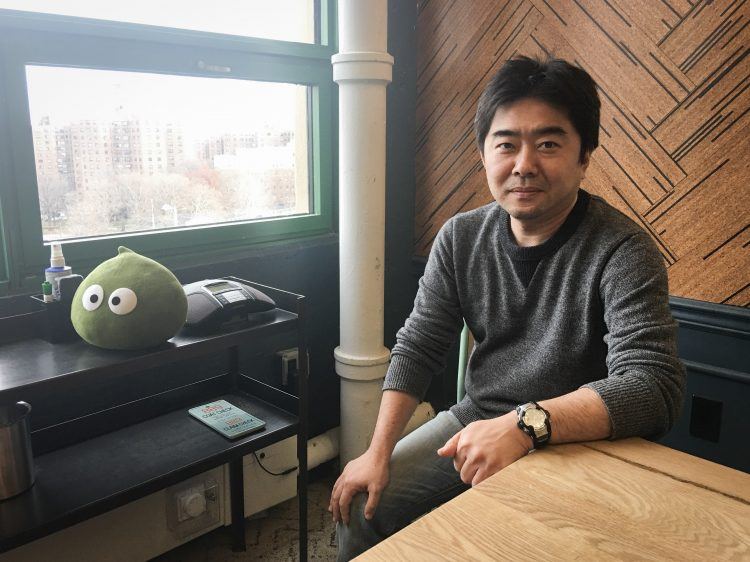
Peatix’s co-founder, Taku Harada.
What were the benchmarks that made your company ready to expand globally?
“From the beginning, Peatix was quite unusual for a Japanese startup in that we had a very international team, so the founders had global aspirations from day one. It seemed like our full potential wouldn’t be realized if we only focused on Japan.
“Our first expansion initiative into Singapore was somewhat coincidental. Our co-founder, Emi [Takemura], had to move to Singapore for family reasons. We always viewed Singapore as a big opportunity both as a market and as a potential hub to cover the Southeast Asian market. Peatix as a service was already offered in English, so it was a relatively smooth project. So, Emi built that initial team in Singapore and since then, we have had steady growth in Singapore and Malaysia, which gave us confidence to expand beyond.
“With Hong Kong we will be venturing into a third language offering with Chinese, which is also a significant milestone for us.
“In Singapore, we’ve achieved great growth with thousands of events on our platform, and this is managed by only six people. We have internal KPIs and formulae in growing number of events, active users, number of tickets sold, etc., and our experience in realizing them in Singapore and Malaysia gives us the confidence to expand.
“Also, in some sense, we are still inspired by our Amazon background in the way we run Peatix. We’re trying to build a business in a low-margin segment with efficient capital structure, while adhering to a single global platform that covers many different areas.”
Did you face pressure from investors regarding growth and market expansion?
“Japan is a very big domestic market and the conventional investor there might suggest that you focus on the Japanese market first and then expand after you become big in Japan. Their argument is that expansion leads to a lack of focus and to this day we still receive pressure—both spoken and unspoken—to keep things limited to our existing markets.
“But we’ve also noticed over the years that Japanese companies that grow big in Japan first have a very tough time going international. We didn’t want to be those guys. I’ll concede that pure logic, especially from a financial standpoint, might say that focusing on one big market only makes more sense. But like I said, our team is very globally minded, and we want to be global. So what can you do?
“We want to bring our mission of serving the underserved creative types to other markets. I feel like we wouldn’t be making the most out of our team’s strengths if we don’t pursue international growth. Companies that are situated in smaller domestic markets are forced to think beyond their borders from day one. Companies like Skype, Spotify, or Grab come to mind. I’m actually quite envious of that because we originate from a relatively large market with many idiosyncrasies in Japan, and we face pressure to stay local.”
Before you enter a new market, what kind of research do you do?
What are your priorities when entering a new market?
How do you localize your product/processes?
How do you do communication and management in different markets?
How do you keep your team motivated?
If you don’t find the right country manager, will you enter the market?
What do you think will be the challenges as your company scales with a larger team?
What will make you leave a market?





Stay updated on the go with our mobile app.
Get latest insights with smoother, more personalized experience through TIA mobile app.








📅 Upcoming Events
22 October 2026
Payoneer x CSPN Summit 2026