- Insights This article was written by a TIA community member. Insights pieces undergo the same rigorous editorial process that newsroom-produced articles have.
 Martin Totev · · 12 min read
Redesigning Seoul’s public bike app: a case study
Author’s note: This project was personal and in no way affiliated with the Seoul City government and the official Seoul Bike app. The design I did is not official. It’s just a side project to practice my UX design skills.
A redesigned Seoul Bike logo.
As a beginner in UX design, a great way to learn something new is through practice. This case study on Seoul Bike, a bike-sharing system in Seoul, South Korea, came out of my frustration with the current app, and it was an amazing opportunity to learn.
I contacted a senior from my university with a lot of work experience in the field and asked for his assistance and mentoring. For a few weeks, I sketched and sketched, trying to understand the Seoul Bike app and how the service was designed. I found some problems that stem from the service itself and other problems in the app’s design.
What is Seoul Bike?
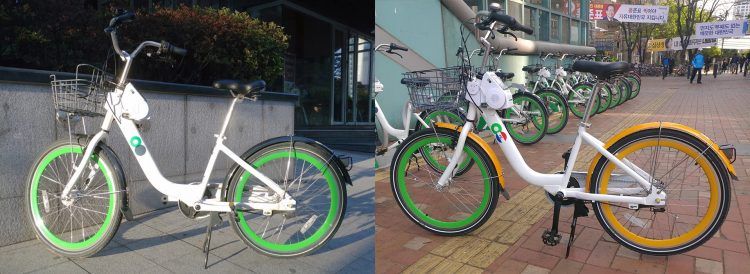
A first-generation (left) and a second-generation (right) Seoul Bike, a gift from the Dutch embassy to Seoul.
Seoul Bike or 따릉이 Ttareungi is an unmanned bike rental system. As the title says in Korean (— 서울자전거 따릉이 — 무인대여시스템), it’s a very cheap public bike system covering Seoul. Its biggest competitive advantages, which has resulted in a growing user base, are its coverage and feature that allows users to return a bike at a different location.
There are three generations of bikes, all of which look very similar to each other. These bikes, which are usually donated by large organizations, are fairly simple. They have three gears and a retractable seat, specially made for the bikes (bike seat theft is still a thing for some reason). There is a touchscreen user interface with a single button and a speaker.
There’s also a locking mechanism for locking the bike to a Seoul Bike rack or a pole when you have to leave it for a while. In the middle of a ride, you can check how much time you have used the bike for, the distance you have traveled, and how many calories you have burned.
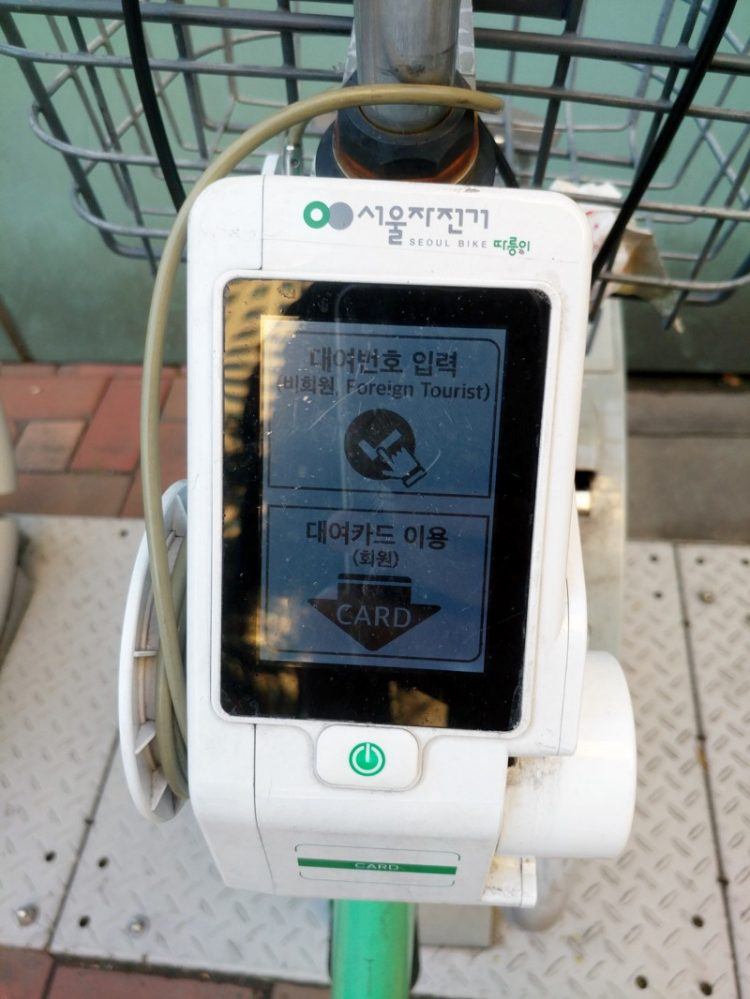
On-bike touchscreen interface.
There are two types of Seoul Bike tickets: short-term and long-term. A short-term ticket costs US$0.91 and expires within 24 hours from the time of purchase. A long-term ticket can be good for seven days (US$2.73), 30 days (US$4.54), 180 days (US$13.63), or 365 days (US$27.26).
To prevent bike hoarding, a user can only rent a bike for one hour by default (normal ticket) or for two hours (premium ticket). If you go over an hour (or two hours for a premium ticket), you have to pay a US$0.91 penalty for every excess hour. You have to pay it upon return of the bike or you can’t rent again.
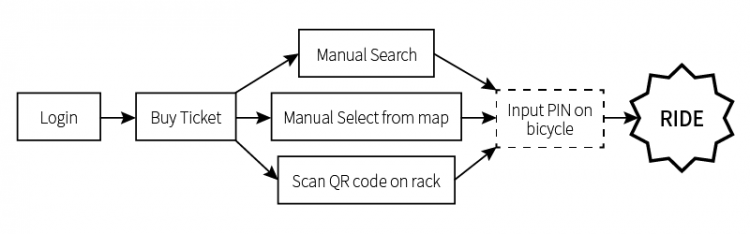
A handful of problems
Why is the color switched to blue and red?
A free UI kit





Stay updated on the go with our mobile app.
Get latest insights with smoother, more personalized experience through TIA mobile app.








📅 Upcoming Events
22 October 2026
Payoneer x CSPN Summit 2026