- Insights This article was written by a TIA community member. Insights pieces undergo the same rigorous editorial process that newsroom-produced articles have.
 Jay Kim · · 6 min read
This racer says chasing your dream isn’t as simple as saying, ‘I like to drive fast’
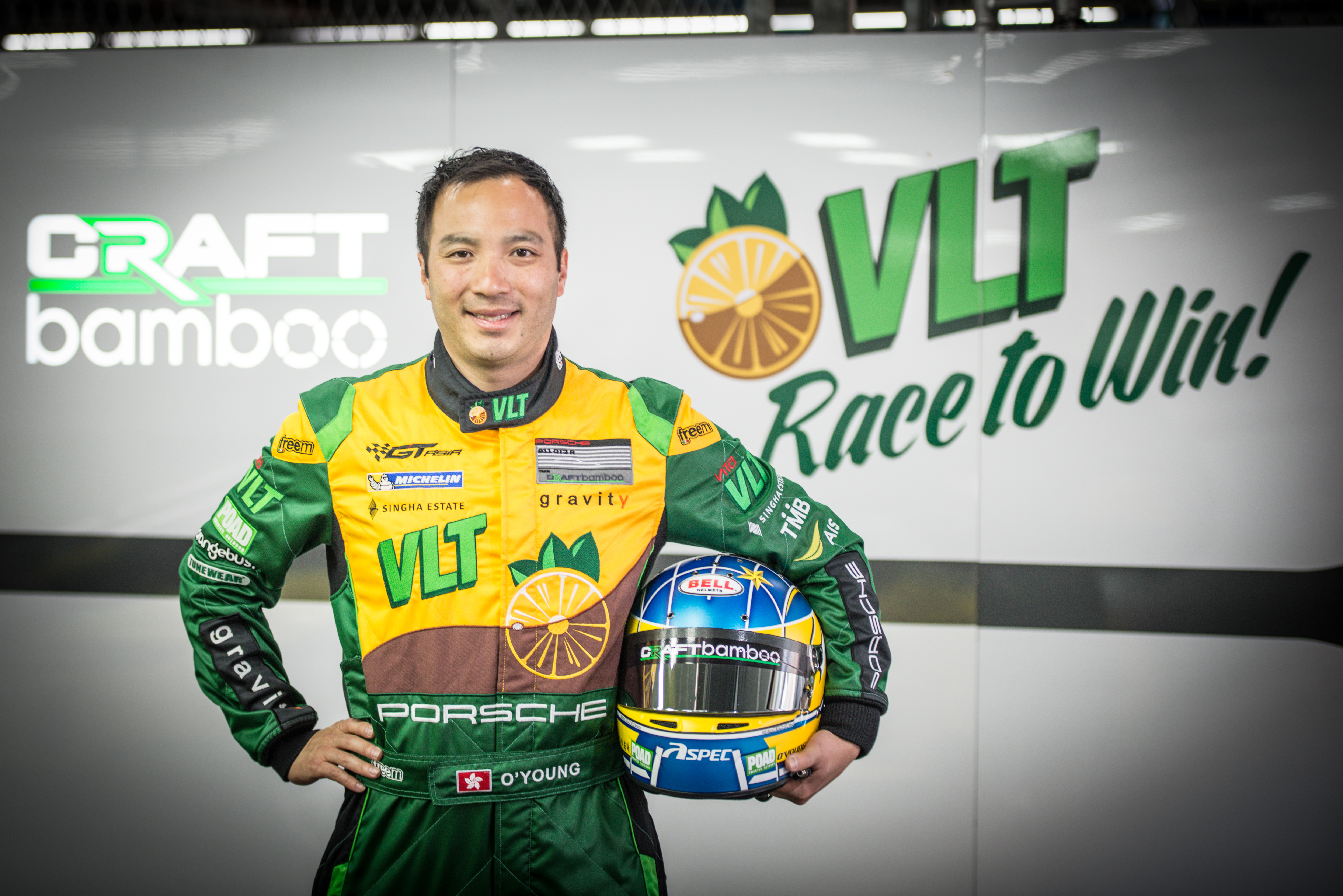
This article is part of Tech in Asia’s partnership with The Jay Kim Show where we publish the revised transcripts from the show’s podcast interviews with top entrepreneurs. This is heavily revised from the original show transcripts. For the full interview, go here.
Darryl O’Young is a professional race car driver and the director of Craft Bamboo Racing. He has over 28 years of experience in motorsport, is a three-time Macau Grand Prix winner, a two-time Porsche Carrera Cup Asia champion, and the 2015 GT Asia Series champion. Darryl’s acquired millions of dollars in sponsorships. Here, he gives us a peek into his early life, the influence that his father had on him, and his advice for young people chasing their dreams. Let’s get right into it.
Tell me about your beginnings and how you got into racing.
“I started racing really young. Like you said, my parents did support us a lot in sports, so I grew up doing a lot of different sports. But racing was one of the things that my dad liked to do himself. It actually started when he was young. The passion started back in Hong Kong. […] Actually, back then, it was a normal thing in Hong Kong to do some street racing. […] That’s where it sparked his interest, and he passed that along to me.
“When I grew up, even after I was born, my dad was already racing cars. He was a semi-professional as a hobby. It was not really a full-time thing for him. […] When I [was] […] four or five years old, I used to watch him race. I really loved cars. Then, when I turned eight, he got me a go-cart. That was really a big turning point because I really just fell in love with racing. I just did it a lot from there forward.
“[…] My dad never forced me. He wasn’t one of those sporting dads that forced me to perform well and forced me to compete. He really just introduced me to it and gave me the chance to race, and I just took it from there.”
Was there a point in your childhood where you thought ‘OK, racing is what I want as a career?’
“Actually, there was a very big turning point [when I was] 12 years old. I do remember this because [we] were just racing locally in Vancouver and around Canada. Then, my dad actually asked me if I wanted to take [racing] more seriously. […] He goes, ‘You’re doing really well, but if you want to take this to the next level, we have to invest time and money into traveling more to the US and competing.’ I definitely said I wanted to do it […]. Of course, he really wanted to make sure I was serious. I had to study well in school [and] I had to actually dedicate myself to [racing] well and doing it with him.
“He actually retired from racing when I was 12. He stopped racing because [it] is a pretty expensive sport. It’s not something you just do with a basketball or something. […] It takes a little bit of an investment. […] He stopped racing, sold his race car, and actually put his time and money into me. It took a lot of time because we did a lot of races. I think at the peak of my racing, when I was about 15 or so, I was probably doing 20 races a year. That’s quite a bit. That’s 20 weekends out of the year.”
As an entrepreneur, the greatest fear is failure. Was there a point where you questioned your career?
“[…] Anytime you try and achieve something that is outside your comfort zone, it’s going to feel risky. It’s going to feel challenging.
“[…] The step from go-carts to formal cars is quite a big one because the car has a lot more costs, so you need a lot more sponsors behind you. […] My dad actually put a lot of resources [and time] himself, and we had a lot of friends helping to get me into my first race car because we couldn’t really afford it.
“We ended up working long nights […] to work on this project, ‘Build Darryl’s Formula Car.’ We had people [come and help] all the time.
“Someone donated a race car—an old race car. It was a piece of junk, but it was an old race car. People were fixing it up. I did three races that year and I was able to finish second in this really big [one] in the US. I was able to land a sponsor. Even then, […] it was very tough. You’re not getting any pay. […] It was just basic necessities and racing. Back then, of course [in my] early 20s, I was like, ‘Yeah, I’ll take it. I’ll do that for a couple of years.’
“[…] It was a challenging part of my career because it’s tough to think about all the ways it’s going to take my future because I’m barely making ends meet.
“[…] I remember after 2 years of doing that, […] I considered quitting racing. I was like, ‘I have to think about my future. I have to think about what I’m going to do. I can’t just keep living this racing dream.’ It was a big part of my life since I was eight […] but obviously, you need to think about reality. […] I remember my sisters encouraged me a lot to continue my career [and] to really focus on not giving up [my] dreams and working hard at it […]. I stuck with it.
Do you do anything on a daily basis that helps you perform at such a high level?
What’s your advice for a young entrepreneur that’s looking to chase a dream?





Stay updated on the go with our mobile app.
Get latest insights with smoother, more personalized experience through TIA mobile app.