Jeffrey Towson · · 7 min read
5 questions to help you understand Didi, Mobike, and China’s new micro-rentals
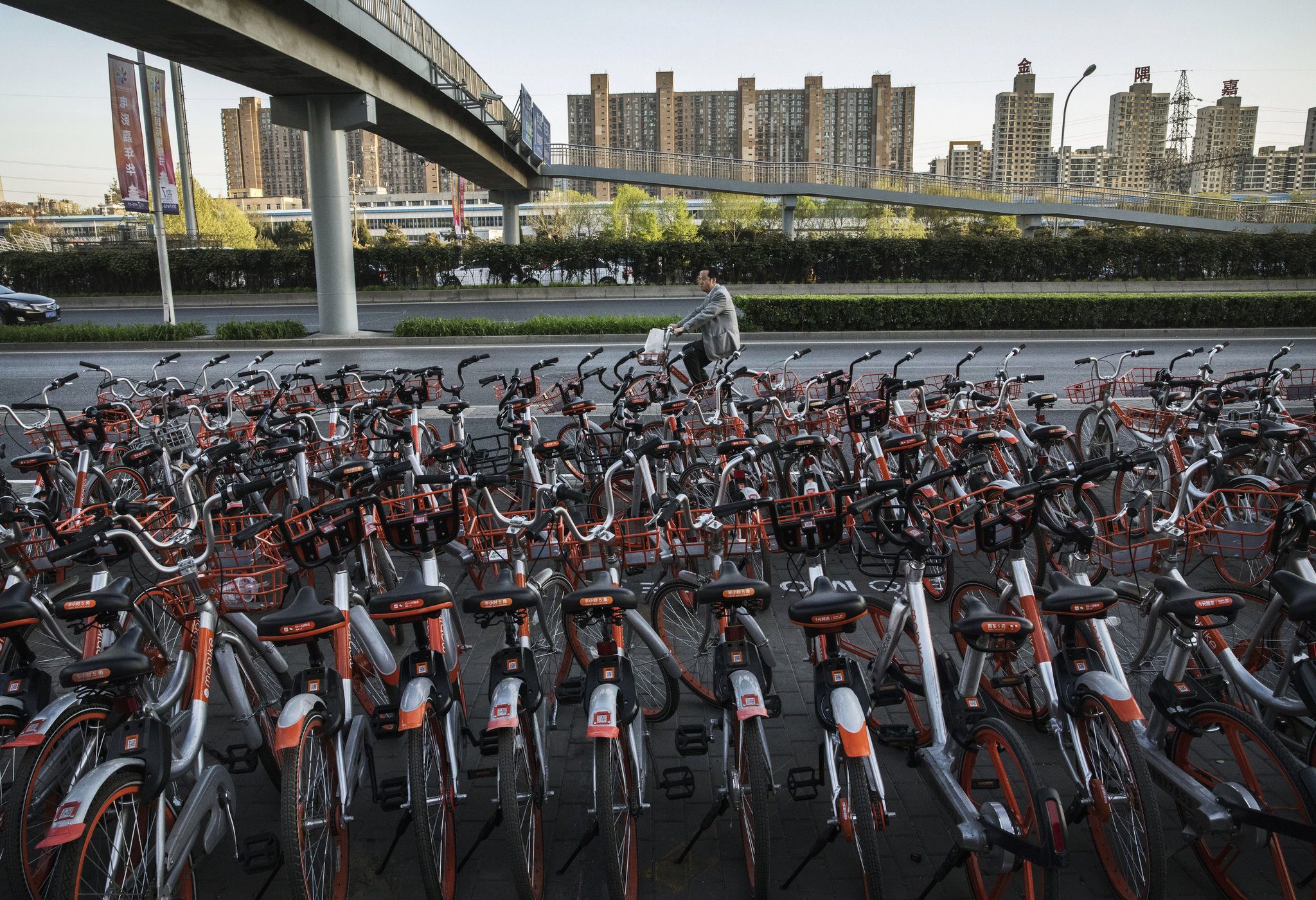
Photo credit: Kevin Frayer.
In part 1, I argued that there is no new Chinese sharing economy. This is why new Chinese businesses like Didi, Mobike, and micro-rentals for basketballs, batteries, and umbrellas are confusing. What is really happening is something much more interesting: the emergence of new digital disruptors in access and convenience. The key points from part 1 are:
- Forget the term sharing economy.
- Instead, think “access economy” vs “ownership economy.”
- New digital tools and processes (like smartphones) can disrupt demand, supply, or both.
- Most of what has been happening in China is classic disruption in access and convenience.
Based on this, here are my five key questions for understanding what has been happening with Didi, Tujia, Ofo, Mobike, and new micro-rentals:
- Is this an ownership or access business?
- Are new digital tools and processes improving convenience and/or reducing price?
- Are new digital tools and processes uncovering latent supply and/or making capacity available in smaller increments?
- Is the business leveraging unowned assets? Are these large or small?
- Is there a network effect or other competitive advantages such as switching costs or economies of scale?
Here is my breakdown of these businesses using these five questions.
Question 1: Is this an ownership or access business?
All these new Chinese companies (Didi, Ofo, Mobike, Tujia, etc.) are access businesses. They all offer an alternative to ownership and they are directly competing against existing access businesses. For example, Didi competes with taxis, and both are access businesses. Mobike is competing with more traditional bicycle rental businesses. Tujia and Airbnb China compete with hotels. And so on.
But these businesses also impact ownership businesses. Will fewer people buy apartments because they can now stay in hotels, Tujia, and Airbnb? Probably not. Will Chinese buy fewer cars because of Didi? Possibly. Will Mobike have a major impact on bicycle ownership? Definitely.
And the newest of these businesses (the short-term rentals of umbrellas, batteries, and basketballs) don’t even have existing competitors in the access economy. They are only competing against ownership of these products.
What is important is that these new access businesses are fundamentally changing consumer behavior for some products (and soon for services, labor, and intangible products like media). And they are changing the ownership vs access makeup of these industries.
My first question is on access vs ownership because that means very different consumer decision making and very different business models. These new Chinese companies are all types of access businesses. The next question is whether and how they are disrupting their markets.
Question 2: Are new digital tools and processes improving convenience and/or reducing price?
Convenience
To paraphrase McKinsey & Company, many of the digital disruptors we see globally are using new digital tools and processes to give consumers what they really want. Software and hardware innovations in cameras have made it possible for you to see your photos instantly. Steve Jobs made it possible for you to buy just the one song you wanted on iTunes instead of the entire CD.
Across the board, digital disruptors make it easy and make it now. They unbundle. They remove the need to wait. They remove the need to go to a store. They let you buy in smaller increments. These are all forms of increased convenience. They can also decrease price, which is discussed below.
Question 3: Are new digital tools and processes uncovering latent supply and/or making capacities available in smaller increments?
Question 4: Is the business leveraging unowned assets? Are these large or small?
Question 5: Is there a network effect or other competitive advantage?





Stay updated on the go with our mobile app.
Get latest insights with smoother, more personalized experience through TIA mobile app.