 Pradeep Menon · · 5 min read
A primer on logical architectures for chatbots
According to a McKinsey report (download here), artificial intelligence (AI) is poised for digital disruption, and companies need to start preparing for it now. In 2016, companies invested US$26 billion to US$36 billion in AI technologies.
Virtual agents (aka chatbots) are an important component of AI technologies. Among our customers, we are seeing more and more interest to integrate chatbots into their business processes. However, chatbots are not silver-bullet solutions, and Jarvis is still just a far-fetched mythical personification.
In this article, I will introduce one of the many architectural patterns for developing a chatbot based on my experience in the field. I will start by explaining the chatbot context and then put across a logical architecture pattern that can be used for developing them.
Let us first discuss the taxonomies of models that are prevalent in conversation as a platform (CAAP).
Taxonomy of models
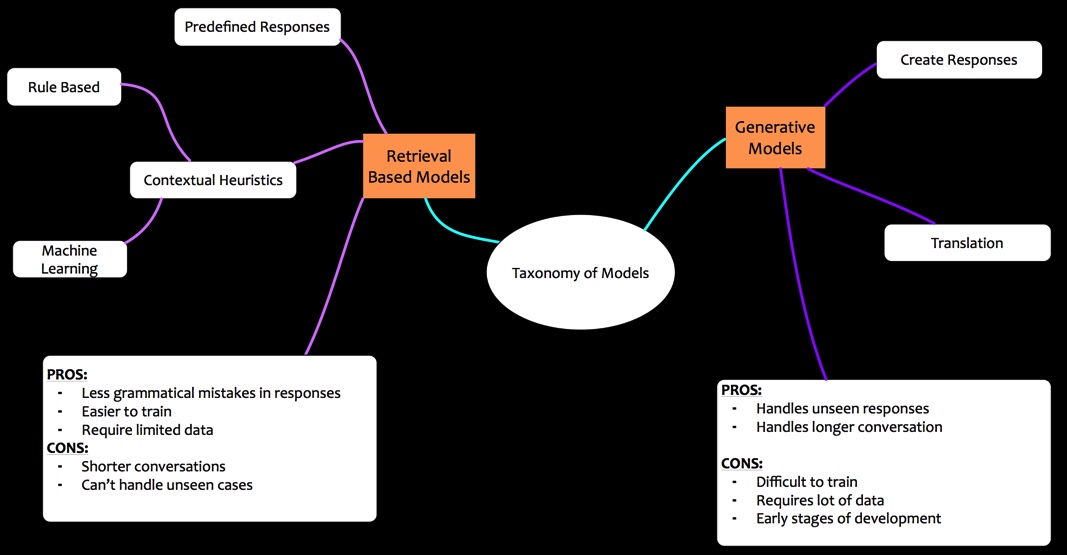
Virtual agents generally have two taxonomy models:
- Retrieval-based models use a repository of predefined responses and some kind of heuristic to pick an appropriate response based on the input and context. The heuristic could be as simple as a rule-based expression match or as complex as an ensemble of machine learning classifiers. These systems don’t generate any new text; they just pick a response from a fixed set.
- Generative models don’t rely on predefined responses. They generate new responses from scratch. These models are typically based on machine translation techniques. But instead of translating from one language to another, we “translate” from an input to an output (response).
Chatbot conversational framework
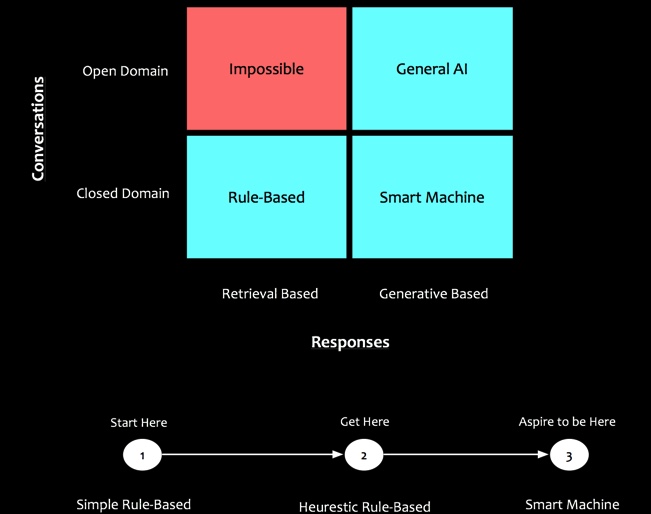
CAAP relies on specific conversational contexts. These contexts can be classified as follows:
- Open domain: Here, the context of the conversation is not defined. There is no well-defined goal or intention. An example of this can be a conversation with Google Home. You can ask it whatever you want and it will try to find the answer and provide you a response.
- Closed domain: Most of the chatbot applications fall into this criteria. Each chatbot has a specific context and specializes in answering questions for that domain. Technical customer support or shopping assistants are examples of closed domain problems.
Logical architecture
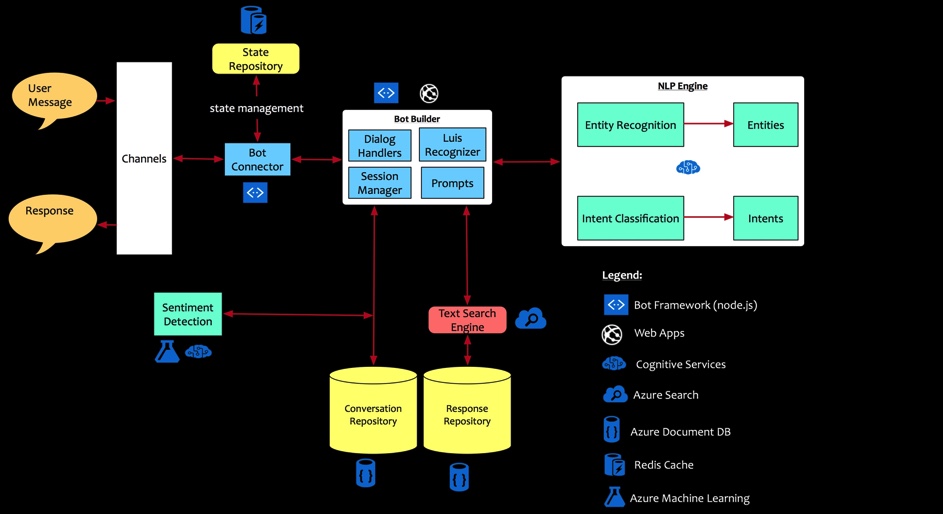
Now that we have a context, let’s discuss the logical architecture. The following are the key components:
NLP-bot builder interaction
Conclusion





Stay updated on the go with our mobile app.
Get latest insights with smoother, more personalized experience through TIA mobile app.







📅 Upcoming Events
22 October 2026
Payoneer x CSPN Summit 2026