- Insights This article was written by a TIA community member. Insights pieces undergo the same rigorous editorial process that newsroom-produced articles have.
 Edwin Mak · · 7 min read
Online stores need an offline presence, but timing is key

Photo credit: Pexels.
The Etail Asia conference held at the Marina Bay Sands recently saw an interesting onstage debate between Pushpendra Sharma, founder and CEO of SpacesGenie, and Ankiti Bose, co-founder and CEO of Zilingo. The debate motion: “Even in the digital age, online players need an offline presence to drive revenue and growth.”

Lukasz Piotrowski watches on as Pushpendra Sharma and Ankiti Bose battle on stage. Photo credit: Prachipalli Panda, eTail Asia.
Pushpendra took the proposition camp, having built an online marketplace that connects brands and pop-up locations. Ankiti stood as opposition, with the strong backing of her online fashion and lifestyle marketplace that has raised funding from the likes of Sequoia Capital, Wavemaker Partners, and Venturra Capital.
In both the pre- and post-debate polls, Pushpendra came out on top with his argument that an offline presence represents an experience that digital platforms cannot replace and that customers will continue to crave for such an experience. Ankiti put up a huge fight with her argument that while brands can delight their customers through offline experiences, it is difficult for them to generate revenue and growth due to high upfront costs and declining footfall in stores.
Personally, I am with Pushpendra in the proposition camp and here is why.
Ecommerce is maturing
Regional ecommerce is maturing as a whole, even though some problems still persist like costly and lengthy last mile fulfillment and a huge unbanked population with no access to online payments. But these issues are also being addressed and have seen improvements in recent years. A key example is Kudo, an Indonesian payment company that allows shoppers to make online purchases through local agents. Finnish startup Tapp Commerce is also using a similar model in Indonesia and the Philippines.
Having an online presence is now almost imperative and easier than ever before. With the likes of Shopify and Squarespace, you can set up your own online store very quickly. Online marketplaces such as Qoo10 and Lazada have also proliferated over the years.
Another sign of a maturing ecosystem, perhaps, is the evolution of marketplaces. Mass marketplace Rakuten shut its business in Singapore, Malaysia, and Indonesia early last year, while niche marketplaces like Zilingo and Fabelio have sprouted to help brands get discovered more easily.
To quickly get a good sense of where ecommerce is right now, I like to loosely adopt the Simplified Whole Product Model. The model is used by Geoffrey Moore in his book Crossing the Chasm, which dives into how you should market your high-tech product in its early days. A circle represents the ecommerce ecosystem and your product is at its core.
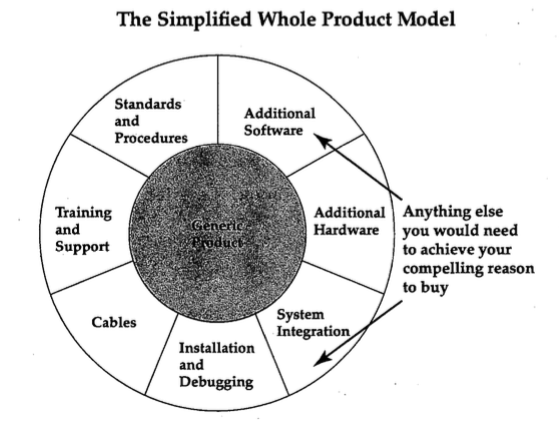
The Simplified Whole Product Model is typically used to evaluate a high-tech product. At the periphery of the core product are the complementary services.
On the periphery are other services such as product discovery, logistics, payments, digital marketing, and even channel managers. With services like Stripe and Dynamic Yield, you get plug-and-play tools that require little to no technical knowledge. Channel managers such as Acommerce, Sellu Seller (Anchanto), and Vinculum have also grown to help merchants consolidate their sales channels. With these players, it is evident that the ecosystem has grown leaps and bounds over the years and is maturing.
Impact of a maturing ecosystem
An offline presence is an opportunity
Conclusion





Stay updated on the go with our mobile app.
Get latest insights with smoother, more personalized experience through TIA mobile app.