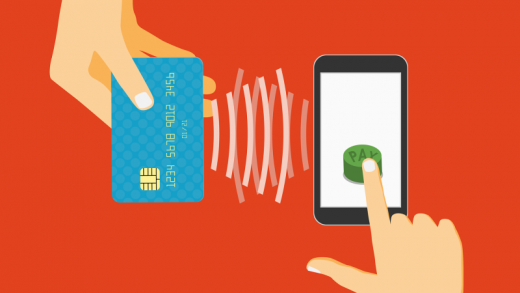
Over the last few years, I’ve consulted banks on new segment/market entry strategies and new payments product launches, among other fun topics. Their objective was either to generate a new source of income or to maximize the profitability of existing portfolios of cards. Some banks focused heavily on data driven segmentations to identify pockets of opportunities and push card spend in selected merchant categories. Others opted for more qualitative approaches to identify and build value propositions aimed at the same objective, but by means of creating value for the cardholders.
At that time, drivers for increased card usage were controlled over finances (credit vs. debit), convenience (cash vs. card) and rewards (none vs. miles, points, cashback). However, smartphones’ penetration picked up and a lot changed since then. Suddenly it wasn’t about plastics anymore but mobile, mobile commerce, and mobile payments. It wasn’t about convenience but speed; not fear of overspending but fear of fraud; not points and miles’ accumulation for future rewards but instant gratifications.
Many banks have launched mobile payments initiatives but many others are still waiting. Some are confused about the concrete opportunity and some are confused about what mobile payments actually mean.
So, what are mobile payments?
When many in the industry talk about mobile payment, they mostly refer to either mobile banking or mPOS. In reality, mobile payments are way more than that, not just a one-size-fits-all solution but a set of ways to pay by using a smart device, phone or tablet, with or without an actual card.
The means of paying can be broken down into 5 buckets:
- Mobile at point-of-sale: When the mobile replaces the wallet to become a “mobile wallet”. The term itself can refer to a wide array of products based on the technology they adopt (NFC, short-range radio, cloud-based) and the players that issue them (credit card companies, banks, Telcos, OS makers, retailers, established or start-up payments companies). Additionally, mobile wallets aren’t just about payments but can be a place to store loyalty and gift cards and, in the future, even driving license and ID cards.
- Mobile as point-of-sale: When the mobile, a smartphone, tablet or dedicated wireless device, performs the functions of a cash register or electronic point of sale terminal. mPOS (mobile point of sale) terminals are often seen as cheaper versions or entry-point versions of traditional POS systems for micro and small merchants. However, as I argued in a previous post, mPOS terminals are also enablers of cost savings and process efficiencies for medium to large enterprises.
- Mobile money: When the mobile phone, not necessarily a smart one, is used to transfer funds between banks or accounts, deposit or withdraw funds, pay bills, and move value from a prepaid wallet to another. A transfer of funds to a friend’s mobile account, a withdraw of funds from a mobile prepaid SIM card, the receipt of a remittance from an overseas relative using her mobile, the payment for a service such as a taxi ride or a utility bill by transferring mobile credit or the purchase of something at a convenience store are all already happening mobile money use cases.
- Direct carrier billing: When mobile phone users pay for goods and services whose costs are credited to their monthly phone bills (in the case of postpaid subscribers) or debited from their prepaid balances. Although Direct Carrier Billing has been available for many years, with the increased penetration of smartphones it evolved from paying mainly for telecoms services in the form of premium SMS and premium-rate calls to paying for digital content, goods and services such as mobile games, films, music, and in-app purchases.
- Mobile loyalty programs: When the mobile phone becomes the access tool to an electronic equivalent of the old-school magnetic loyalty cards, stamps and punchcards. The inconvenience of carrying any proof of loyalty is now replaced with the hassle-free way of mobile coupons that can be flashed at a point of sale for quick redemption, scanned via QR codes, pushed as SMS or emails.
The shift from plastic to mobile payments
The shift from plastic payments to mobile payments brings a new set of challenges to financial institutions and schemes alike:





Stay updated on the go with our mobile app.
Get latest insights with smoother, more personalized experience through TIA mobile app.