- Insights This article was written by a TIA community member. Insights pieces undergo the same rigorous editorial process that newsroom-produced articles have.
 Ben Fathi · · 5 min read
What I learned working for both Bill Gates and Steve Jobs
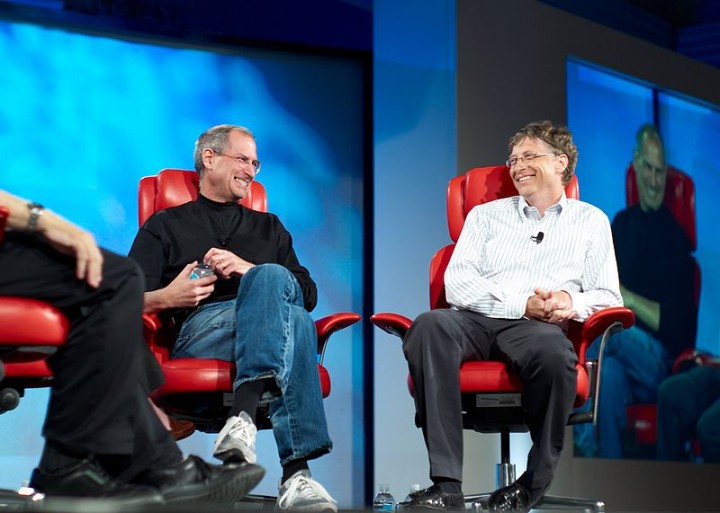
Photo credit: Joi Ito
Warning: I didn’t understand any of this as I was living through it. You won’t, either, when it happens to you.
It would be fair to say that I’m proud of my 35-year career in the computer industry. I’ve had the pleasure of working with thousands of brilliant people and, thankfully, have learned a little bit from each of them. I was once a brash young engineer at NeXT Computer and, many years later, a corporate vice president at Microsoft.
In a sense, two of the most important lessons I ever learned, I learned from Steve Jobs and Bill Gates.
Steve Jobs fights the right battles
I was the brash young engineer who quit NeXT Computer in 1992 when Steve Jobs cancelled the project I was working on: a PowerPC-based next generation dual processor workstation running NeXTStep. The project was almost finished, the system was ready to be shipped, and was due to be announced at an industry conference the following week when it was cancelled.
I was so mad that I didn’t even bother including the job experience on my resume!
Steve tried to get me to stay at the company but I was too hot-headed and angry to realize that he had made the right call. He had realized that the battle over processor architectures was over—Intel had won. He completely killed all hardware projects at NeXT and gave the company a software-only focus.
I, of course, stormed out the door. How dare he cancel my project?
I was too busy looking at the trees in front of me to see the forest all around.
I was too busy looking at the trees in front of me to see the forest all around. The processor war was over. The correct answer was to move up the stack and innovate in software, not to keep fighting the processor war for an ever-shrinking slice of the market. Of course, he then returned to Apple with the NeXT team intact and the rest is history.
That’s what I mean when I say the hardest lessons take years to internalize. I wasn’t thinking at that level. I was too emotional about the project I’d just spent so much time and effort on. I couldn’t be bothered to take a step back and look at the bigger picture.
What I learned from Steve later — much later, after I had cooled down — was to fight the right battles. Continuing to fight a battle after the war has already been lost is an exercise in futility.
Bill Gates and his impressive mental capacity
Later in my career, I spent a dozen years at Microsoft working on various versions of Windows. Now that you look back on it, you can see that Windows lost the mobile phone war to Apple, the server war to Linux, and the cloud war to Amazon. Back then, we were too busy pumping out versions of Windows to realize that.
It’s hard to put into words the amount of organizational inertia that goes into an engineering team behind a successful platform with billions of users. They almost never see the disruption coming at them. Or if the leaders do, the rank-and-file don’t. Most of them are too busy pushing the current rock up the mountain, the classic definition of “innovator’s dilemma.”
Only work on things you are passionate about





Stay updated on the go with our mobile app.
Get latest insights with smoother, more personalized experience through TIA mobile app.