Victor Medina-Conesa · · 4 min read
Korean university students lack startup spirit, and what can be done to fix it
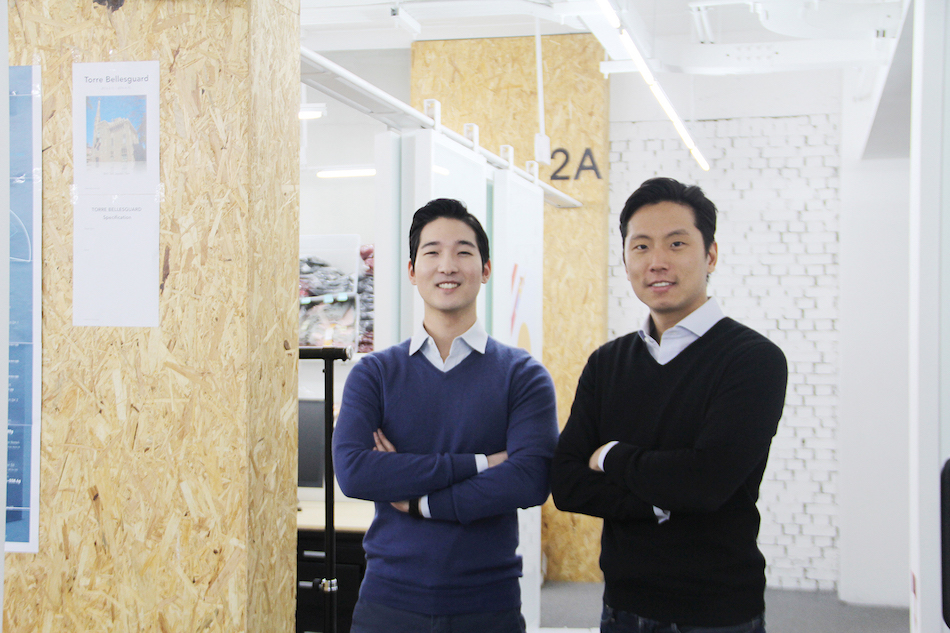
Entrepreneurs like WaHome’s John Lee (left) and Edward Hahn are a rare breed in Korea. Photo credit: WaHome.
In my master’s thesis “Development of young technology companies across Asia-Pacific,” I did a survey to assess the motivations and perceptions of technology entrepreneurship in Korean university students. In agreement with previous studies on the topic, the results show a low level of entrepreneurial spirit among Korean students.
Only 21 percent of respondents were willing to start up their own business after university graduation. “Avoiding risk of failure” was considered by 83 percent of respondents as the main reason for refusing to become entrepreneurs. However, 90 percent of respondents think technology startups will play an important role in the future Korean economy.
Risk avoidance at odds with government’s ambition
The results of the survey given above are not positive for the new economic agenda of the Korean government to promote a “creative economy.” This new economic agenda consists of supporting startups to develop new technological innovations.
However, this agenda will be difficult to develop if there’s scarce human capital willing to start or work for innovative technology companies. Risk avoidance is a characteristic of the Korean society in which a failure in business can result in dramatic social failure too.
Korean students are known to get successful results in world education rankings like PISA. Most students are obsessed with getting good grades in high school so that they can get into the top universities in South Korea. Literature confirms that getting a degree from a reputed university in Korea such as Seoul National University or Yonsei University gives the student more chances to get a well-paid job at a big conglomerate, bank, or public administration.
Most Korean families exert pressure over young people to get the best possible grades on their studies and secure a successful professional career. This family pressure causes high levels of stress in the young students and, in some tragic cases, suicide. My survey confirms that most respondents (61 percent) would like to work for a big conglomerate after their graduation. 17 percent would like to work for the government and only 8 percent want to work for a small and medium-sized company (SME).
These results clearly show that most Korean students are not interested in any kind of enterprise which is not a big company or conglomerate.
Creativity isn’t valued
The education system in South Korea is based on the accumulation of knowledge, which is not helping to foster creativity in students. Startups need founders and employees who have a high level of innovative and creative skills because these companies have to detect current needs in the market and create innovative solutions to satisfy customer needs.
Korean policymakers should change the apparently successful education system to encourage creativity. This will lead to economic diversity in South Korea and stop Korean educational institutions from merely becoming training centers for Chaebols.
The results aren’t all bad
The survey showed some positive results: 67 percent of the respondents have some knowledge about technology startups and 69 percent are willing to consider them as a possible workplace in the future. Around 58 percent of the respondents consider technology startups as a workplace where people can improve their innovation skills and 17 percent appreciate the high level of creativity in startups.
The survey had a question with only two possible options: “working for a big and traditional corporation which offer well-paid jobs but with high level of hierarchies”, or “working for a young company which offer low-paid jobs but the employees have chances to develop their innovation and creative skills and there are low levels of hierarchies.”
The majority of respondents (61 percent) select the second option. The most frequent reasons cited about wanting to become entrepreneurs were self-realization (35 percent) and innovation (31 percent).
The results of the survey show that Korean universities are starting to promote entrepreneurship among the students. 67 percent of the respondents think their home universities are encouraging them. to become entrepreneurs in the future. However, from that proportion, only 43 percent state that their home universities have programs to develop and promote entrepreneurship among the students.
Korean startups should promote themselves more





Stay updated on the go with our mobile app.
Get latest insights with smoother, more personalized experience through TIA mobile app.