Hisham Itani · · 6 min read
What we found analyzing Indonesian ride-hailing companies’ social media performance
Ever since the inception of companies like Uber in 2009, ride-sharing apps have taken center stage around the world.
The hype has expanded into fast-growing markets like Indonesia, resulting in companies like Go-Jek which raised US$1.2 billion in May this year. This put the company at a US$3 billion valuation.
Given the immense size of the market, we thought it would be interesting to analyze the Indonesian ride-hailing sector on social media.
Indonesians love social media
With over 100 million users on social media (spending three hours on different platforms every day), Indonesians are heavily influenced by the interactions and content presented on these platforms. This is why observing how companies act and are perceived on social media is an important step to evaluate the popularity and likelihood of growth and adoption of internet-based apps by the masses.
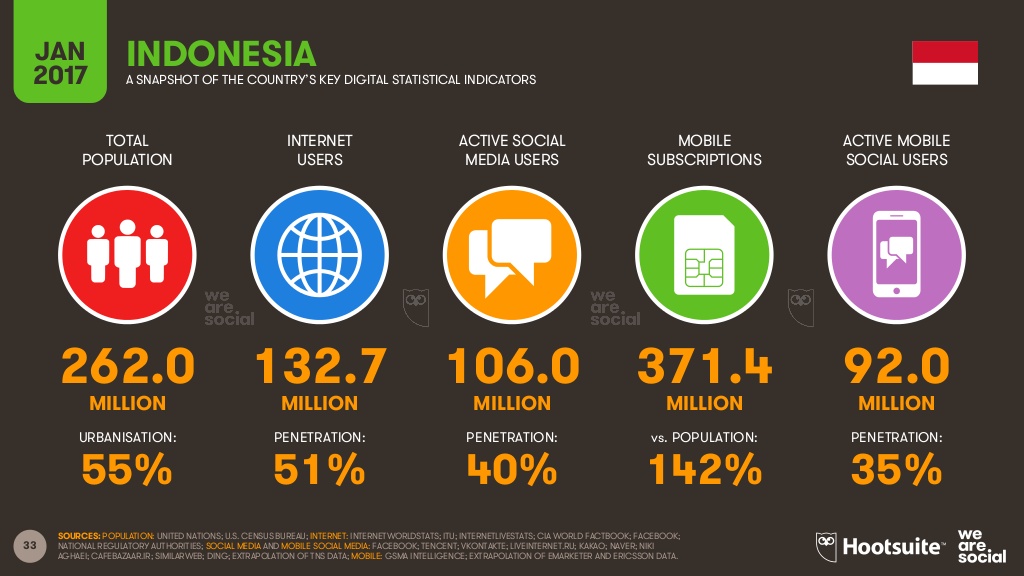
Indonesia’s digital market in 2017. Photo credit: We Are Social.
We asked Krzysztof Bulski, managing partner of Pendopo Labs, a business development firm, for his feedback on social media platforms in Indonesia. Here’s what he had to say:
“What distinguishes Indonesia is that it is common to be an active user of several social media platforms at once. Twitter, Instagram, and Facebook are only a part of the social media landscape in Indonesia along with platforms like Path, Line, and others. Very often, each of the platforms will serve a different social purpose. You will be in touch with your family on Path, with friends on Facebook, Instagram is often used for shopping, and business is done mostly on WhatsApp.”
Between Go-Jek, Grab Indonesia, Uber Indonesia, and others, there’s a lot of competition going around. Let’s see which brands dominated on Facebook, Twitter, and Instagram from January to July 2017.
They started off as ride-sharing apps, then shot for the stars
Let’s take a look at ride-sharing/hailing apps in Indonesia, starting with Go-Jek. This industry giant is slowly becoming a part of everyday life for many people in Indonesia. Below are the services that Go-Jek offers through its app.
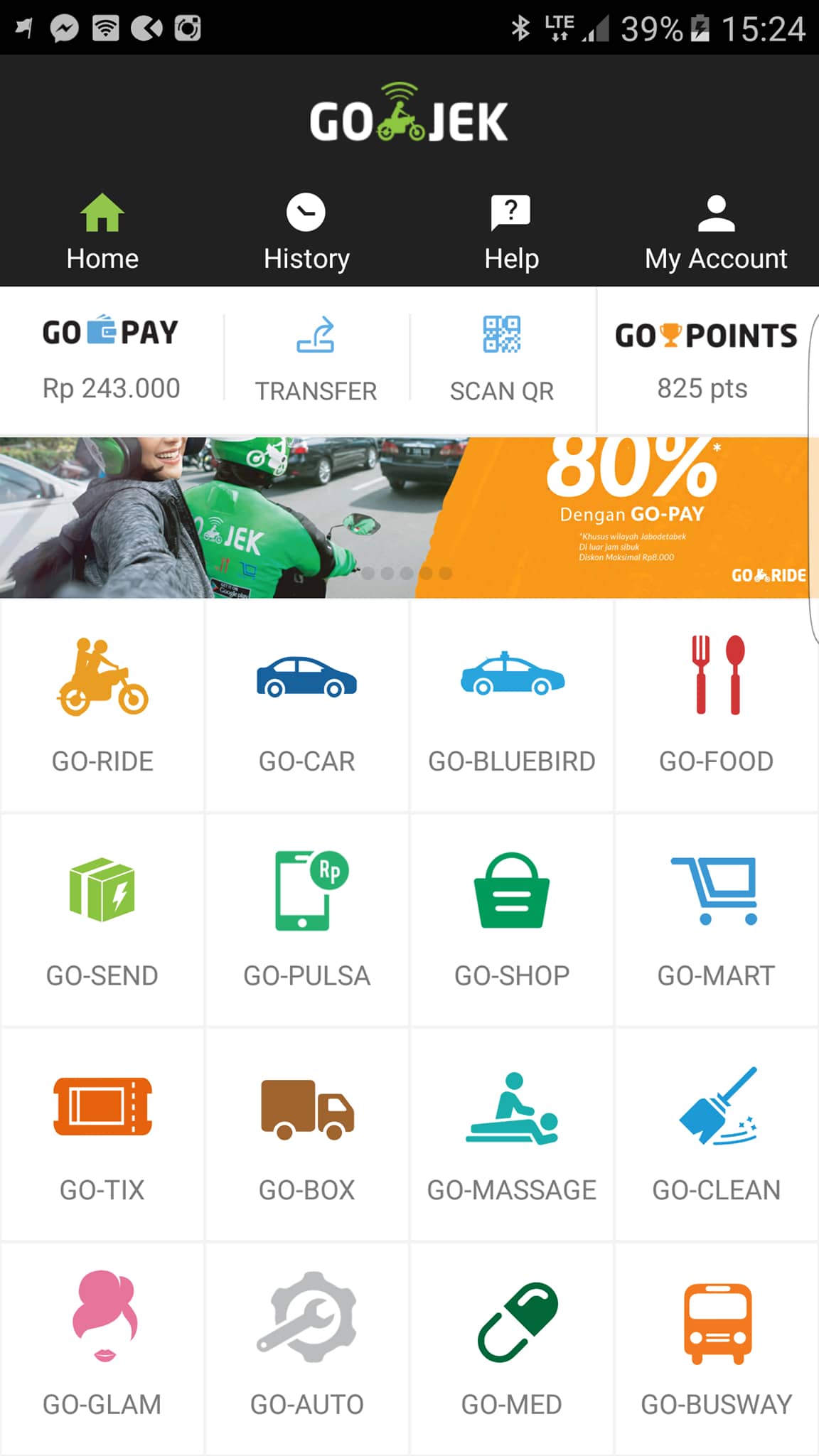
Another interesting fact is the use of their mobile payment system Go-Pay, which is used not only for services included in the app but through other platforms as well (similar to Android Pay). Others have followed suit in this regard, most notably Grab, another Southeast Asian company present in six countries and a main competitor of Go-Jek.
Other companies we looked at in Indonesia are, of course, Uber and Grab along with two other companies. One of them was Blue Bird Group, Indonesia’s largest taxi operator that suffered after big competitors entered the market and wiped out three-fourths of their market value.
Here’s why tech companies can’t survive without social media
Using Twitter as a primary platform for engagement
Top posts require consistency and a budget
Indonesians love social media platforms and companies know how to use it





Stay updated on the go with our mobile app.
Get latest insights with smoother, more personalized experience through TIA mobile app.