 Sandeep Murthy · · 3 min read
Opinion: Startups should understand the modern Indian consumer to win the market
Photo credit: Fancycrave.
The Indian story has always focused on the size of the market. But across social and demographic divisions, one thing has drastically changed in the last two decades: the desire to trade up.
Across the world, people are increasingly conscious of work-life balance. But in India, work comes first. In metros across the country, office lights are on all night. Uber and Ola drivers race across the city clocking in extra hours. Late night food delivery orders are up three times in less than two years.
Technology has made it possible to make money, but it comes with strings attached.
From clothes to cars, the market has long been fragmented, with only a few brands emerging as market leaders. But now, as new retail emerges in parallel with better internet access, monopolies in distribution are giving way to consumer choice. The new Indian is hyper-aspirational and never before has the opportunity to live better at such a great price existed.
The formula is clear: better for cheaper. The challenge for entrepreneurs is to create efficiencies using technology.
As India urbanizes, the youth are on the hunt for lifestyle brands that make them look and feel good.
Brands that have risen to the occasion have grown rapidly. Patanjali, an FMCG brand with affordable herbal remedies, has been popular across the income pyramid. Indigo, a Gurgaon-based budget airline, is a runaway success. Blue Tokai, a three-year-old coffee brand that offers farm fresh, artisanal Indian coffee, is the background of choice on teenagers’ Instagram stories.
As India urbanizes, the youth are on the hunt for lifestyle brands that make them look and feel good.
But in the same time frame, India has not yet delivered big financial returns to its investors. The US$10.8 billion invested from 2007 to 2016 has only seen exits worth US$8.5 billion from 500 exits. This has quite rightly made investors reconsider.
The biggest challenge has been the slow growth of the middle class. From 2000 to 2010, China’s urban middle-class households grew by 20 percent. In comparison, India’s middle class grew only 10 percent from 2005 to 2015. Simultaneously, the top two household segments, which contribute a disproportionately large amount to consumption, grew eight times in China but less than twice in India.
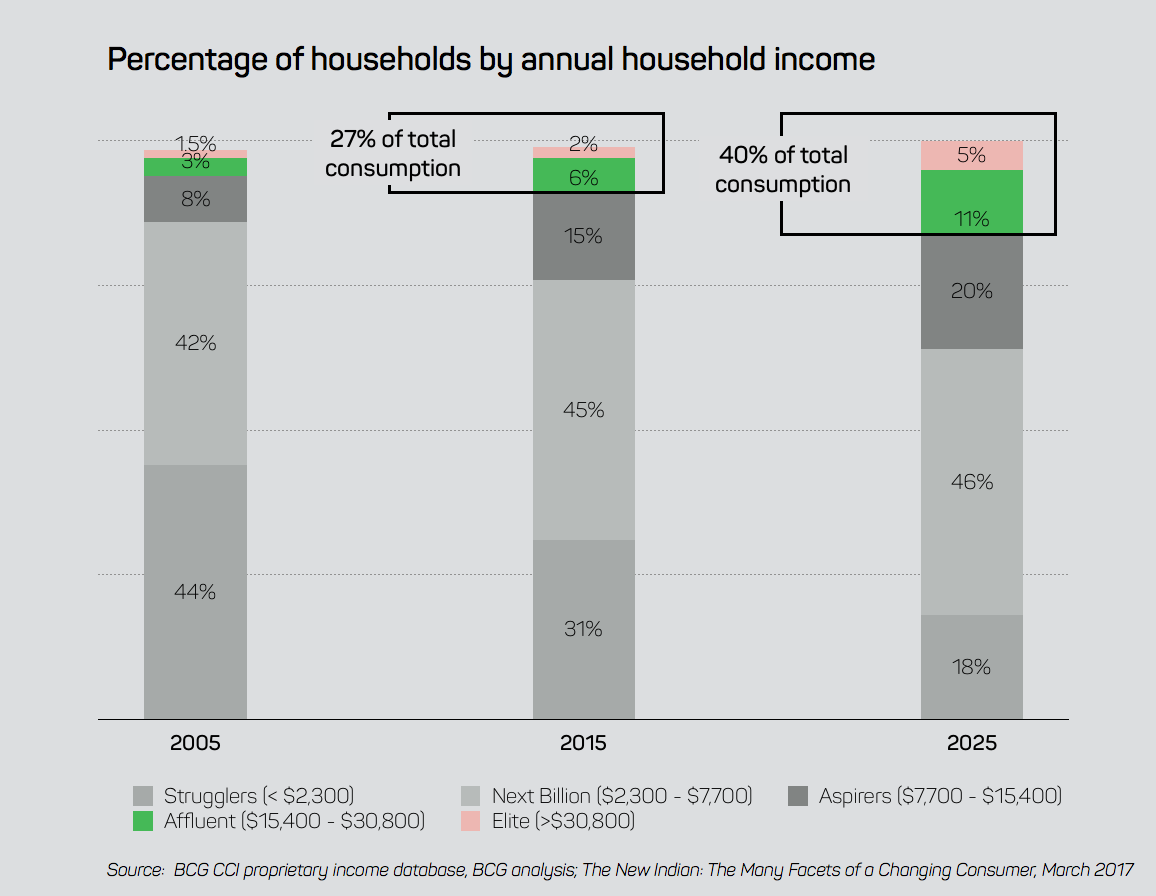
Meanwhile, investors have backed too many x-of-India businesses, compounding the current crisis for the venture capital industry. While chasing copycats, the big global funds have missed investing in businesses created around India’s realities.





Stay updated on the go with our mobile app.
Get latest insights with smoother, more personalized experience through TIA mobile app.









📅 Upcoming Events
22 October 2026
Payoneer x CSPN Summit 2026