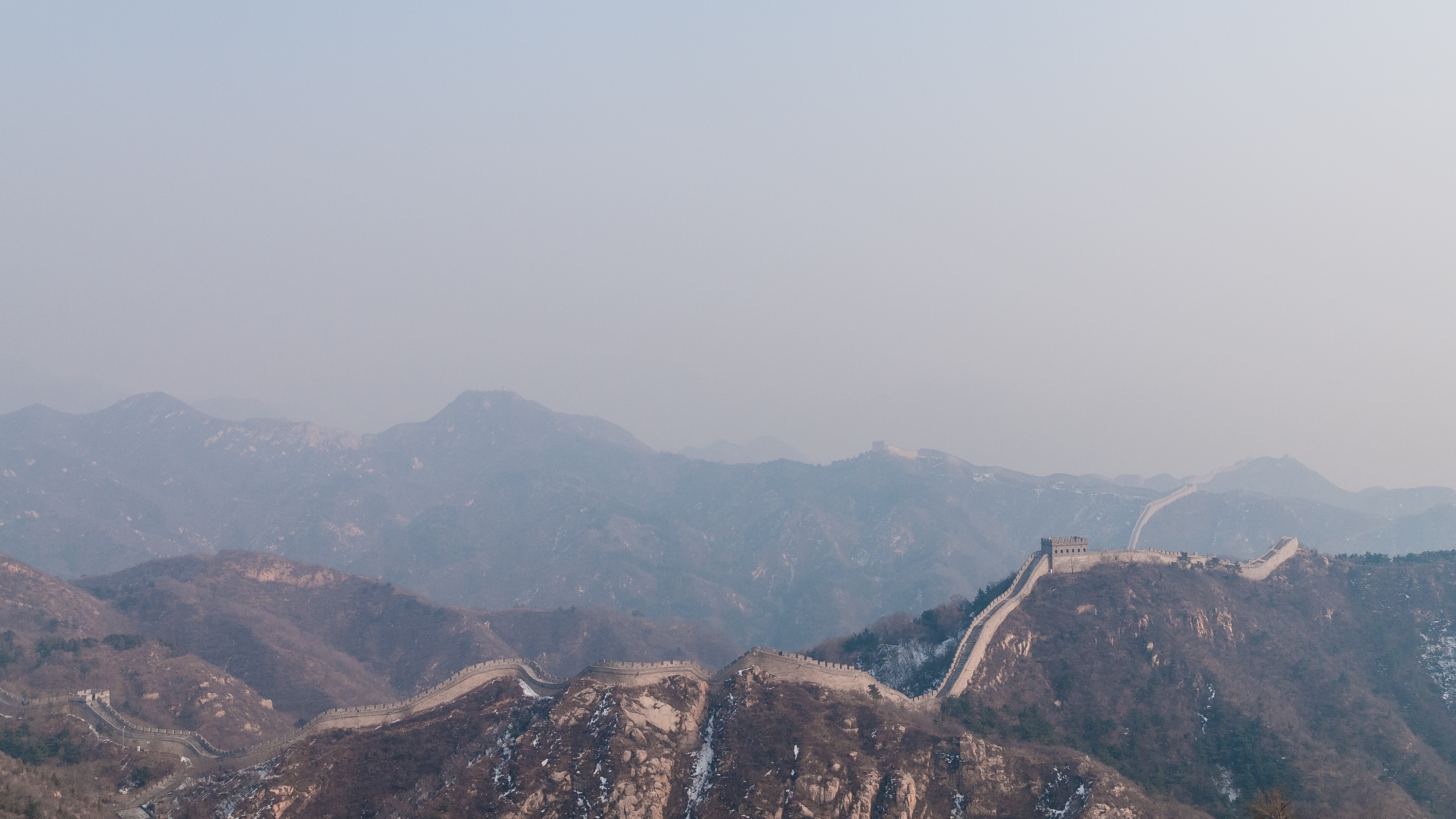
Photo credit: Frak Lopez
I was about 10 years old when I learnt about the Great Wall of China. I don’t know really why this wall captivated me so much — was it the fact that glutinous rice flour was supposedly used to bind the bricks, or was it the length of time it took, and tragedy behind the building of the wall?
The orient was exotic in my imagination, only much later did I realize that I too, was part of the milieu of exotic. My early image of China was shaped by Pearl S. Buck and her book, The Good Earth. Coleridge fired my imagination of Xanadu and Kubla Khan. Mao Zedong’s biography held in me a fascination that Mien Kampf could not match. Amy Tan added to my knowledge, while The Last Emperor epitomized my sympathy for the suffering of 30m people lost in the cultural revolution.
So I knew something of China, but it had no semblance to the current modern state. It was almost like my going to America with knowledge from watching the wild west movies (also a pastime of mine in my younger years). My fascination with China was of its past, and modern China had not the same lure.
The trip to China
I set out last month to a 10-day visit to China to experience modern China to build friendships and learn from China’s venture capital success. We went to Shanghai and Beijing, mostly spending time with other venture firms in China and catching up with a few large companies.
风险投资 – fēng xiǎn tóu zī – means throwing capital into the wind. In China, this throwing into the wind has been very profitable, representing $170b in total unicorn enterprise value generated or the 200+ IPOs last year.
The summary of the trip in this presentation does not capture the inspiration and aspirations we brought back from the visit, nor can it capture the openness and warmth we experienced in both business and private meetings.
Our stay went smoothly, and we managed to navigate the cities easily. I relished all my fully vegetarian meals.
Getting the visa to China was an easy, 2 day process that went smoothly. The flight from Shanghai to Hong Kong, not so much, with a 4 hour delay to our trip. If they gave any explanations, I didn’t catch it. However, the bullet train from Shanghai to Beijing the next day was fast, on time and very comfortable.
Our main takeaway from every meeting there centred around growth, velocity, ambition and transformation.
The rise of large Chinese companies
Like the death star that gobbles up planets and is an ecosystem in itself, Chinese companies have created large ecosystems that are like intergalactic empires.
How else to describe the massive rise of a company to $50b in a short 6 year period? Xiaomi now sells 2,000 non-phone gadgets, among them, a fitness band, earphones, a router, a smart TV, air and water purifiers, a Segway-like scooter and, soon, a smart bicycle and a VR device and my favorite, a rice cooker controlled by one’s phone.
Alibaba with $500b in GMV, sells everything. Jack Ma coined that BABA was a data company and his famous letter to shareholders talks about Health and Happiness as 2 key areas of growth, showcasing the breadth of products and services the group plans to dominate.
Can Indian and Chinese startups collaborate?





Stay updated on the go with our mobile app.
Get latest insights with smoother, more personalized experience through TIA mobile app.









📅 Upcoming Events
22 October 2026
Payoneer x CSPN Summit 2026