- Insights This article was written by a TIA community member. Insights pieces undergo the same rigorous editorial process that newsroom-produced articles have.
 Steve Blank · · 5 min read
How startups can keep their innovation culture as they scale
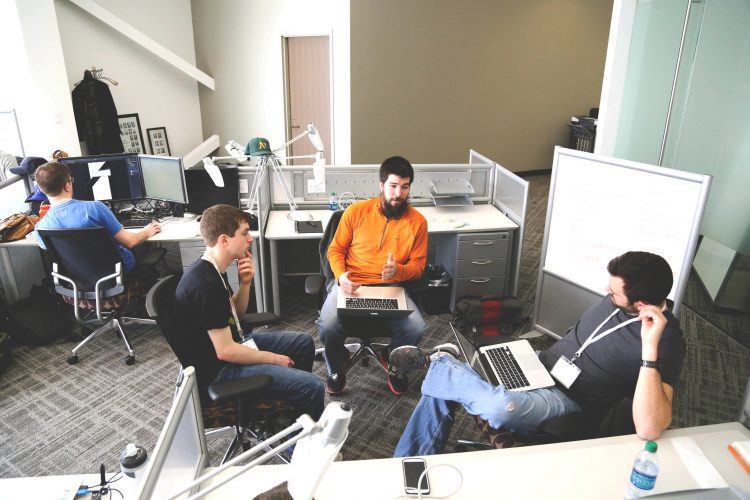
Photo credit: Startup Stock Photos.
I spent a day working with Bob, the chief innovation officer at a smart, large company I’ll call Acme Widgets. Bob summarized the company’s impediments to innovation:
“At our company, we have a culture that fears failure. A failed project is considered a negative to a corporate career. As a result, few people want to start a project that might not succeed. And worse, even if someone does manage to start something new, our management structure has so many financial, legal, and HR hurdles that every initiative needs to match our existing business financial metrics, processes, and procedures. So, we end up in paralysis by analysis—moving slowly to ensure we don’t make mistakes and that everyone signs off on every idea (so we can spread the collective blame if it fails). And when we do make bets, they’re small bets on incremental products or acquisitions that simply add to the bottom line.”
Bob looked wistful. He added: “Our founders built a company known for taking risks and moving fast. Now, we’re known for ‘making the numbers,’ living on our past successes. More agile competitors are starting to eat into our business. How can we restart our innovation culture?”
What drives innovation?
I pointed out to Bob the irony: In a large company, fear of failure inhibits speed and risk taking. But in a startup, it drives speed and urgency.
If we could understand the root cause of that difference, I said, we could help Acme build a system for continuous innovation. I suggested that the best place to start the conversation was with the 21st century definition of a startup:
A startup is a temporary organization designed to search for a repeatable and scalable business model.
Startups have finite time and resources to find product-market fit before they run out of money. Therefore, they trade off certainty for speed, adopting “good-enough decision making,” iterating, and pivoting as they fail, learn, and discover their business model.
The corollary definition for a large company is:
A company is a permanent organization designed to execute a repeatable and scalable business model.
That means in their core business, large companies have a series of knowns:
Need for different tools, cultures, and organizations
The ambidextrous organization
What we now know about corporate innovation
Lessons learned





Stay updated on the go with our mobile app.
Get latest insights with smoother, more personalized experience through TIA mobile app.







📅 Upcoming Events
22 October 2026
Payoneer x CSPN Summit 2026