- Insights This article was written by a TIA community member. Insights pieces undergo the same rigorous editorial process that newsroom-produced articles have.
 Putra Muskita · · 4 min read
What does the Grab-Uber deal mean for Go-Jek?
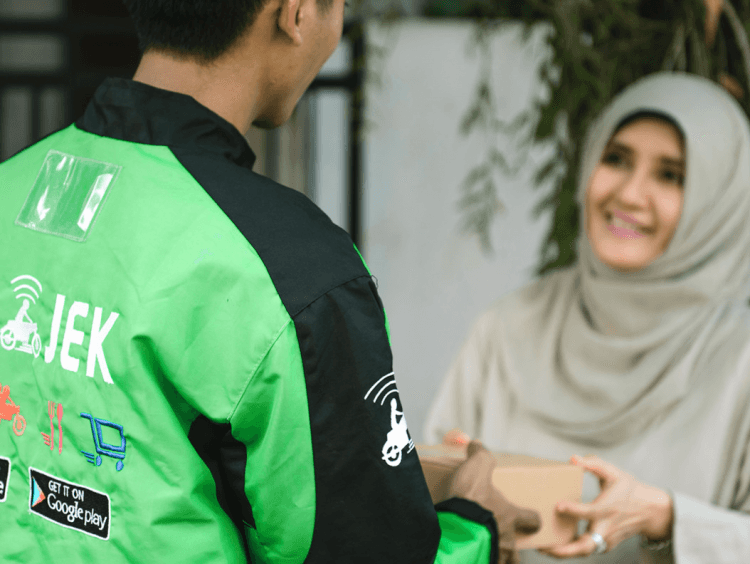
Photo credit: Go-Jek
Discuss features short but strong and insightful opinions on interesting startup, entrepreneurship, and tech topics. Got a topic or question to suggest? Drop us an email or leave a comment.
And then there were two. Grab’s acquisition of Uber’s Southeast Asia business means it will now go head-to-head with Go-Jek—and not just in the ride-hailing business, but also digital payments and food delivery.
Of course, Go-Jek still reigns in its home country of Indonesia (the region’s largest market), but Grab continues to be competitive there while maintaining a chokehold on the rest of Southeast Asia.
Where does the Indonesian unicorn go from here? We asked two experts for their thoughts.
Editor’s note: Answers have been edited for clarity.
 Jianggan Li, founder of Momentum Works
This deal means Go-Jek will face more competitive pressure, as Grab now can concentrate their resources on the market to finish Go-Jek off. Go-Jek has traditionally (and still is) much better than Grab in speed and execution. However, facing Softbank’s almost unlimited lifeline, Go-Jek’s investors will be under pressure. How will Go-Jek’s team withstand this pressure, bring in more money, and still develop the business? That will be really interesting to watch.
Over the past year, many people in Manila, Bangkok, and Ho Chi Minh City have been approached by Go-Jek recruiters. I do think going on the offensive is a necessity, and with Grab being the only major player in many markets, it might become easier for regulators to create an environment that favors Go-Jek’s entry. But Go-Jek should not lose focus in its core market. The interactions between Didi and Meituan could offer interesting lessons for both parties.
There are a couple of possible outcomes:
- Go-Jek bows to investor pressure and merges with Grab. Founding team (and shareholders) exits with large cash payout.
- Grab faces regulatory and other road blocks and has to leave Indonesia alone. Go-Jek grows well in Indonesia at its pace.
- Go-Jek partners with major banks to go super aggressively into consumer finance, and becomes a profitable company. And it no longer has to bow to investor pressure.
- Tencent, Meituan, and others decide that Go-Jek is strategic, and pumps in a strong lifeline to prevent any consolidation. Founders get diluted.
Ultimately, this is a game of multiple parties with myriad interests and many possible outcomes. This is different to Uber. When Travis Kalanick was forced out in mid-2017, it was quite clear that the company would eventually give up Southeast Asia as a market.
Let’s discuss:





Stay updated on the go with our mobile app.
Get latest insights with smoother, more personalized experience through TIA mobile app.









