- Insights This article was written by a TIA community member. Insights pieces undergo the same rigorous editorial process that newsroom-produced articles have.
 Ishita Parbat · · 4 min read
How Grab experimented with chat to drive down booking cancellations
This article is part of Tech in Asia’s content partnership with Grab. Visit their engineering blog here.
This article was co-authored by Kaisen Wang, Joseph Khan, and Mike Tee.
Booking cancellations are frustrating, costly, and unpleasant. They’re a major setback to a seamless booking experience for all parties involved.
Post-allocation cancellations are particularly painful. These are cases where a strong intent to take a ride is expressed, the price is agreed upon, but the trip eventually does not happen.
While we at Grab recognize that some cancellations are unavoidable, we wanted to know if there are instances where we can prevent such cancellations, particularly the ones post allocation.
Service design for customer centricity
Service design is the process of generating a product, policy, or any kind of enhancement that improves the user experience while hitting business metrics.
Booking cancellations were a key problem and the service design team was convinced that, with the right interventions in place, some cancellations could be prevented. To identify these scenarios, the team conducted several rounds of user research to understand the root cause of cancellations, and therefore devise a valid solution to enhance the ride experience for both passengers and driver-partners.
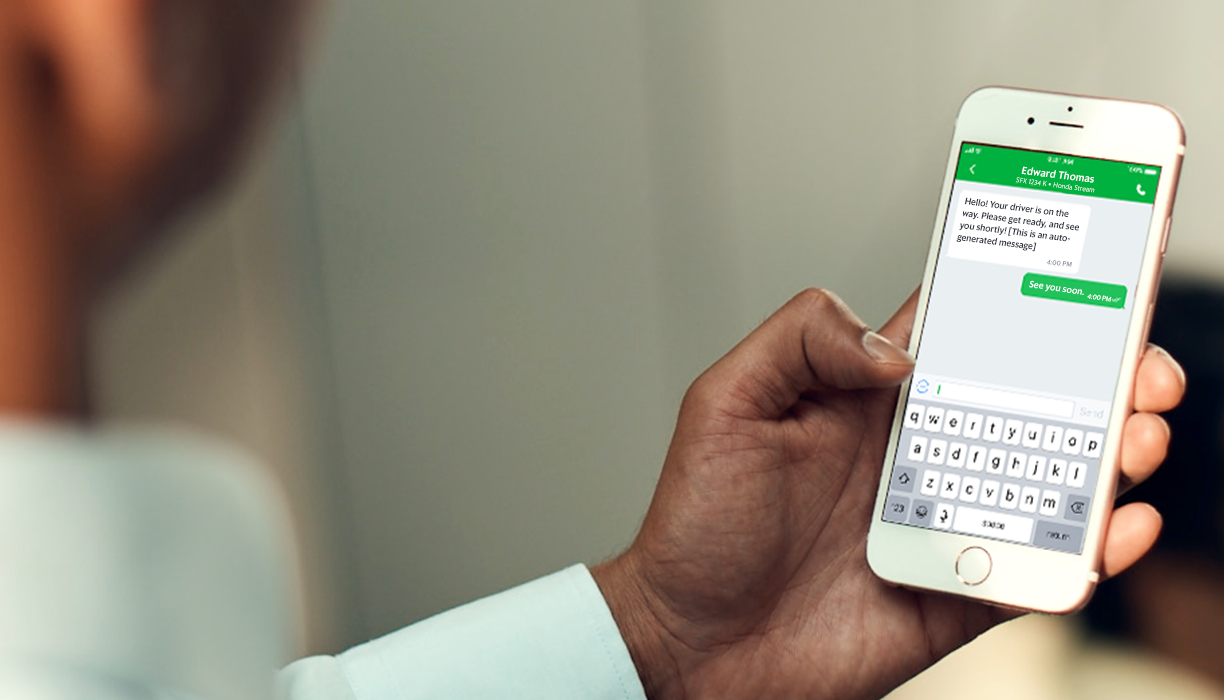
Here’s an interesting insight we heard from one driver-partner: whenever he informed the passenger that he was on the way to the pickup point, the booking had a lower likelihood of being cancelled. A simple message from the driver-partner could help reduce the perceived waiting time and give passengers more confidence in the service.
This triggered us to dive deeper into understanding the correlation between GrabChat (our in-app messaging system) and cancellation rates.
GrabChat vs cancellation rates
We dug into our data to validate the feedback that the service design team had received, and we discovered an interesting correlation: bookings which involved GrabChat conversations indeed had a lower likelihood of being cancelled.
When the two parties established contact through chat, it transformed the service from a mere transaction into something more human. This human touch reduced perceived waiting time, making passengers and driver-partners more patient and accepting of any unavoidable delays.
Building on this insight, we hypothesized that we could potentially avoid cancellations by encouraging both parties to engage in a chat conversation upon getting a matched ride.
To validate this, we conducted a series of iterative experiments.
Experimentation
New learnings





Stay updated on the go with our mobile app.
Get latest insights with smoother, more personalized experience through TIA mobile app.









📅 Upcoming Events
22 October 2026
Payoneer x CSPN Summit 2026