 Vincent Chan · · 8 min read
How GoGoVan builds new products
This week in Tech in Asia Jobs shares insights into how successful companies operate, hire, and more.

Working with members of the product team at Gogovan. Vincent is third from left. Photo credit: GoGoVan
“What problems you are trying to solve? Why are you solving them now? How do you validate that these are real customer problems?”
These are some of the most fundamental questions we frequently ask each other on the product team at GoGoVan.
We focus more on defining and prioritizing problems instead of building solutions. This is because a solution can only be as good as our understanding of the problem we’re addressing.
In fact, it’s easy to build things exactly the way our users described, but it usually misses the mark because the actual problem is buried a few layers deeper. By digging deeper into the problem (the “why”), we can mitigate the risk of building something not valuable to users before putting in any design or engineering time to develop the solution (the “what”).
At a high growth startup, where there’s more at stake, understanding the “why” is even more important. There is no bigger waste of resources than spending months to build something that is not valuable at all.
Over the last four years, our online logistics service platform has grown from a small Hong Kong startup to one with over 180,000 registered drivers and hundreds of thousands of customers across Southeast Asia.
Not surprisingly, we have to sort through tons of ideas that can potentially solve the age-old logistic problem. And it’s very easy to fall into the trap of doing too many things but not delivering results.
To avoid that, we prioritize solving problems that create the most customer value, and do so in a way that’s consistent even as the team grows.
That’s where a well-crafted product process comes in — to give the team a way to consistently evaluate the “why” and rapidly iterate the “what”. This way, we don’t have to rely on luck to build great products.
Our product process has evolved over the years, and we’ve learned many lessons along the way. Some things have worked really well, some less so. To replicate our product successes as we scale, we’ve reflected on how we work and how we want to work in the future. We thought that it would be valuable to share what our ideal flow looks like today.
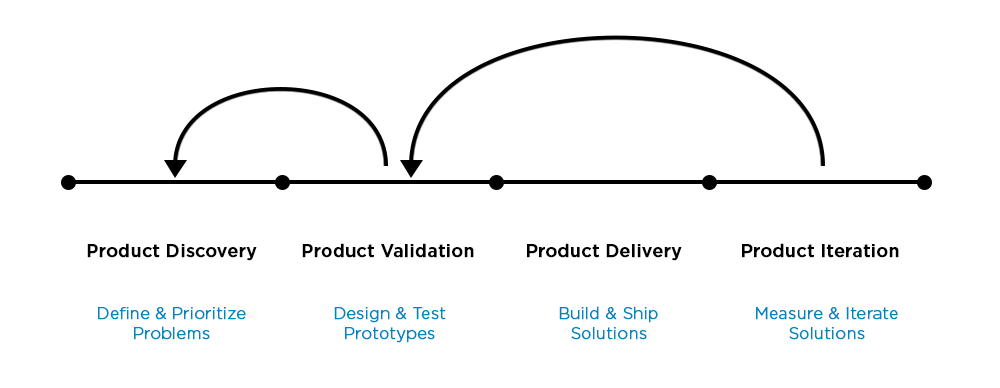
1. Product discovery
2. Product validation
3. Product delivery
4. Product iteration
The takeaway: what got us here won’t get us there.





Stay updated on the go with our mobile app.
Get latest insights with smoother, more personalized experience through TIA mobile app.









📅 Upcoming Events
22 October 2026
Payoneer x CSPN Summit 2026