- Insights This article was written by a TIA community member. Insights pieces undergo the same rigorous editorial process that newsroom-produced articles have.
 Lam Tran · · 4 min read
Opinion: Why startups in Vietnam aren’t going global
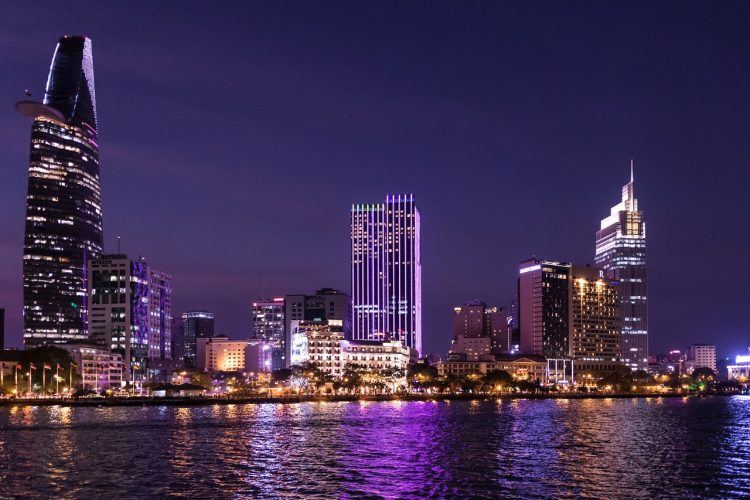
Photo credit: Dieter Metz.
My name is Lam Tran and my startup was funded by accelerator Viisa a couple of months ago. The company I founded is aiming at becoming a global business from Vietnam. But it’s really hard, as it’s something that nobody has done yet. I’m struggling at the moment with the process, so I thought of sharing my story and my take on why Vietnam hasn’t seen any of its startups scaling globally.
Let me quickly define global startup so nobody gets confused. It’s a company that has expanded in more than 15 countries with more than US$1 billion in annual revenue. Totally arbitrary, I know, but I would love to shoot down Flappy Bird (no pun intended) and VNG (digital content company) as these two are great Vietnamese stories that don’t interest me.
Flappy Bird was a hype and didn’t last long. It was certainly downloaded and played in more than 15 countries but I never heard Dong, the man behind the game, claiming to make a billion dollars in revenue.
VNG is one of the success stories we have here in Vietnam, but so far, they haven’t been able to turn any of their products into a global business yet. The company itself is making less than US$1 billion yearly and it doesn’t seem to be on track to earn that much anytime soon.
Now that I’ve addressed those two, I can start talking about a few factors that are hindering Vietnamese startups from becoming global businesses.
Reason 1: Mindset
The mindset in Vietnam is usually not to start a revolutionary idea. It’s more about looking at what’s working overseas and just localizing it. It’s usually difficult to turn a copycat into a billion-dollar global business, as the market itself is too small in Vietnam.
Therefore, if we see some copycat, the best case is to find some really good entrepreneurs who might build a regional business. We usually think of Southeast Asia first but we don’t dare to go beyond because it’s already complex to do business in Vietnam, Thailand, Malaysia, Indonesia, Singapore, and the Philippines.
At best, some brave ones may think of Korea, Japan, Hong Kong, and Taiwan. For the crazy ones, we have another neighbor called China, but we would prefer to wait for Elon Musk to expand and set up a colony in Mars first before thinking about China.
Reason 2: Ecosystem
For all the good and bad reasons, most of the investors I’ve met have been asking me to set up a company in Singapore or Hong Kong. Currently, the main reason is it’s hard to get money from Vietnam due to some regulations in our country. It’s seen as a risk and investors just don’t want to feel like putting some cash in here.
Despite the relative attractiveness of Vietnam with its GDP growth, our country hasn’t set a legal framework yet to ease investors’ concerns. Hence, most of the money is parked in Singapore and we end up travelling there to sign some investment contracts.
We have another neighbor called China, but we would prefer to wait for Elon Musk to expand and set up a colony in Mars first before thinking about China.
If it were easier to open a business as it is in Singapore, easier to get the money out from Vietnam, and easier to invoice businesses digitally (it’s 2017, for god’s sake!), then it’s likely to see more money flowing in.
Too many times, I’ve got people telling me that it’s great to start here in Vietnam because we have cheap labor for IT compared to San Francisco. It might be true but that doesn’t guarantee that we can build a great billion-dollar business. Sadly, it’s because we take into account the costs but not productivity, years of experience, and the languages (it’s pretty much ASP here… ).
Reason 3: Internationalization





Stay updated on the go with our mobile app.
Get latest insights with smoother, more personalized experience through TIA mobile app.









📅 Upcoming Events
22 October 2026
Payoneer x CSPN Summit 2026