- Insights This article was written by a TIA community member. Insights pieces undergo the same rigorous editorial process that newsroom-produced articles have.
 Oleksiy Kuryliak · · 4 min read
Decentralized apps, or Dapps, are the future. Here’s what you need to know
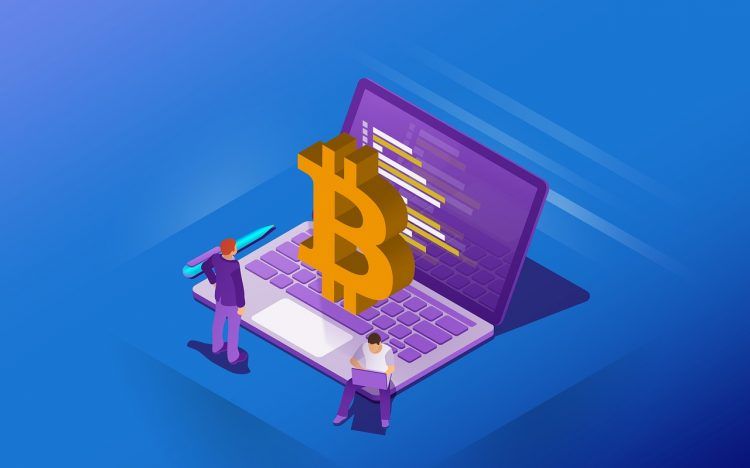
Photo credit: Pixabay
Blockchain has undoubtedly broken the internet in the past year. Originally, Satoshi Nakamoto’s bitcoin was intended to disrupt global financial systems by providing a trustless, peer-to-peer electronic cash system. But the technology has proven to do a lot more, essentially enabling developers to disrupt not only financial systems but also virtually every industry.
This became possible through decentralized applications (Dapps), which are based on blockchain. Let’s take a closer look.
What makes a Dapp?
Most of the apps we know today are centralized, which means a few things:
- The overall flow of information comes from a single center.
- The control of individual units is executed from a single center.
- All individuals are dependent on the single center.
Unlike centralized apps, Dapps’ server-client model is entirely distributed. In order for an application to be categorized as decentralized, it needs to fulfill the following criteria:
- It should be autonomous and open-sourced. This suggests that any changes on it may only be executed after reaching a consensus. It also means that there is no single authority executing those changes.
- Protocols and information are stored on blockchain, protected by cryptography.
- Tokens are issued and used for rewarding application access and network users.
- Tokens are generated through an algorithm that encourages contribution by the members of the network.
According to Vitalik Buterin, founder of Ethereum, these criteria can be summed up in this way:
- Logical: Does the interface and the structure of data of the system suggest a distributed structure or a centralized one?
- Political: How many individuals are given control over computers that comprise the system?
- Architectural: How many computers can the system sustain before collapsing?
Advantages of Dapps
Before we go into the advantages of Dapps, consider this: everything an app can do, a Dapp can do better. Unlike centralized applications, Dapps provide a particularly quick, affordable, and highly efficient way of processing big data.
So, here are some of the biggest advantages of Dapps as compared to traditional apps:
Higher level of security
The nature of Dapps provides for a higher level of overall security. Since the information is stored on a distributed ledger, a potential threat would have to go through the burden of hacking all of the connected nodes. This addresses popular attacks such as distributed denial of service (DDoS).
The nature of decentralization itself bars collusion and infiltration, making Dapps a whole lot harder to hack.
Two types of Dapps
How do Dapps work?
Challenges for developers





Stay updated on the go with our mobile app.
Get latest insights with smoother, more personalized experience through TIA mobile app.







📅 Upcoming Events
22 October 2026
Payoneer x CSPN Summit 2026