- Insights This article was written by a TIA community member. Insights pieces undergo the same rigorous editorial process that newsroom-produced articles have.
 Putra Muskita · · 5 min read
Your data has helped keep the internet free. Now what?
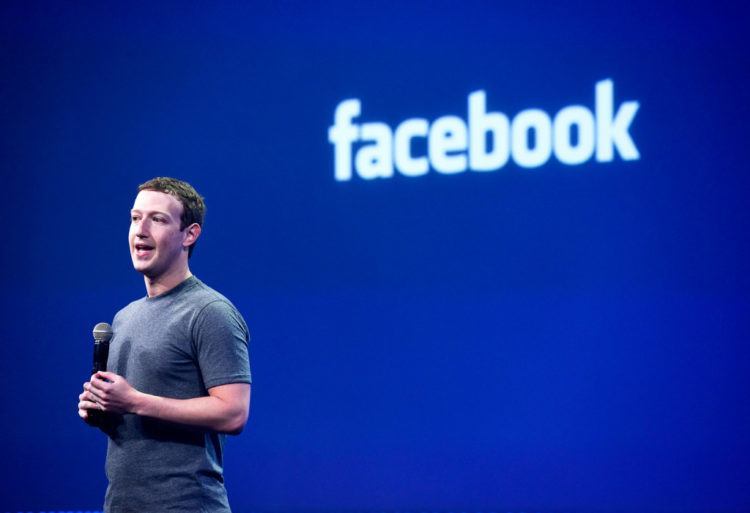
Photo credit: David Paul Morris/Bloomberg via Getty Images
This is a Discuss post, where we feature short but insightful opinions from the Asian tech community on startup, entrepreneurship, and tech topics. Got a topic or question to suggest? Drop us an email or leave a comment.
As the furor over Facebook’s data breach continues, it’s worth remembering that the social media giant is hardly the only platform—big or small—that keeps itself free through advertising and data. With all its flaws, though, this remains the default business model for platforms seeking to maximize their network effects.
So where do they go from here? Dare we imagine an alternative model for monetization? We asked two experts—Jianggan Li and Nikhil Kapur—for their thoughts.
 Jianggan Li, founder at Momentum Works
The issue of ethics is much more complicated than many would imagine. There are extreme views, ranging from “all ads are immoral” to “anything goes, as long as people get some value.” The former does not make sense because without commerce, we would all still be stuck in feudal societies; the latter is problematic because people can get serious harm from indulging in short-term gain.
Fundamentally, there is nothing wrong offering free service while collecting data for targeted ads; however people need to be fully aware of what is being collected, and how the data is used. What I mean by “aware” is not simply ticking a box saying “I have read and I agree,” but to be really sure what they are getting into.
We can compare this to bank loans: as we all know, a dependence on loans could create problems for many people, but banks are incentivized to push for more loans. What regulators should do is to make educating customers the banks’ obligation. In Singapore, banks are obliged to tell people the effective interest rate (rather than just the nominal rate), and if the banks can demonstrate that they fully comply, it then becomes the consumers’ responsibility to accept or deny the service.
I think targeted ads is—at least supposedly—a responsible way to monetize consumer data, but with checks and balances in place. Just think about a few scenarios: for example, if a user has a tendency to gamble, do you push option trading ads to them? Or what happens if they decline to share their medical history, but the system still collects that data and displays ads accordingly?
For Facebook, I think there are two big challenges pertaining to its size:
- A lot of ads still need to be approved by humans, and rightly so! However, once you have a large team of human beings checking through the ads, how do you make sure they apply the same (sound) standards? Some of the legislators at Mark Zuckerberg’s hearing asked why certain harmless ads were rejected by Facebook—this is exactly the problem.
- How you make the incentives properly aligned. Baidu underwent a scandal where a university student died after seeking treatment for his illness through Baidu ads, which turned out to be from fake doctors. This was exactly because of misaligned incentives: the department selling ads wanted to sell as many as possible, and there was competition for performance, but there were no real checks in place.
From the regulators’ point of view, they probably want to make the likes of Facebook more accountable. In that regard, you can probably learn from banks, in particular how the business and risk departments balance each other, but without imposing too much compliance burden.
I do not think there is any viable alternative for the ads and data model—unless the government collects taxes the same way the British government taxes TV owners to fund the BBC (which is, by itself, a can of worms). So I would see ads and data to still be a favored model, but with checks and balances in place.
Let’s discuss:





Stay updated on the go with our mobile app.
Get latest insights with smoother, more personalized experience through TIA mobile app.