Kenny Ng · · 4 min read
How cutting-edge IoT tech is connecting tunnels and communities in Asia
IoT technology has arrived at the transportation station, and it is here to stay. In the Asia Pacific region, the smart transport market is expected to double from a US$1.1 billion opportunity in 2015 to US$2.3 billion by 2020. High-profile projects such as the Chenani-Nashri road tunnel in India and the Stormwater Management and Road Tunnel (SMART Tunnel) in Kuala Lumpur need a new level of hardened technology to ensure connectivity in even the harshest of environments.
Enter IoT
IoT technology and smart sensors are providing the world’s engineers with more efficient means of monitoring, maintaining, and protecting vital transportation infrastructure. Even tunnels built nearly 100 years ago are now being equipped with IoT sensors. This provides the aging infrastructure with mass amounts of data in real time on how best to maintain and protect it for future use.
For example, excavating large tunnels underneath urban infrastructure without causing damage is a tough challenge. Low-cost and durable IoT sensors can detect even the slightest of movement, enabling problems to be detected before they become a potential risk to the tunnel, staff, and passengers.
Producing smarter tunnels
In a smart tunnel, a lot of the technology allowing for the smooth passage of trains and cars is automated. This means that an extremely stable and reliable network is necessary to transmit essential data to and from the tunnel. An IoT environment relies on real-time communication between IP-enabled devices (the “things”) to collect up-to-the-second operational data and provide tunnel operators the information they need to ensure all systems run smoothly and safely.
Doors are just one example. If any of the doors leading to service areas or access tunnels are left open, the pressure caused by a high-speed passenger train is enough to cause considerable physical damage to systems within the tunnel. An IoT-connected tunnel monitors all the doors 24/7, automatically sending alerts to the control room if the doors are not secured when they need to be.
But when you also consider the sensors, surveillance cameras, ventilation and drainage infrastructure, communications, and control and monitoring systems across the entire site, which are all sending or receiving real-time data, you can begin to see why reliable connectivity is so important.
Connecting the dots
It is up to the data network—or rather data networks, as there can be separate networks in parallel tunnels—to bring all these IP-enabled end points of IoT together and transmit the data to operators in a tunnel’s control center. It must be resilient and able to operate at all hours and in all temperatures and environments. This means having data switches that go beyond the ordinary, designed to operate with uninterrupted traffic and zero communication errors in some of the harshest working environments.
How it works in real life
India’s shining example
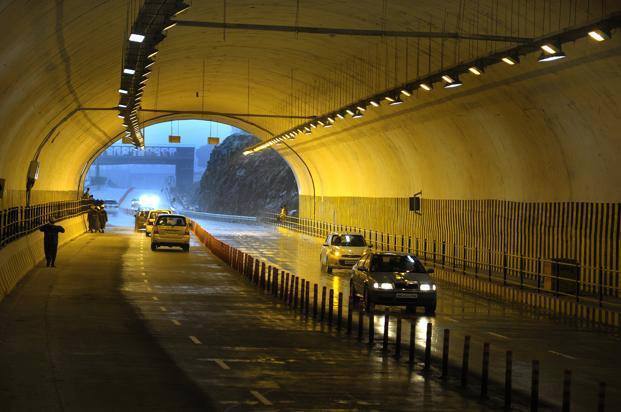
The Chenani-Nashri road tunnel. Photo credit: Greater Kashmir.
In April, the Indian Prime Minister Narendra Modi inaugurated the Chenani-Nashri road tunnel. The country’s smartest road tunnel cuts through the heart of the Himalayas and is 10.9 km long. The tunnel took seven years to construct and will cut the distance between the towns of Chenani and Nashri from 41 km to 9.2 km. The tunnel also contains 124 CCTV cameras, which are monitored and streamed to the police stationed outside, and carbon dioxide exhaust monitors linked to a state-of-the-art ventilation system to regulate air flow.
Keeping Kuala Lumpur moving
The Asia Pacific region is at the forefront of smart tunnel innovation both for transport and vital community support. The SMART Tunnel in Kuala Lumpur won the UN Habitat Scroll of Honor Award for its innovative and unique management of storm water and peak hour traffic.
Harsh conditions
The hardened network
Going where standard networking cannot go





Stay updated on the go with our mobile app.
Get latest insights with smoother, more personalized experience through TIA mobile app.