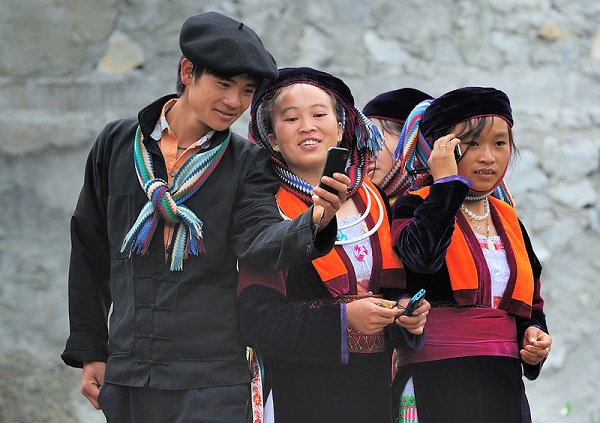
Children in Vietnam using their mobile phones. Photo credit: Trung Vo Chi
Back in 2013, cloud software in the public mind consisted of Dropbox, Microsoft, and Google’s ‘one-size-fits-all’ solutions. If you wanted to get into cloud, the smaller freemium cloud startups had just started to fold (BitCasa, SygarSync) and overall, most insiders would’ve warned against attempting a cloud startup.
Yet, mobile service providers (MSPs), like AT&T and Verizon, were rolling out their own cloud platforms – quietly occupying a surprising 35 percent market share. When we examined their cloud services, and having worked on LG’s potential cloud platform, we knew we could do better.
With that vision, in 2013, myself and 5 other ex-LG cloud employees launched Cloudike to take our own swing at MSPs across the world.
We would later find out the marching was the easiest part on the path to global startup success.
In search of cloud
We started by looking to regions that were still growing their network infrastructure – most of them a couple of steps away from adopting cloud usage. This included regions like Southeast Asia, Eastern Europe, and the Middle East. In actual terms, we were targeting roughly 2 billion people.
The market research was very promising. In regions like Eastern Europe, nearly 81 percent of all internet users in 2015 were accessing the web from their phones, processing close to 550,000 terabytes a month; in 2016, that number is expected to jump to 87 percent of mobile internet users processing 950,000 TBs a month in the region.
In other regions like Southeast Asia, countries like Vietnam and the Philippines are just starting scratch at the growing number of cloud users thanks to increased web connectivity and infrastructure.
One country, many challenges

Sample interface for Cloudike
Now our product isn’t culturally offensive or damaging to local businesses, yet we faced surprising logistical and regional challenges each time we sought to enter a new market.
For example, Russia and some of its immediate neighbours in Eastern Europe face serious internet security issues. Therefore, web security and user authentication implementation become increasingly complex. This is especially the case for MSPs, as they have access to sensitive customer information.
When we first launched Cloudike with Megafon in Russia (a cool 62 million customer base), users were having a hard time logging in. Given that MSPs typically don’t beta test new software or services (though they do go through extensive testing), our launch and product testing were rolled into one phase. We had to address issues as soon as they came up, so that Megafon and their customers could access their cloud and be protected from potential hackers.
In Southeast Asia, setting the right prices was a new challenge. We came to understand that customers in Southeast Asia had much lower revenue per user (RPU) than customers in say, Korea or Russia. Hence, when negotiating with MSPs in Southeast Asia, we had to explore alternative methods of pricing, such as a combination of profit sharing with lowered monthly maintenance fee.
A very guarded gate
Mapped and ready





Stay updated on the go with our mobile app.
Get latest insights with smoother, more personalized experience through TIA mobile app.