- Insights This article was written by a TIA community member. Insights pieces undergo the same rigorous editorial process that newsroom-produced articles have.
 Ofir Dor · · 4 min read
Culture, AI, and regulations: Challenges of Chinese-Israeli business relations
Having spent the past decade living and working in Hong Kong and Beijing, investor Amir Gal-Or is one of the early advocates of tightening business ties between China and Israel.
Gal-Or is the founder and managing partner of Infinity Group, an Israeli-Chinese equity fund. He also received the China Government Friendship Award, the highest honor bestowed on foreigners by the Chinese government, in 2017.
According to Gal-Or, while Chinese interest in Israeli technology is on the rise, cultural divide and restrictive regulations mean that business opportunities between the two countries are still constrained. Relations between the countries will need to mature for a decade or more before Chinese companies can make big acquisitions like Intel’s US$15.3 billion acquisition of Jerusalem-based auto tech company Mobileye.
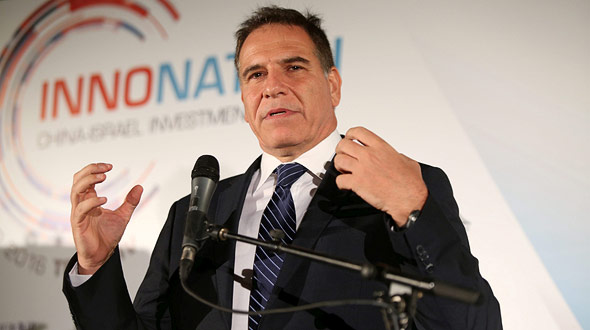
Amir Gal-Or / Photo credit: Amit Sha’al
Sino-Israeli deals
In recent years, Gal-Or has served as chairman of the annual Innonation China-Israel Investment Summit, which connects Israeli technology companies with potential investors and collaborators in China. Since the first summit in 2016, 500 Israeli tech companies and over 15,000 Chinese investors and strategic partners have attended the event, yielding over US$4 billion in proposed investments.
While Israeli interest in China has risen in recent years, a thought persists among some Israelis working with China: the buzz exceeds actual results.
Dozens of brokers are working to connect Israeli technology with Chinese money. But notable deals such as Bright Food’s acquisition of Tnuva, an Israeli food processing company, and ChemChina’s acquisition of Adama Agricultural Solutions Ltd., are few and far between.
“Many of the deals remain undocumented,” said Gal-Or. “At Infinity, we reported about 5 percent of the investments we made.” About a year and a half ago, the Chinese government closed the tap on investments outside of China, and Chinese companies must now go through an arduous bureaucratic process to close deals abroad.
“We see much fewer deals where one company invests millions in another company, and more deals where companies exchange knowledge, research and development partnerships, and consulting agreements. These deals receive less attention,” Gal-Or shared.
But according to him, these smaller deals are “seeds that will ripen.”
Regulations and cultural differences
In addition to regulatory restrictions, cultural differences create a challenge for Israeli companies looking for business opportunities in China. Israeli entrepreneurs, many of whom studied or worked in the US and Europe, have learned to adapt to that business world. China is a different story.

Beijing / Photo credit: China Daily
“In China, the main problem is data,” Gal-Or said. “There are half a million companies here, and you cannot simply find information about them online—not even in Chinese.” According to him, while Israelis want “Chinese money” or a bigger share of the market, Chinese companies are interested in “knowledge transfer” and deep technologies.
Working together on AI





Stay updated on the go with our mobile app.
Get latest insights with smoother, more personalized experience through TIA mobile app.








📅 Upcoming Events
22 October 2026
Payoneer x CSPN Summit 2026