- Insights This article was written by a TIA community member. Insights pieces undergo the same rigorous editorial process that newsroom-produced articles have.
 Ajay Shrivastava · · 4 min read
Minimum viable technology (MVT) : move fast and keep shipping at your startup
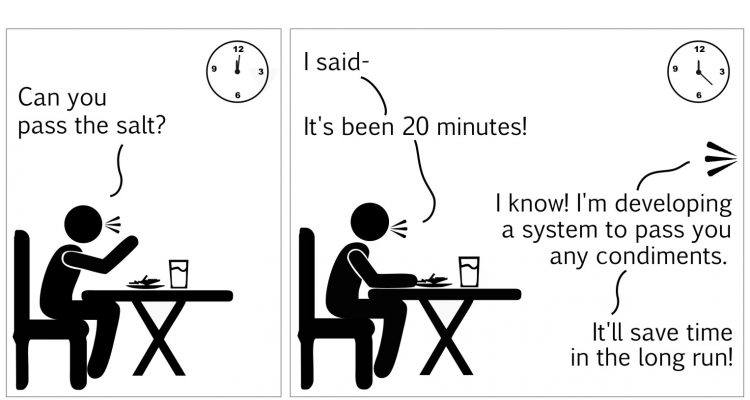
Photo credit: Xkcd.com and Vasundhara Mehra.
Technology teams can be the biggest asset or worst bottleneck for a growing company depending on their strategy. In the name of future proofing engineering, technology teams become a hurdle to a company’s goals. You can see the hidden frustration in Bezos words below:
“Engineers should be fast acting cowboys instead of calm clear-headed computer scientists .”
Rampant problem in the industry
When the task is to build a bike, the product and technology teams tend to plan for a product which can run on motor, seat four people, sail the seas, and even fly in the future. This hypothetical building of a castle in the air digresses from the real problem. This is what Bezos says to refrain from because it wastes resources and delays the time it takes to get the product to market.
In other words, technology teams build cannons for killing birds.

The evolution of the MVP philosophy
The philosophy of the minimum viable product (MVP) evolved to avoid this unnecessary over-thinking and over-preparation, which plagued all companies. It encouraged teams to build only the minimum required at a certain point of time and then iterating and improving it going forward. The MVP approach enables fast experimentation and the fail-fast-and-invest-where-needed strategy.
However, no such philosophy evolved for technology. Therefore, the decades-old defensive and paranoid philosophy still prevails (which was much needed during older 1–2-year long waterfall releases). This becomes a competitive disadvantage for fast-growing startups and those fighting for survival.
The fundamental problem is that the engineers blindly copy large company strategies, considering them to be the standard. Corporates and startups differ widely in their needs relating to scale, brand, speed, a feature’s impact, and losses from bugs. Startups enjoy more freedom to make mistakes, which they should exploit to their benefit.
Strategies used in big companies are more often irrelevant and even detrimental to a small growing company’s interests.
Minimum viable technology (MVT)
The solution to the above problems is to build the minimum technology that makes the product and its foreseeable iterations viable. Make it live a.s.a.p. and then iterate and improve it based on real usage learnings. Every company is in different stages of evolution. Something that is MVT for a big company, can be over-engineering for startups.
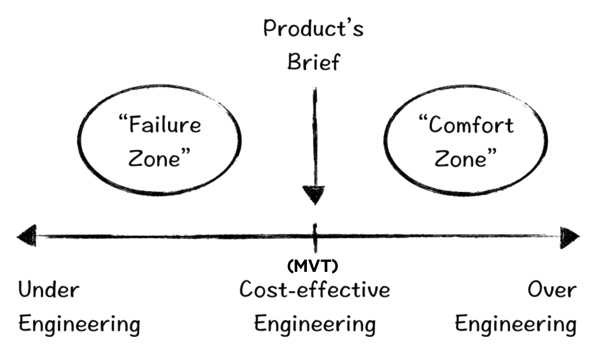
If the task is to kill a bird, we should only build a small-gun or catapult, to begin with. If that becomes successful and there is a need to kill larger animals, then bigger guns and cannons should be built as required.
“There is nothing so useless as doing efficiently that which should not be done at all.”
Principles of MVT





Stay updated on the go with our mobile app.
Get latest insights with smoother, more personalized experience through TIA mobile app.













📅 Upcoming Events
22 October 2026
Payoneer x CSPN Summit 2026