- Insights This article was written by a TIA community member. Insights pieces undergo the same rigorous editorial process that newsroom-produced articles have.
 Taha Effendi · · 4 min read
Quantum physics paving the way for a hack-proof internet
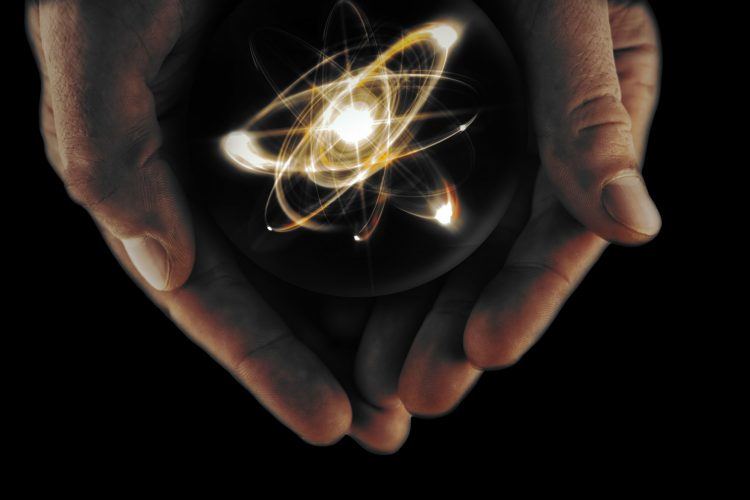
Photo credit: mackoflower / 123RF Stock Photo.
From ransomware and Trojans to faceless hackers and “two-faced” malware, the malicious nature of cyber threats continues to evolve at the same pace as breakthroughs in cybersecurity. Today, hackers have the means to pull off highly sophisticated cyber attacks that can take down businesses, take governments hostage, or even take down a huge swath of the web with one single attack!
This rapidly evolving data security landscape has pushed governments (and businesses) into a virtual arms race, prompting hackers to do research and development on more efficient cyber security technologies.
And it seems that all their efforts have finally paid off.
NASA’s quantum leap in data security
Scientists at NASA have developed what could be hailed as the Shield of Aegis of the digital multiverse — a breakthrough technology that, quite surprisingly, comes from the realm of Quantum Physics. According to a recently published research paper by Nature Photonics, scientists at NASA’s Jet Propulsion Lab have successfully set up the first ultra-secure hack-proof “Quantum Internet.”
But can the internet really be “hack-proof?”
When we look at traditional encryption, the strength of a key is measured by the number of digital bits it uses. To a novice hacker, the 256-bit encryption which is commonly used today would take a ridiculously long time to crack.
Quantum encryption is the holy grail of truly secure communications.
“But not all hackers are noobs,” argues Eduard Yegor, data security expert and manager of global marketing for Russia-based Ivacy VPN.
“Although many people tend to ignore it, the risk is very much real, even in the virtual space of the internet,” he adds. “Brute force decryption techniques, for example, have played an important role in rendering current encryption methods highly susceptible to interception.”
At the other end of this digital spectrum is the concept of Quantum Internet, which uses cryptography that is based on the intrinsically random nature of quantum mechanics. By generating a digital key based on a random set of numbers, quantum internet ensures that the key is practically impossible to crack.
Scientists at NASA achieved this breakthrough by firing a photon laser through a metropolitan fiber cable network that causes the photons in the laser to entangle. While the phenomenon has been routinely simulated in lab settings, this is the first time that the experiment was successfully executed over a long distance of 6 kilometers, within an actual city (Calgary).
When asked to comment on NASA’s recent breakthrough in the field of quantum key encryption, Kevin Curran, senior member of the IEEE and senior lecturer in computer science at Ulster University, had this to say:
“Quantum encryption is the holy grail of truly secure communications. It is considered secure as any attempt to eavesdrop on the communication link can be determined. The information can quite simply not be copied either as quantum physics forbids the cloning of an unknown quantum state. This offers an information-theoretically secure solution to the key exchange problem which will render many public-key algorithms obsolete.”
Concept based on fiction
A new world of possibilities





Stay updated on the go with our mobile app.
Get latest insights with smoother, more personalized experience through TIA mobile app.