 Dr. Serkan Toto · · 4 min read
Why Apple banned Mixi’s Monster Strike, or: what are serial codes?
Mixi (2121) still hasn’t given an official reason why Apple pulled its mega hit Monster Strike from the Japanese App Store over the weekend (they are not obliged to), but the answer seems to be relatively simple.
As I mentioned on Saturday (the day the app went offline), the official Monster Strike page was updated with a curt explanation according to which Apple found the “serial code input form” inside the iOS app problematic.
Monster Strike couldn’t be found or updated in the App Store between around 5.30pm on Saturday until shortly before 1am on Sunday. It can be estimated that Mixi lost around US$600,000 during the time frame (the Android version was not affected).
What Are Serial Codes?
Serial codes are strings of numbers and/or letters that mobile game users can enter into an in-app form to receive special items or currency. In some cases, these items cannot be received in any other way (by paying for them or just playing the game in question).
Serial codes (also known as referral codes) are by no means specific to Japanese mobile games, but I would say that developers over here use the feature much more aggressively than Western ones.
Examples For Serial Codes
Game makers are giving away items if a new user types in a friend referral code (the friend, an existing user, gets the item), send codes to people who pre-register (the user needs to input that pre-registration code when they first open the app to get a special reward), distribute serial codes at real-world events, etc.
In other words, serial codes are tools developers can use for promotion, retention, and user acquisition.
Here is a screenshot of the App Store page of Brave Frontier where Japanese users share their codes inside the reviews (they get in-app currency for free once another player inputs that code):
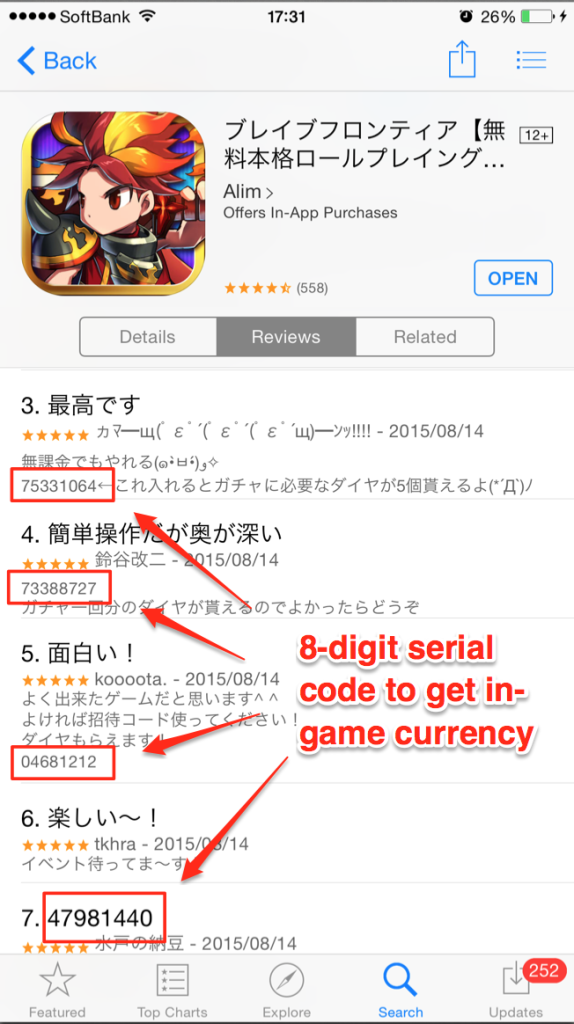
Again, this is not specific to Japan, but code usage is much more extreme here.
As just one “Japan-only” example, there exist a range of printed mobile game magazines whose primary selling point are serial codes that can be used inside the corresponding games to get unique items.
Here is a screenshot I made of one my magazines (Appli Fan Vol. 4 from 2012) just now:





Stay updated on the go with our mobile app.
Get latest insights with smoother, more personalized experience through TIA mobile app.









📅 Upcoming Events
22 October 2026
Payoneer x CSPN Summit 2026