- Insights This article was written by a TIA community member. Insights pieces undergo the same rigorous editorial process that newsroom-produced articles have.
 Dave Chang · · 5 min read
We built a fast-growing K-beauty business in a year. Here’s how.
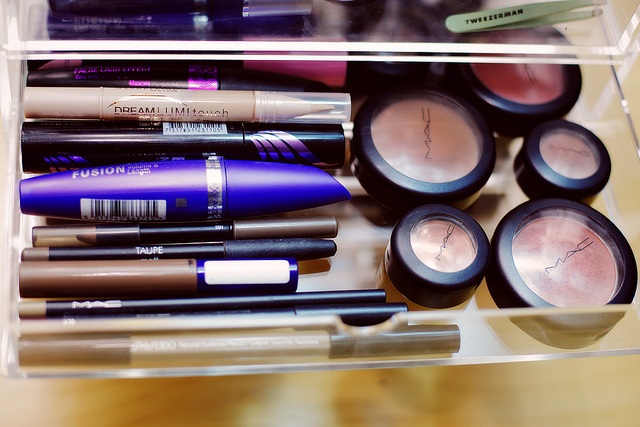
Photo credit: Maria Morri/Flickr.
Let me preface this by saying I truly believe that at least half of success in business can be attributed to luck; the other half is execution. Although it’s fruitless to try and document something as idiosyncratic as luck, I’ll discuss what I believe were the key principles that allowed us to scale our business to where it is today.
Althea.kr is a Korean beauty ecommerce business. We were founded in Malaysia in July 2015; in the past year, we have expanded our operations to Singapore, Philippines, Indonesia, and Thailand. Within a year, Forbes recognized us as the largest Korean Beauty website in Southeast Asia with an annualized revenue run rate of US$10 million (editor’s note: according to the author, this was calculated from taking a month’s worth of gross revenue and multiplying it by twelve. He did not disclose which month it was).
Luck aside, I think we can attribute our ability to grow so quickly to three principles – focus, localization, and financial discipline.
1. Focus
Althea focuses exclusively on one niche – Korean Beauty (K-Beauty). In the past 10 years, the K-Beauty industry has experienced a CAGR of 33.8 percent; a significant amount of that demand comes from Southeast Asia. We estimate that the addressable market for K-Beauty in the region alone will be US$8 billion by 2020.

Google search interest in keyword ‘Korean skin care.’
Side note: Why K-Beauty is popular
The unique dynamics of the Korean market help explain the popularity of K-Beauty. It comes down to the fact that Korea is a small country with a demanding and fickle population.
Companies are constantly under pressure to innovate and create new products in order to meet the differing demands of consumers and to stay relevant. In traditional beauty companies, it takes approximately two years to create a new product, whereas Korean companies do so within months. One of the best examples of this hyper-innovation is highlighted in the unique ingredients used in K-Beauty products ranging from snail mucus and horse oil to egg whites.
There are over 10,000 K-Beauty brands in Korea, but less than 100 of them are available in Southeast Asia.
Despite the high demand for K-Beauty, it’s extremely difficult for consumers to purchase K-Beauty products in most parts of Southeast Asia. The first challenge is the limited selection – there are over 10,000 K-Beauty brands in Korea, but less than 100 are available in Southeast Asia. Why: demand in Southeast Asia is growing, but is still small relative to Korea’s domestic market and their main export market, China. Moreover, the available brands usually only offer a limited selection of their top sellers, not the full product line.
The second challenge is pricing. In other parts of the world, K-Beauty is known as a value-for-money product. But because of distribution agreements and import duties in Southeast Asia, customers often pay up to 100 percent more for the same product. For example, Laneige sells its Water Sleeping Mask for 28,000 KRW in Korea, but it costs approximately 35,000 KRW if a consumer purchases the same product in Singapore.
2. Localization
3. Financial discipline
Conclusion





Stay updated on the go with our mobile app.
Get latest insights with smoother, more personalized experience through TIA mobile app.











📅 Upcoming Events
22 October 2026
Payoneer x CSPN Summit 2026