- Insights This article was written by a TIA community member. Insights pieces undergo the same rigorous editorial process that newsroom-produced articles have.
 Tak Lo · · 3 min read
4 things that affect AI startup acquisition price

Photo credit: Global Panorama.
AI startups have grabbed the recent headlines on exit activity. These headlines are a confluence of multiple trends, including the lack of 2016 exits, the increasing acceptance of AI as a core technology, and the largest acqui-hire in history through DeepMind.
But as common as AI acquisitions have been, the understanding of the process has been and still is pretty opaque.
AI acquisitions club
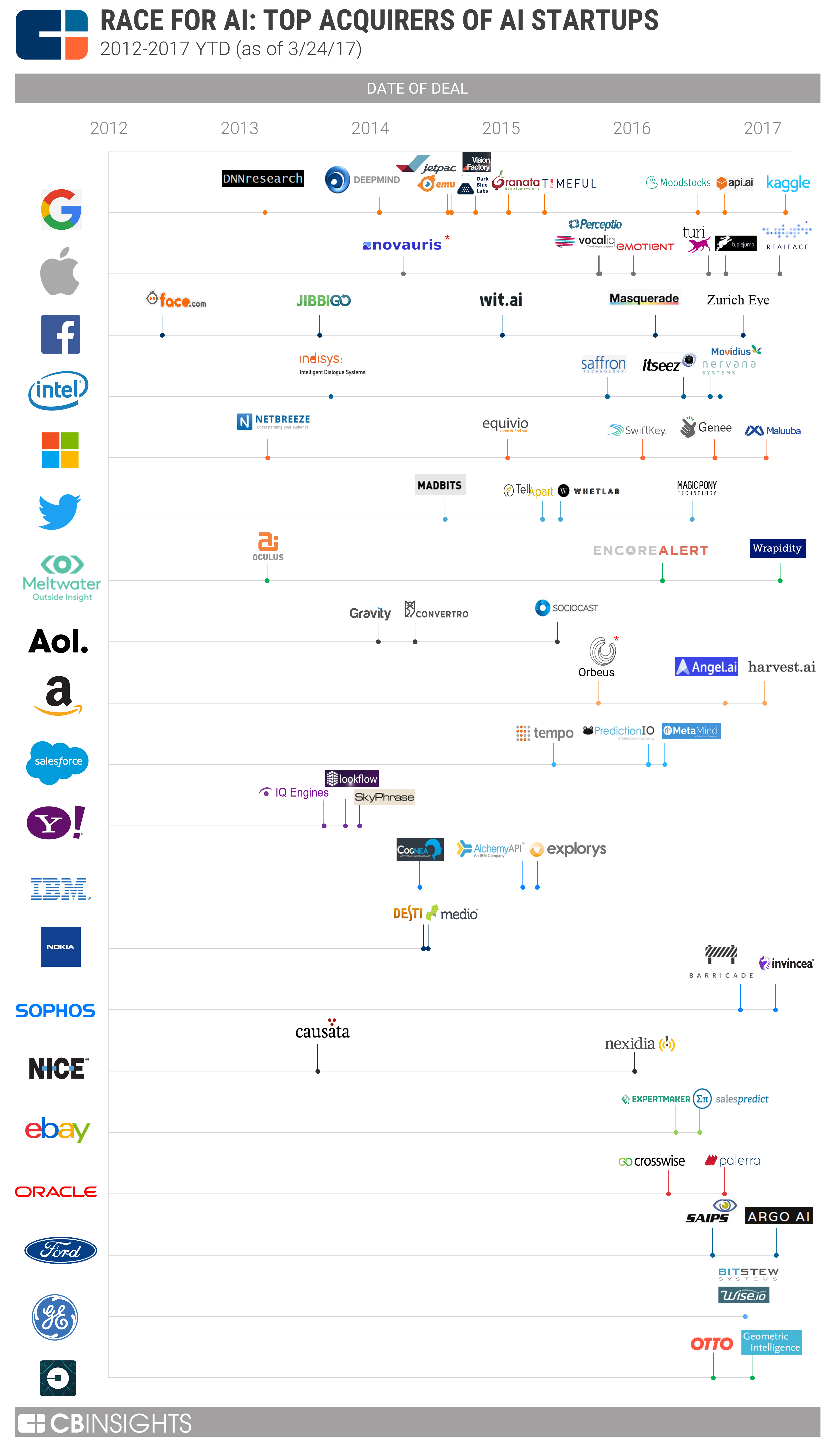
Part of the opacity is the differences per acquisition deal. Some deals will be executed quickly due to familiarity between the acquirer and acquiree (see Gnips and Twitter), and some will be a much longer ordeal. Some will be executed very smoothly with both sides being happy, and some disappear into the sunset because of bad negotiation, timing, or players. Some force relocation of a startup into the parent company’s headquarters, and some, like Pie in Singapore, is the bedrock for the parent company in a new market.
However, like in most things, there are patterns to be discerned. These patterns serve to provide a framework for future acquisitions to happen and to pave the way for future processes. This framework serves as a guide and should improve over time.
4 elements of acquisition pricing
There are four distinct elements of how an acquisition is priced. These elements are interrelated and the ultimate price may be a factor of one or all four of these elements. For clarity, acquisitions of public companies are not considered since they are already priced by market forces. Furthermore, these four elements are in the order of importance, from most to least.
Strategic intent
The first element is the acquirer’s strategic intent. It is important to assess why a possible acquirer is interested based on the factors of product, team, or the opportunity cost of not acquiring.
In some cases, the motive behind an acquisition is for an acquirer to accelerate development in a product, with human resources that are not currently available within the acquirer’s company. Thus, it is cheaper to acquire a startup that has been developing in the space than to organically build a team from nothing or divert resources from other products.
Product
The second element of an acquisition is product or, more specifically in the case of AI startups, the core tech and algorithms. Acquirers often have existing data but no idea how to utilize the data they have. On the other hand, AI startups have product and algorithms that effectively use data and can generate significant accretive value. The leverage is understanding what data is needed to generate value, find acquirers that have that data, and target acquirers that will benefit significantly from a product integration.
Team





Stay updated on the go with our mobile app.
Get latest insights with smoother, more personalized experience through TIA mobile app.