Collin Furtado · · 3 min read
Openspace Ventures’ new follow-on fund to raise around $100m in first close
What do startups such as super app Gojek, digital therapeutics startup Biofourmis, agritech firm TaniHub, and livestreaming app Kumu have in common? Yes, they’re all from Southeast Asia. But there’s another point of connection: These companies were all backed by early-stage venture capital firm Openspace Ventures.
Launched in 2014, Openspace aims to support startups in Southeast Asia by participating in their series A and B rounds. Since its inception, the company’s portfolio has grown to include 33 investments across sectors such as logistics, fintech, agritech, edtech, healthtech, cleantech, and B2B software-as-a-service.
It’s now looking to raise US$200 million for its new follow-on fund, OSV+, gunning to gather close to half of the targeted amount in the fund’s first close in the second quarter of this year, said a source with knowledge of the development.
This would mean that Openspace is eyeing to raise around US$100 million in the first close.
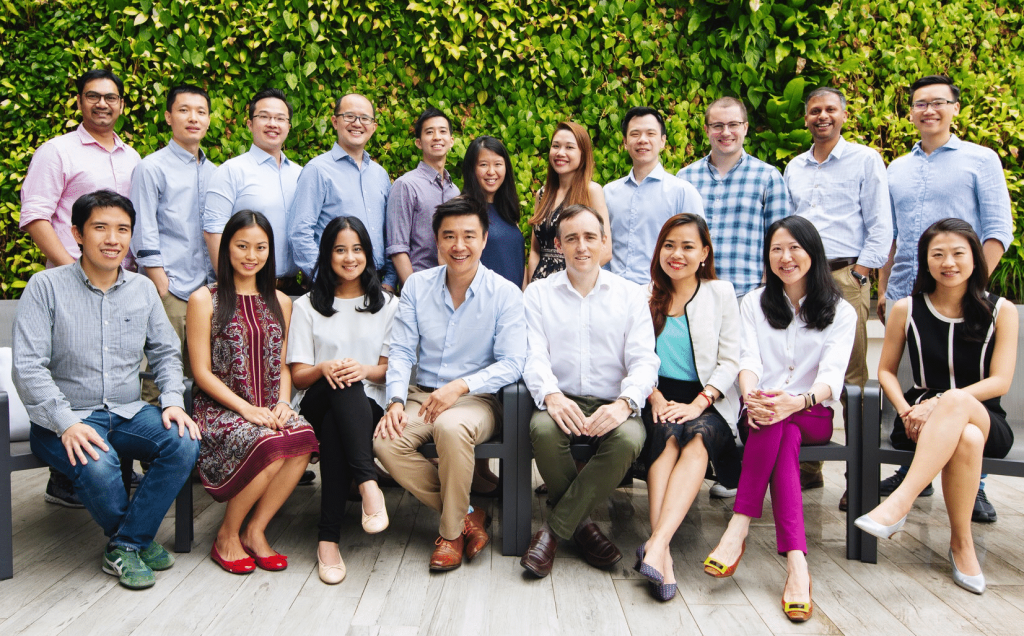
Photo credit: Openspace Ventures team
The new fund will focus on investing in the series C stage and follow-on rounds of its portfolio companies. However, OSV+ will have the flexibility to back companies that it hasn’t yet invested in.
The fund will look to invest in about eight to 10 portfolio companies, with a ticket size of around US$15 million to US$20 million per investment.
In September last year, OSV+ already participated in the US$100 million series C round of Biofourmis.
Once it completes the final close of this fund, Openspace will have US$625 million in committed capital across four investment vehicles.
The news on OSV+ comes on the heels of the company raising US$200 million in the final close of its third fund last month. Investors in the third fund include Germany’s DEG, Norway’s Norfund, the US’ 57 Stars, and Japan’s Mizuho Financial Group.
Leading the way for Southeast Asia-focused VC funding
The company has secured a distributed paid-in (DPI) capital multiple of 1x on its US$90 million Fund 1, added the source. This means that investors are at breakeven, getting back the principal capital they invested in the fund. DPI is a measure of the cumulative investment returned to the investor relative to the total invested capital.
The feat could be attributed to the exits of some portfolio companies such as TradeGecko, which was sold to Intuit in 2020, and Whispir, which listed on the Australian stock exchange in 2019.
According to data from Cruchbase, other portfolio companies like Redmart and Jualo have also exited. However, these portfolio companies could be part of the second fund and not Fund 1.





Stay updated on the go with our mobile app.
Get latest insights with smoother, more personalized experience through TIA mobile app.