 Jonathan Chew · · 5 min read
How sustainable proteins can meet the world’s food needs

In recent years, plant-based meat alternatives have been popping up more often in consumer foods. With companies such as Impossible Foods and Beyond Meat inking deals with the likes of Walmart and PepsiCo, respectively, the growing presence of plant-based meat reflects a steady growth of consumer demand for alternative sources of protein.
Much of this growing demand is driven not just by concerns over animal welfare, but also by environmental considerations. The consumption of meat from traditional livestock sources poses a huge threat to the environment – the processes needed to meet the consumption of 350 million tons of meat each year is responsible for the equivalent of 7.2 gigatons of carbon dioxide emissions. This accounts for almost two-thirds the total amount of carbon dioxide generated due to food-related reasons.

From left to right: Aaron Yeo, director of operations at Good Meat, Seck Yee Kwang, director of the Agri-Food and Consumer Industry Cluster at ASTAR, and Tan Ying Quan, head of people and partnerships at Barramundi Group / Photo credit: ASTAR
“What we eat contributes to climate change and is harming our planet,” says Seck Yee Kwang, director of the Agri-Food and Consumer Industry Cluster at the Agency for Science, Technology and Research (ASTAR). “If we do not change this, we risk going down a dangerous path.”
To help avoid this, ASTAR, a statutory board under the Ministry of Trade and Industry in Singapore, is hoping to drive further innovation in the production of sustainable proteins.
Under the sea
One popular source of sustainable proteins is aquaculture farming. This process involves rearing aquatic organisms in controlled environments, which can then be sold off for consumption as seafood. The industry is already making great strides, with global fish production expected to expand from 179 million tonnes in 2018 to 204 million tonnes in 2030. Asia, in particular, is seen to be responsible for more than 89% of this growth.
The reason why aquaculture farming is popular as an environmentally-friendly option is that its feed usage is roughly 2x to 4x more efficient compared to the feeds used for livestock such as pigs and cattle. This cuts back on feed production, a process responsible for roughly 45% of the greenhouse gas emissions in livestock farming.
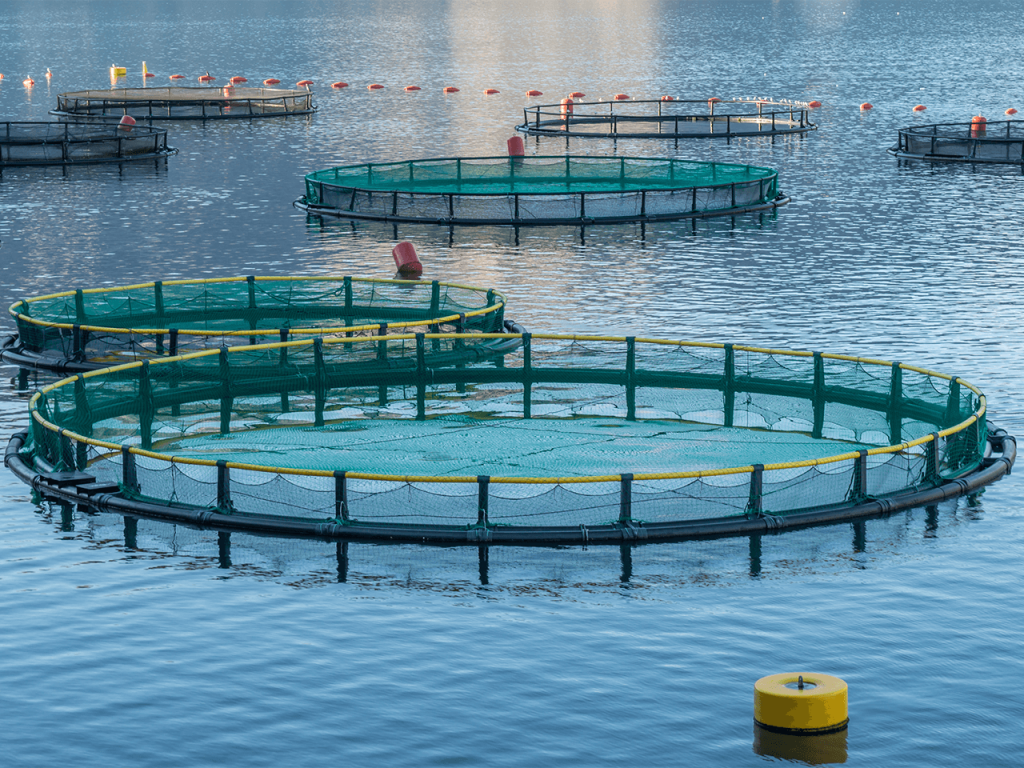
However, despite the promise of aquaculture farming, there are still some challenges that the industry has to contend with before it can seek to replace conventional meat production. One such challenge is rising sea temperatures due to climate change.
According to Tan Ying Quan, head of people and partnerships at Barramundi Group, higher water temperatures could make the fishes reared by aquaculture firms more susceptible to diseases.
“With rising temperatures, there’s a more suitable environment for pathogens and viruses to thrive,” he explains.
To overcome this issue, Tan notes that vaccines could be developed to help protect fish health. In this area, he said that Barramundi Group, which farms and harvests barramundi fish, has partnered with ASTAR to develop its own vaccines.
Apart from fish health, another challenge for aquaculture farms is ensuring the sustainability of their business model in the long run.
Tan points out that for Barramundi Group, fish feed carries the highest business cost. This makes optimizing feed usage one of the firm’s top priorities for its long-term sustainability. For this, the company is exploring additional options such as high-performance feed, which could improve fish growth more efficiently and lead to increased profit margins on each fish.
Cultivating lab-grown meat
Another sustainable source of protein is cultivated meat, which involves harvesting animal cells that are grown and multiplied in a controlled environment, eventually forming the muscle tissue that people normally consume.
“Because we produce actual meat without killing or tearing down a single tree, we present consumers with a sustainable and ethical choice to still consume meat,” says Aaron Yeo, director of operations at Good Meat, which processes cultivated meat.
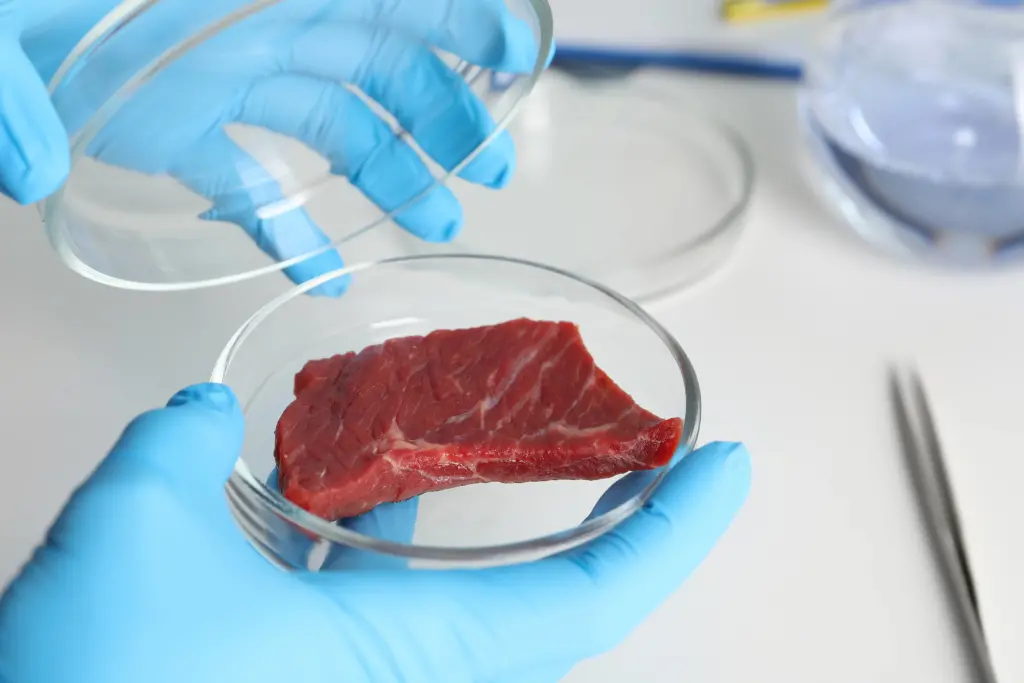
Photo credit: belchonock / 123RF
He notes that cultivated meat is seeing growing acceptance and enthusiasm from consumers of all ages. Younger individuals are drawn to the fact that they can consume meat without indirectly contributing to animal slaughter. Meanwhile, older consumers view its benefits from a nutritional standpoint – because the meat is cultivated in a controlled environment, it would be less likely to have foreign microbiological entities and heavy metals, Yeo explains.
However, despite growing consumer acceptance, the industry still has to grapple with major concerns over its own sustainability, according to Yeo.
The process of cultivating meat can be energy-intensive, which means that it could potentially cause more problems than it solves when it comes to the environmental effects of food consumption.
The silver lining is that meat cultivation itself is not the issue, Yeo points out. Because it relies on heavy consumption of electricity, companies can instead alleviate this issue by ensuring that their own supply of electricity is as environmentally friendly or efficient as possible, such as through the use of renewable energy sources.
Strengthening support for sustainable protein advancements
In helping both of these sustainable protein industries to thrive, ASTAR has launched the Singapore Institute of Food and Biotechnology Innovation (SIFBI), which pulls together ASTAR’s research capabilities in areas such as biotechnology, clinical nutrition, food process engineering, and analytics. With the SIFBI, institutions and ASTAR’s industry partners now have a single touchpoint to support research and development.
Additionally, SIFBI and Temasek have announced a US$22 million partnership to set up the Food Tech Innovation Centre over the next three years, which This will provide aspiring foodtech startups with access to a fully-equipped facility for product development as well as to technical expertise from ASTAR.
Other key partnerships by ASTAR include the development of a US$105 million Singapore Food Story R&D program with the Singapore Food Agency (SFA) in 2019. This aims to strengthen the country’s capabilities across three key themes: sustainable urban food production, future foods, and food safety science and innovation.
As part of this program, ASTAR also collaborated with the SFA and Nanyang Technological University to launch the Future Ready Food Safety Hub in 2021. Through this initiative, ASTAR hopes to boost food safety related R&D capabilities, develop talent, and enhance food safety risk communications.
Through these efforts, ASTAR hopes to further support the growth of the sustainable proteins sector in the coming years, with the eventual goal of accelerating the transformation of the food industry and capturing new opportunities in sustainable food production for Singapore and other urban cities around the world.
The Agency for Science, Technology and Research (ASTAR) drives mission-oriented research that advances scientific discovery and technological innovation. It plays a key role in nurturing and developing talent and leaders for Singapore’s research Institutes as well as the wider research community and industry.
To explore collaboration opportunities, connect with ASTAR on its website.
This content was produced by Tech in Asia Studios, which connects brands with Asia’s tech community. Learn more about partnering with Tech in Asia Studios.
Stay updated on the go with our mobile app.
Get latest insights with smoother, more personalized experience through TIA mobile app.
Recommended reads
 Indonesian AI startup goes global
 Forrest Li on scaling Sea, building smarter bots, and founder grit
 An AI assistant that joins sales calls and scores team skills
 Beyond the check: Why VCs need more than capital
 SGX’s CEO says it doesn’t need a unicorn to win
 SMEs want AI too, but not the kind Big Tech is selling
 Oatside’s alt-milk rise hits a profitable gear
 Alibaba’s financial health in 12 charts
 Asia’s telcos bundle AI into mobile plans. Will it pay off?
 M-Daq chases bigger clients as revenue falls, losses grow





Editing by Winston Zhang and Lorenzo Kyle Subido
(And yes, we’re serious about ethics and transparency. More information here.)


