- Premium Content It takes our newsroom weeks - if not months - to investigate and produce stories for our premium content. You can’t find them anywhere else.
 Terence Lee · · 5 min read
The superpower behind Grab’s super app?
Some people in the tech community are skeptical of “super apps” not named WeChat.
But as I’ve written in the past, it’s a mistake to think that there’s just one flavor of super apps.
Grab, which calls itself the “everyday everything app,” recently announced that it’s listing in the US via a special purpose acquisition company (SPAC). The move, which has lit up the tech world, also lifts the veil on why Grab’s vision of a super app – and that of Gojek’s by extension – could be game-changing.
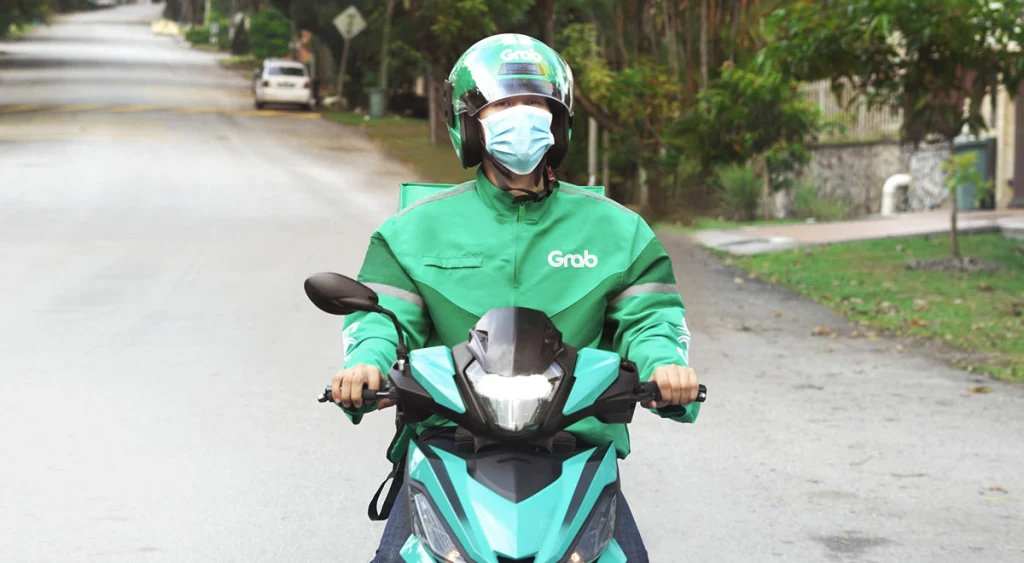
Photo credit: Grab
While its truncated presentation deck got the most attention from the business community, a more detailed version filed by Altimeter Capital Management, Grab’s SPAC sponsor, was more illuminating.
Grab’s superpower?
Grab claims that consumers are buying into its super-app concept. According to the company, an increasing number of its users have begun using two or more of its services, and they’re more likely to keep using the app if they do so.
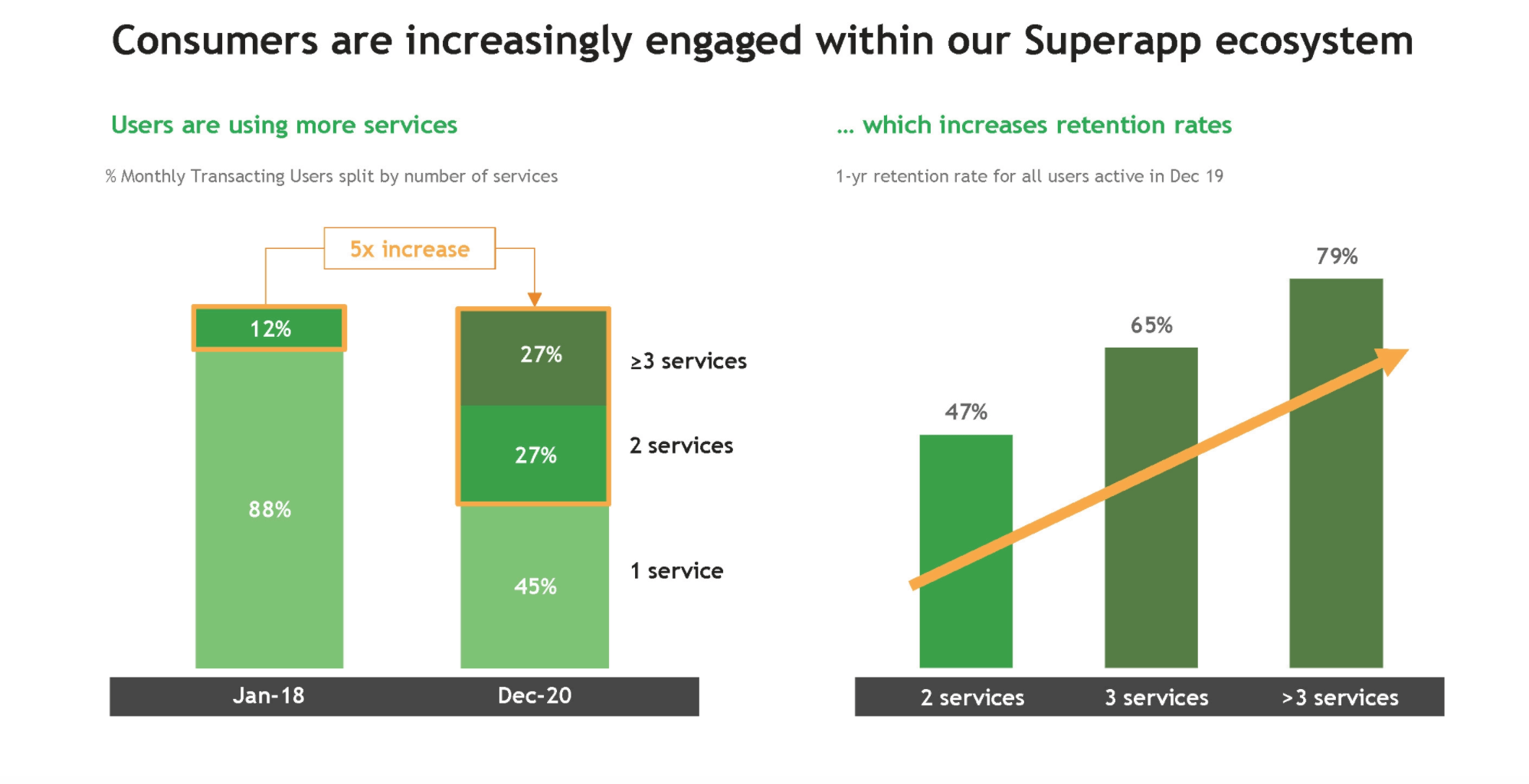
Image credit: Grab
In comparison, Alipay – the payments platform of China’s Ant Financial – claims that eight in 10 users use more than three categories of services.
The more compelling argument, however, is that being a super app improves Grab’s driver-partner network, which forms the backbone of its service.
This network may well be its secret sauce. The company argues that its super-app concept isn’t just skin-deep, citing how 59% of its two-wheel food delivery drivers also pick up passengers.
This creates a denser and more efficient network compared to competitors that offer just one type of service like ride-hailing, for example. It also leads to busier drivers that make more money, which means Grab needs to offer fewer incentives to retain them.
Because of this, Grab claims that its sales and marketing spending as a percentage of adjusted net revenue has been declining. Its use of driver and merchant incentives has also decreased.
This deep network partially explains why Grab’s delivery business, which ships food, groceries, and parcels, has been growing through the pandemic, and it’s expected to be its biggest growth driver in the future.
Stay ahead in Asia’s tech landscape
This is premium content. Subscribe to read the full story.
While Grab is best known for its consumer app, its secret sauce may be its network of thousands of drivers and merchants.
We know this is not ideal. ⌛ Sign up in 20 seconds. Cancel anytime.
Our subscriber community includes professionals from these companies:





Stay updated on the go with our mobile app.
Get latest insights with smoother, more personalized experience through TIA mobile app.









📅 Upcoming Events
22 October 2026
Payoneer x CSPN Summit 2026