 Stefanie Yeo · · 7 min read
The startup’s guide to navigating SEA’s fragmented payments scene

Just 10 years ago, a merchant in Southeast Asia could only receive payments from customers in a handful of methods, mostly through cash, credit cards, or bank transfers. Now, the ways in which Southeast Asian consumers pay have evolved significantly, with e-wallets, QR payments, and buy now, pay later, among other methods, rising to prominence in the region.
While this has proven to be a boon for consumers, it has created new challenges for the region’s businesses.
“As a merchant [in Southeast Asia], you have a long tail of alternate payment methods that you have to offer at checkout, and these vary on a country by country basis,” says Anantharaman Pattabiraman, co-founder and CEO of payments integration platform Inai. “If you want users to check out and buy on your platform, you basically have to offer all of these payment methods.”
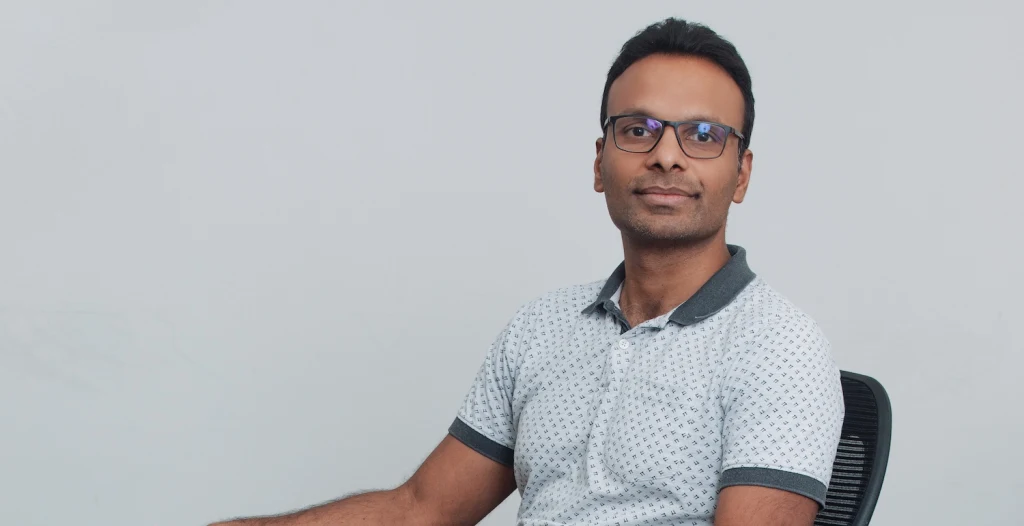
Anantharaman Pattabiraman, co-founder and CEO of Inai / Photo credit: Inai
In order to offer a large variety of payment methods that meet the needs of their users, businesses often need to work with payment processors and gateways to facilitate these transactions. However, this can lead to problems for businesses looking to sell to consumers across the region.
“There are very few players who offer a solution that works across all markets,” shares Pattabiraman. “If you scale your business across multiple geographies today in Southeast Asia, you have to work with multiple payment gateways, which then creates problems on the engineering and operations side of your business.”
On top of that, each payment method has its own flow. Some require a QR code to be scanned, while others redirect users to an app or involve a separate payment window altogether. Firms also need to accommodate different security and authentication protocols across and within different markets, as well as manage data across these multiple platforms.
The necessity of integrating all these disparate processes into a firm’s payment stack creates significant strain on engineering resources, diverting focus away from other aspects of the business such as product development.
However, firms cannot afford to deprioritize their payments infrastructure. Not having a consumer’s preferred payment options in place is detrimental to checkout conversions and can lead to cart abandonment rates as high as 80%.
How can merchants in Southeast Asia navigate this fragmentation? Pattabiraman shares some guidance on what companies can do.
1. Understand the landscape
Imagine a consumer in rural Indonesia trying to buy something on a shopping app. They navigate to the checkout page and realize that the company only accepts credit cards as a form of payment, something that the consumer doesn’t have access to.
What would they do? Quite likely, they’d make their purchase on a different platform.
Given Southeast Asia’s diverse population, it is essential that businesses understand the markets that they’re working in, making sure that they have the right payment methods in place that align with what their customers use.
“The first thing [companies] need to do is to identify these few things: What are the methods used by my customers in that country that I want to collect or make payouts to? What are the payment methods that are involved?” advises Pattabiraman.
For example, the payment preferences of consumers in Singapore would vary significantly from that of customers in Thailand. Singapore has high card penetration, with 65% of all ecommerce transactions being paid for by either credit or debit cards. On the flip side, cards are on par with bank transfers in Thailand as a means of payment for ecommerce purchases, with e-wallets such as TrueMoney becoming more commonplace.
To that end, a business operating in both Singapore and Thailand needs to ensure that it offers the right payment methods for consumers in both markets, even if they are accessing the firm’s services via the same website or app.
“You need to know, in the markets you’re in, what your customers want,” adds Pattabiraman. “That’s very important.”
2. Find the right partners
Payments are a complex process in Southeast Asia, given the fragmentation of the landscape and the sheer number of options available in the region. It’s near-impossible for a company to build its own payment gateway given the complexity of the endeavor and the resources required to do so.
As such, it’s necessary for businesses to work with payment processors and gateways that can help them facilitate these transactions. However, not all payment gateways are made equal, and companies need to identify the right partners that can meet the needs of the business and their customers.
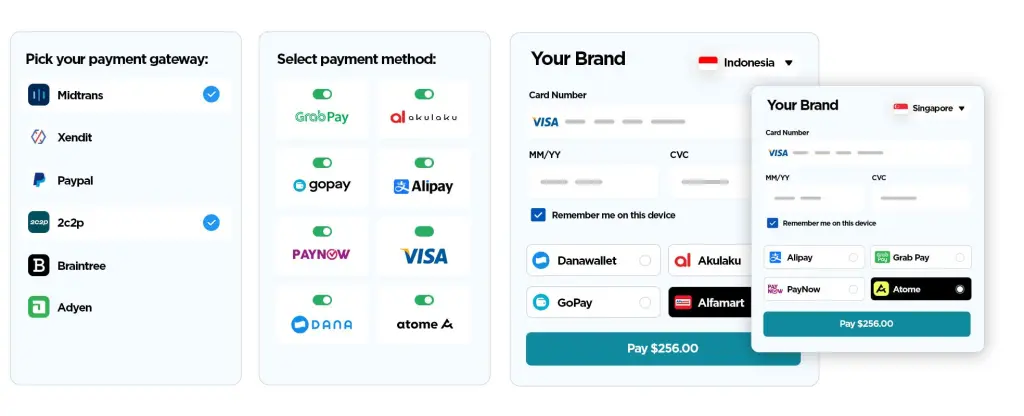
Image credit: Inai
“Businesses then need to ask themselves these questions: What are the payment gateways that support the payment methods we want to offer? What are the strengths and weaknesses of these payment gateways?” says Pattabiraman.
In his view, this is the part of the process that requires large amounts of research. Businesses need to consider the costs involved with using a payment gateway’s solutions, the downtimes they experience, their success rates, and the kind of documentation they offer for their APIs.
Firms also need to look at the kind of support that payment processors offer, especially in the larger story of a firm’s operations. These may include how the payment gateway manages failed transactions and how it helps companies navigate events such as chargebacks and disputes.
“What kind of support can [companies] expect from the payment partner on these fronts, both from a technical side, as well as from a finance and processing side?” adds Pattabiraman. “I highly encourage companies to evaluate their partners across all of these parameters.”
3. Don’t forget about the future
It’s important for companies to understand the existing needs of customers and strike up partnerships with the right providers to support these. However, firms also need to keep an eye out for new payment methods that may emerge in the future.
Consider BNPL – it was unknown in Southeast Asia just a few years ago, but it’s now a popular payment method in the region. Merchants who don’t offer it as an option may find that they’re losing out on an entire pool of potential customers.
As such, it is vital that businesses remember to future-proof themselves and be able to adapt to these developments, both in terms of the payment options they offer and the partners they work with.
“Companies need to ensure that they’re not constrained by one payment processor,” advises Pattabiraman. “This is especially important if you’re in a high-risk space like crypto – you absolutely don’t want your business to be beholden to a single processor, because it might turn you off and your entire business goes to zero.”
However, this is something easier said than done, given the complexity involved with integrating payment processors into a company’s payment stack. According to Pattabiraman, there are numerous APIs involved with each part of the process, from refunds to 3D Secure authentication to error handling and everything in between – and these are only for a single payment gateway. The process becomes more complicated when multiple payment processors are brought into the picture.
To that end, Pattabiraman suggests looking toward payment integration solutions that help companies skip this step by creating an orchestration layer that pulls everything together. Inai’s product, for instance, is an example of one such orchestration layer, pulling together all the different APIs and processes involved with payments into a single no-code platform.
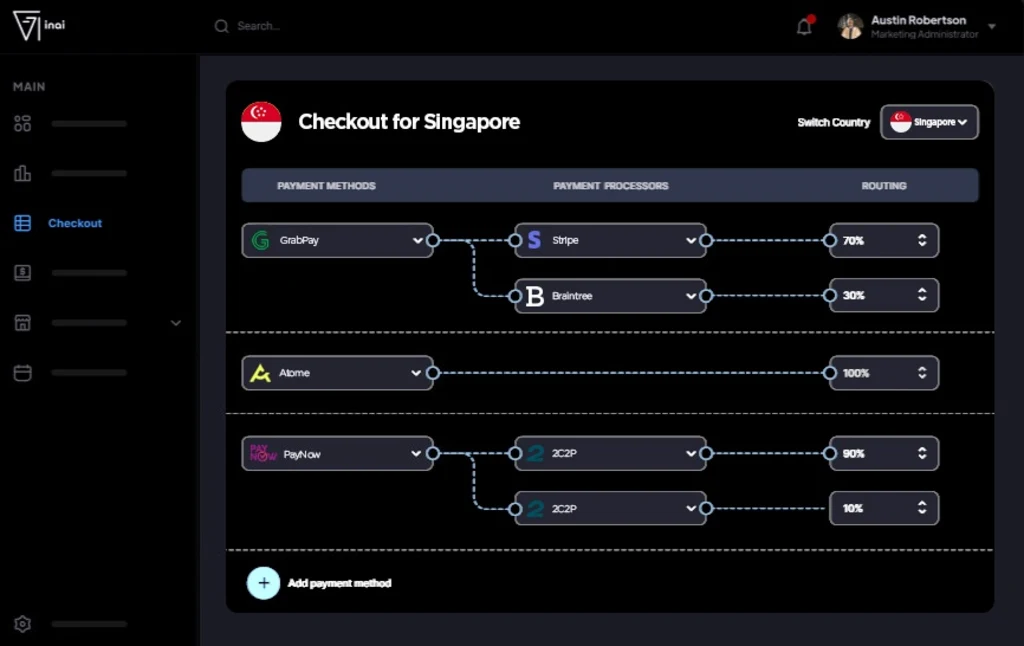
Image credit: Inai
The firm also provides a tokenization layer, allowing firms to safely and securely store customer payment data instead of outsourcing the process to an external payments processor. This facilitates a company’s movement between different payment processors, reducing the costs and hassle involved with doing so.
The use of an orchestration layer also makes it easier for product teams to run A/B tests on different payment methods and checkout processes, which improves a company’s operations in the long run.
“Companies don’t have to be constrained by engineering resources and can just have one orchestrator for all their payments,” explains Pattabiraman.
What’s next for Southeast Asia’s payments scene
In the CEO’s view, Southeast Asia’s payments landscape is only going to get more and more fragmented, especially with Web3 taking off in the region and cryptocurrencies becoming increasingly accepted as a means of payment.
In the face of this,businesses have to continually evolve their payments offerings, keeping an ear to the ground and adapting to the demands of their customers.
“Innovation will continue in this landscape,” says Pattabiraman. “Businesses need to stay ahead of the curve in terms of payments, be careful in terms of the choice of partners that they are making, and really think about future-proofing their stacks.”
Build a modern paystack with no code – Inai is a one-stop solution for payment integration.
Learn more about Inai on its website.
This content was produced by Tech in Asia Studios, which connects brands with Asia’s tech community. Learn more about partnering with Tech in Asia Studios.
Stay updated on the go with our mobile app.
Get latest insights with smoother, more personalized experience through TIA mobile app.
Recommended reads
 Visa launches Google Wallet feature in Malaysia
 Mortgage fintech: Indonesia’s next big consumer lending space
 Indonesia’s micro SMEs need a digital leg up. This company wants to help
 Indonesian agritech firm rakes in $2.5m in seed money to support middlemen
 Examining Alfamart’s and Indomaret’s digital moves
 Why Southeast Asia’s ecommerce players should prioritize customer loyalty
 Philippine fintech firm partners with Alipay+
 Shein’s rapid rise in Southeast Asia could topple ecommerce giants
 The pandemic hit rural SMEs hard. Here’s how Shopee helps them bounce back
 Tonik CEO on BNPL: ‘I prefer to call it sales finance’





Editing by Nathaniel Fetalvero and Lorenzo Kyle Subido
(And yes, we’re serious about ethics and transparency. More information here.)







📅 Upcoming Events
22 October 2026
Payoneer x CSPN Summit 2026