
So you’re a developer with a test-ready product and a specific tester profile in mind. What’s next?
With crowdtesting, the next steps are straightforward. By bringing together a diverse set of real-world testers, it delivers actionable feedback that helps businesses improve their product offerings and gives developers a chance to discern how users will perceive their apps once they go to market.
“Real-world testing is becoming an integral best practice for many leading companies as it provides the scalability and coverage needed to test in today’s software development lifecycle,” says Rob Mason, chief technology officer at digital crowdtesting service provider Applause. “It helps companies increase testing coverage, capacity, and flexibility, while also giving brands a true end-user view of their users’ digital experiences.”
This capability has led crowdtesting to gain traction among brands in Asia that aim to follow in the footsteps of global industry leaders. Many enterprises across North America, Europe, and beyond swear by crowdtesting, and they leverage it to better understand their customers and ensure that software releases meet the needs of their end users.
That said, crowdtesting isn’t just for large corporations – it can reap copious benefits for startups too.
The way it works is simple.
How it works
Testing teams are highly customizable. Every characteristic – from their location to the device used – can be determined by developers themselves. Depending on the desired outcome, companies can seek testers in the form of quality assurance and automation professionals or usability and accessibility experts.
Testers’ locations can also be scaled based on project specifications. Developers can go from worldwide to regional, even country-specific testing. Once teams are set, startups can work with testers over different projects or switch out team members when fresh eyes are needed.
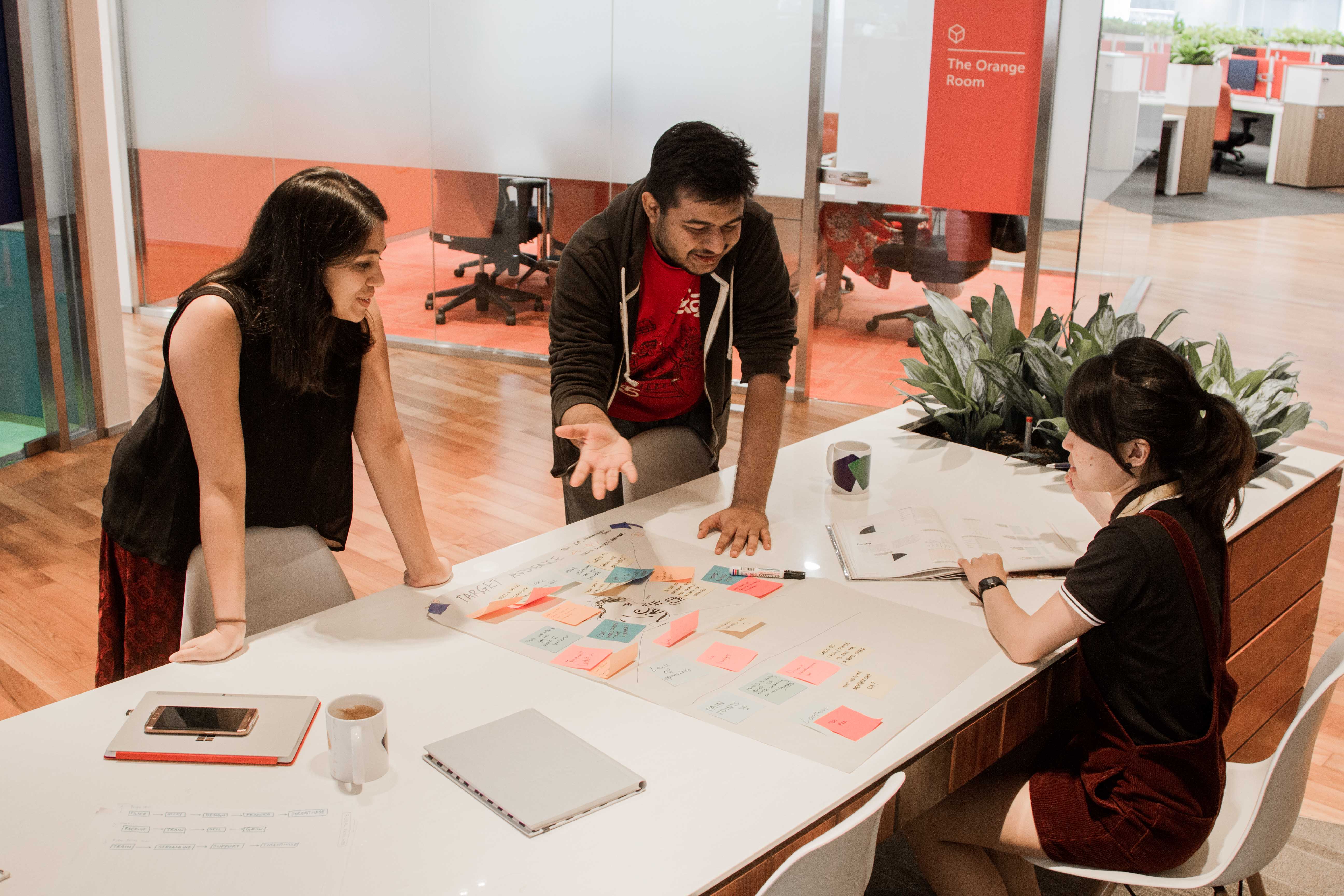
Photo credit: Level3.
So between locking in a team of English-speaking automation testers across Southeast Asia to putting together a team of Mandarin-speaking usability professionals in Indonesia, Japan, and Singapore – all of whom have a smartphone on hand – crowdtesting provides limitless opportunities to test products among people who look and act exactly like the target end user.
“The distributed model gives brands unparalleled scalability and time-to-results when compared to traditional testing methods,” explains Mason. “It also gives them unmatched speed and flexibility in scaling their release testing and expanding coverage as needed.”
But what’s in it for testers? For every high-value defect they find and every submission they send through, testers are paid for their contributions. There is also the possibility of earning more for submissions that are deemed highly valuable by clients. This encourages testers to focus on the issues that matter most to businesses.
While its application options are endless, developers can make the most out of crowdtesting in two ways.
The first scenario works best for those looking to uncover internal bugs. Vetted testers with prior quality assurance knowledge can be tapped to specifically seek out errors that the internal team might have missed.
The second scenario is for developers looking to elevate software user experience. Testers with little to no knowledge in quality assurance can be leveraged to give feedback on the intuitiveness of a product. And it doesn’t stop there: Testers can also be employed to do manual scripted, exploratory, and accessibility testing.
In short, it’d be like having a whole testing suite at your fingertips.
Crowdtesting is a friend to all
Crowdtesting’s flexibility and scalability make it a great solution for corporations and startups alike. But before startups jump to invest in it, it’s important to note the method’s limitations.
“Crowdtesting is typically used for external-facing experiences, not for internal systems,” Mason warns.
That said, the benefits far outweigh the constraints.
For one, it can help amplify startup efforts. Many startups may not have the internal resources needed to conduct tests using the full range of relevant devices and operating systems. They may not have the means to test in all necessary locations either. By working with crowdtesting solutions such as Applause, startups can tap on a large and diverse community of trained testers to ensure that the device, location, and tester coverage they need are within reach.
The community-based approach can also often be more cost-efficient than hiring internal quality assurance testers or working with offshoring testers. With it, businesses can reduce costs as they have the ability to scale down testing when it’s not needed, and scale back up once the need arises.
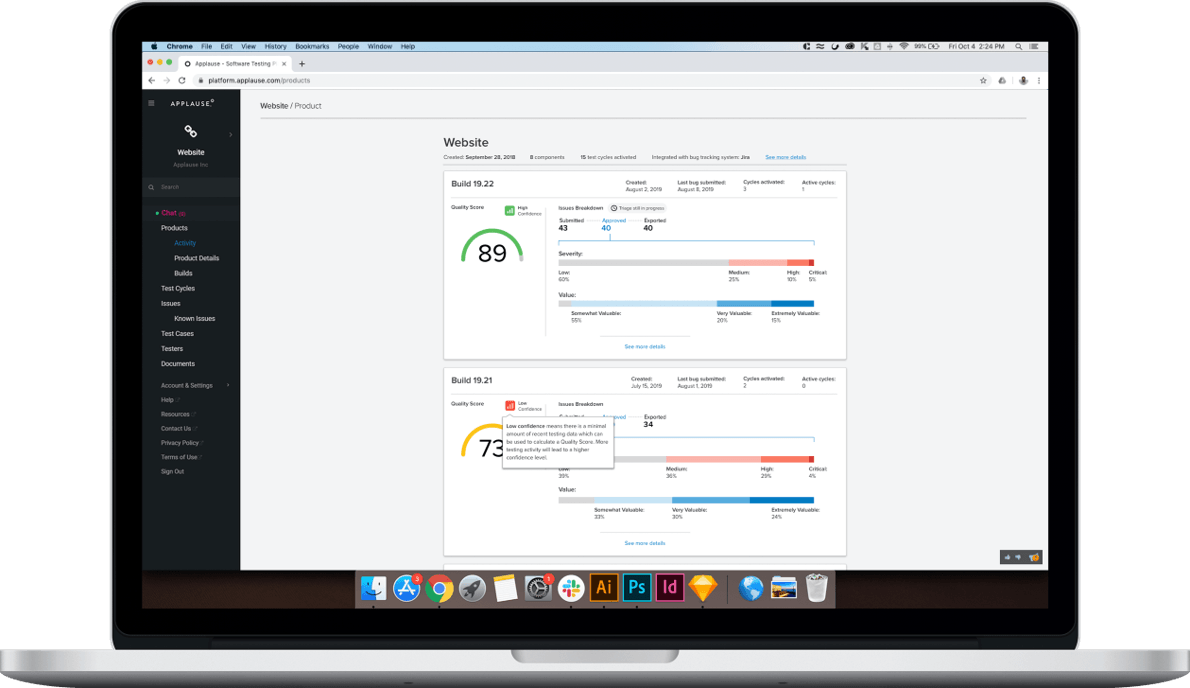
Photo credit: Applause
Working with Applause can also accelerate the process as there are no set working hours for crowdtesting. Startups have the option to carry out scale testing at a moment’s notice to meet the day’s demand. Testing can also be carried out during off-hours, at night, during weekends, even during public holidays; if a startup kicks off a testing cycle on a Friday afternoon, they shouldn’t be too surprised to see the results on their desks by Monday morning.
To successfully leverage crowdtesting, startups must first clearly define their testing objectives and requirements. From there, Applause takes the lead to deliver results by assembling a dream team of testers. Only then will testing begin. That way, startups can be assured that they can receive actionable testing results in real time.
Reshaping the future of tech
In a recent study by Hobson & Company, businesses who have worked with Applause cited a 75% decrease in testing lab costs. The number of software releases increased by 150% annually, and internal team capacity jumped to a whopping 200%. On the business side of things, brands saw 50% less defects released to end users and a 10% increase in conversion and retention rates.
Numbers lean in favor of crowdtesting, and Mason says it won’t be long until it rises in popularity here in Asia as more startups become more able to deliver accelerated testing, all while producing better results. He adds that there is growing interest by crowdtesting customers to run complete localization testing of their products, verifying accuracy, and context-correctness, including payment preferences and processes, ecommerce nuances such as tax calculation and shipping options, or cultural nuances such as button location and navigation norms.
“I think you would have seen higher-quality software and digital experiences come out of startups had they started using crowdtesting earlier on,” predicts Mason. “This would have helped them secure and retain customers more quickly and easily.”
With the never-ending innovation in the tech industry, advanced technologies such as artificial intelligence and machine learning will likely alter and propel crowdtesting to greater heights, further boosting its efficiency while reducing human intervention.
Needless to say, the evolution of crowdtesting is only just beginning.
Applause helps global brands such as Fox, SonyLIV, Google, Nike, Uber, Microsoft, AT&T, Paypal, and Walmart to ensure flawless digital experiences for their customers.
To learn more about Applause and its crowdtesting solutions, reach out to its team on its website.
This content was produced by Tech in Asia Studios, which connects brands with Asia’s tech community. Learn more about partnering with Tech in Asia Studios.
Stay updated on the go with our mobile app.
Get latest insights with smoother, more personalized experience through TIA mobile app.
Recommended reads
 Making AI work in the real world, not just on paper
 Why falling AI costs spark investor panic but drive new revenue
 Bridging the gap between legacy data and AI
 This startup turns Indian market chatter into quant trades
 Why purpose-built AI is the key to unlocking genAI’s true value
 Why SaaS is dying and service as software is rising
 How an ex-OpenAI lead views the shift from software to robots
 Startup offers cleaner activated carbon without coal use
 Why relying on AI models could hurt software profits
 A new platform digitizes Cambodia’s local pharmacies





Editing by Nathaniel Fetalvero and September Grace Mahino
(And yes, we’re serious about ethics and transparency. More information here.)





