Stefanie Yeo · · 6 min read
Grab’s Anthony Tan gets candid on building the super app

Summary:
- In Grab’s latest podcast, co-founder and group CEO Anthony Tan shares stories and insights into how Southeast Asia’s biggest super app was built.
- Called Inside Grab with Anthony Tan, the show dives deep into the company’s founding days, bringing listeners behind the scenes and sharing anecdotes you won’t hear anywhere else.
- Check out the podcast on your favorite platforms: YouTube | Spotify | Apple Podcasts
From collapsing in a Walmart between investor meetings to having a customer turn up at the office to shout at the team, Anthony Tan’s early days building Grab were a rollercoaster, to say the least.
The firm’s series A funding round in 2014 was particularly grueling.
“It was very painful,” says Tan, who co-founded Grab in 2012 and currently serves as its CEO.
This experience is just one of the many topics he talks about in the company’s latest podcast special. In conversation with Cheryl Goh, Grab’s group head of marketing, sustainability, loyalty, and support, Tan revisits his journey, reflecting on the 13 years – and counting – he has spent at the firm’s helm.
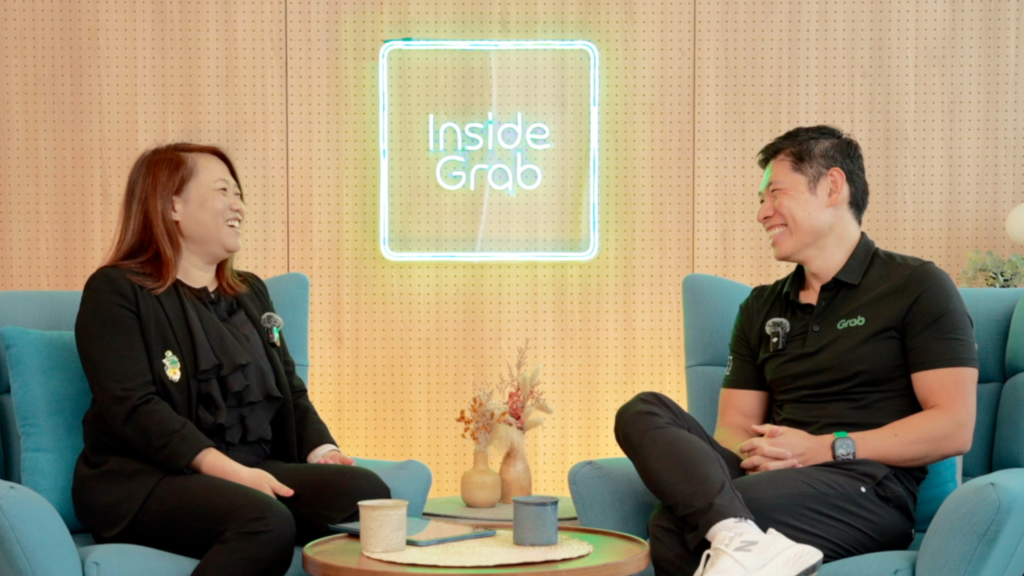
Photo credit: Grab
The podcast, titled Inside Grab with Anthony Tan, unpacks the early chaos at Grab. It also delves into personal anecdotes and shares insights from the co-founder and CEO, giving the tech community a candid view into what it took to build Southeast Asia’s biggest super app.
Check out the podcast: YouTube | Spotify | Apple Podcasts
Here’s a sneak peek at the insights and stories Tan shares on the show:
Anchor everyone to your core purpose
As a founder, you often find yourself being pulled in many directions. Everybody has their own ideas about what to do with the business – but how do you cut through the noise?
According to Tan, it’s crucial to ensure that everyone is anchored to a core purpose and calling for the company.
“People think it’s only for your employee base, but actually it’s just as important, if not even more important… for the board to be anchored,” he says.
As the highest decision-making body, board members need to understand what the company wants to achieve. They must be able to connect the big decisions being made to what is happening in real life and on the ground.
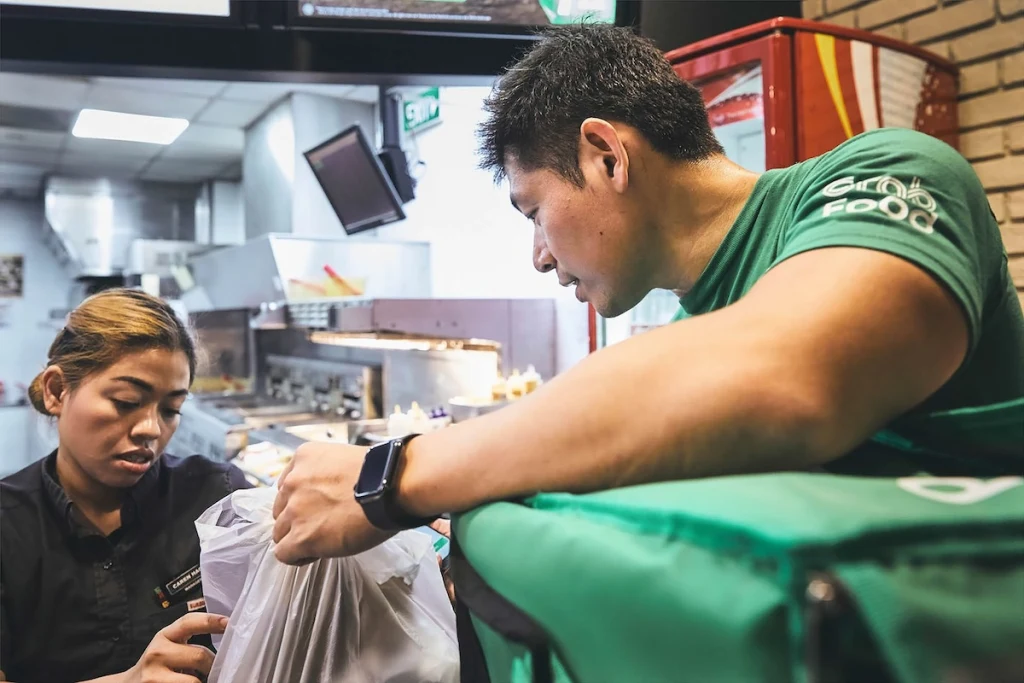
Tan on the ground delivering food / Photo credit: Grab
This is why, at Grab, board meetings are held in cities where it has operations.
“We could conveniently do it all via Zoom, but we do it [in-person] because we want our board to see the livelihoods we impact,” Tan explains. “They meet drivers, they talk to them, they understand their problems… that’s the best way to anchor them to this philosophy and value system.”
He then recalls one such meeting held in Manila, where the board witnessed Grab team members working late into the night to onboard a long line of motorcycle taxi riders onto the platform.
“Our people were working the night shift until like 1:30 or 2:00 in the morning to sign up [these drivers],” Tan shares. “When the board saw that for themselves, you could see a different appreciation after that.”
Right investors, right opportunities
Fundraising will be a huge part of your life as a young founder. In the current climate, it can be tempting to take money where you can get it – but it’s incredibly important to make sure you have the right people on board.
When identifying whether a specific investor is the right choice at a specific point in time, you need to consider a few things.
“I don’t think it’s an ideological game,” Tan says. “You need to think of it as what’s available, right? There’s the pragmatic lens. Then which one suits your values.”
“When you have options… then we wanted to go with who could give us the highest probability of success,” he adds.

Tan and co-founder Tan Hooi Ling ringing the opening bell in Singapore when Grab went public on the Nasdaq / Photo credit: Grab
Moreover, it’s important to ensure you get investors who share your startup’s vision instead of just taking money from anyone.
“There were some [investors] that I would say gladly, in hindsight, I’m glad we bombed,” Tan says. “They wanted to put in money, but just to sell us to… Uber or Didi, or whoever else it may have been, who are much bigger than us – it was just about flipping, versus ‘I’m in it with you to grow the business.’”
Having the right investors unlocks new opportunities for a company. In Grab’s case, its series A backer, Vertex Ventures, did more than just provide funding – it offered connections and resources, including office space, to get Grab off the ground.
The VC firm also opened doors for the then-fledgling startup.
“Our series A investor helped us get our series B investor, who introduced us to our series C,” Tan recalls. “Then that investor introduced us to Ming Maa and Masayoshi Son at Softbank, and then you saw the big headlines.”
“That’s the beauty of getting the right investor at the right time, who then introduced us to many other great investors that really helped us on our journey,” he adds.
Go where the problems are
Founders often feel pressured to have a clear, defined roadmap for their companies. It can be daunting, but solving your users’ problems is a good way to start.
Grab started as a taxi company, but it has since expanded into a variety of other verticals.
“[This expansion] was accidental because customers led us to it – it was problem-linked, or problem-founded,” shares Tan.
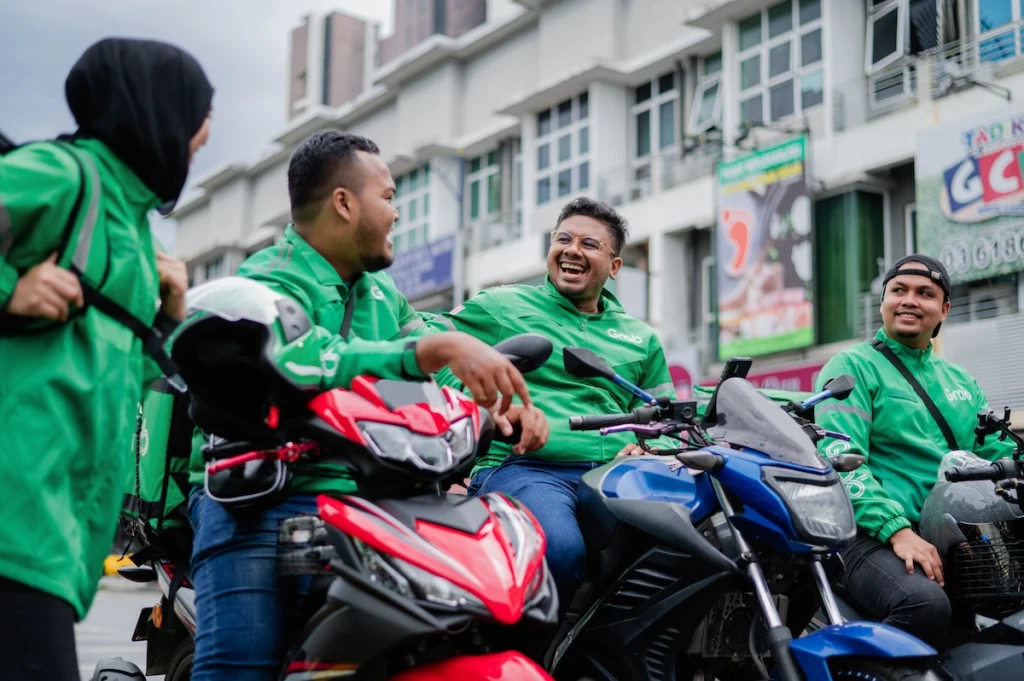
Photo credit: Grab
In fact, Grab’s fintech solutions emerged from its eagerness to address user problems. In the early 2010s, taxi rides were paid for in cash, which made drivers prime targets for robbers.
“What we did was we created a driver wallet that a passenger couldn’t take cash from,” Tan shares. “And that was how GrabPay was founded.”
GrabFood, meanwhile, was made to help drivers and riders maximize earnings by delivering food when demand for transport services was low.
“They would send people to work, and then after that, wait until [the] evening for people to leave work, but in between they had so much spare time,” Tan says. “We created GrabFood … so that they didn’t have to sit there and just wait and do nothing.”
The ability to develop valuable solutions to meet real user needs is rooted in Grab’s belief in understanding what’s happening on the ground.
As part of the company’s expansion into Indonesia, Tan moved his family from Singapore to Jakarta, immersing himself in the local environment to understand the pains of users in the country.
“We knew that the only way was to … live there and have our kids go to school there, and live life as a daily resident,” he says. “You need to go down, experience the pain yourself, and talk to those that we’ve affected and then learn and build a solution for [these users].”
Inside Grab with Anthony Tan takes a look back on what it took to build Grab. It aims to unpack the early chaos, dive into the lessons no one saw coming, and share stories you won’t hear anywhere else.
From early struggles with fundraising to how the co-founder and CEO found his first employees, the podcast unpacks Grab’s success story.
Check out the podcast on your favorite platforms: YouTube | Spotify | Apple Podcasts
This content was produced by Tech in Asia Studios, which connects brands with Asia’s tech community. Learn more about partnering with Tech in Asia Studios.
Stay updated on the go with our mobile app.
Get latest insights with smoother, more personalized experience through TIA mobile app.
Recommended reads
 Moving beyond screens with physical VR arenas
 Grab grabs robocars and GoTo
 The new rules of getting investors on board
 Maybe we’re the ones in a bubble
 Traveloka cuts jobs to reshape workforce for AI, long-term growth
 Edtech startup NativeX halts operations due to cash crunch
 Don’t fret an AI bubble
 This solo GP sees the VC middle class dying
 Rethinking Singapore’s biotech bet
 SaaS is dead, long live SaS





Editing by Winston Zhang and Mina Deocareza
(And yes, we’re serious about ethics and transparency. More information here.)