- Insights This article was written by a TIA community member. Insights pieces undergo the same rigorous editorial process that newsroom-produced articles have.
 Jean-Pierre Sedaghat · · 10 min read
A step-by-step guide to crafting the perfect fundraising pitch deck
While it’s hard to tell a startup what exactly to put in its pitch deck, there’s an effective framework that can help a company build one.
As one of the more famous VC firms in the world, Sequoia Capital’s pitch deck is worthy of a deep review, and it can be a model for any company.
Sequoia Capital’s pitch deck template
The company’s deck is made up of 10 key slides:
- Company purpose
- Problem
- Solution
- “Why now?”
- Market size
- Competition
- Product
- Business model
- Team
- Financials
One immediately noticeable thing about it is the simplicity of its slides. Design can be helpful in clarifying ideas, but they should be a secondary focus; the content is far more important.
The first rule: Humans have a short attention span
The most important information needs to be stated at the start of the pitch. If a meeting is an hour long, it’s a rookie mistake to assume receiving a full hour of the audience’s attention. It would be smarter to have a 30-minute presentation instead and allot the remaining 30 minutes for Q&As, with supporting slides.
The typical attention span during an investor meeting follows this curve, which must be taken into consideration when building a deck:

Angel investor and venture capital investor attention span
If a startup can’t convince investors that its idea is interesting within the first five minutes of a presentation, they will most probably lose interest in following through with the investment. The first few minutes of a pitch must coherently present crystal-clear ideas.
Company purpose
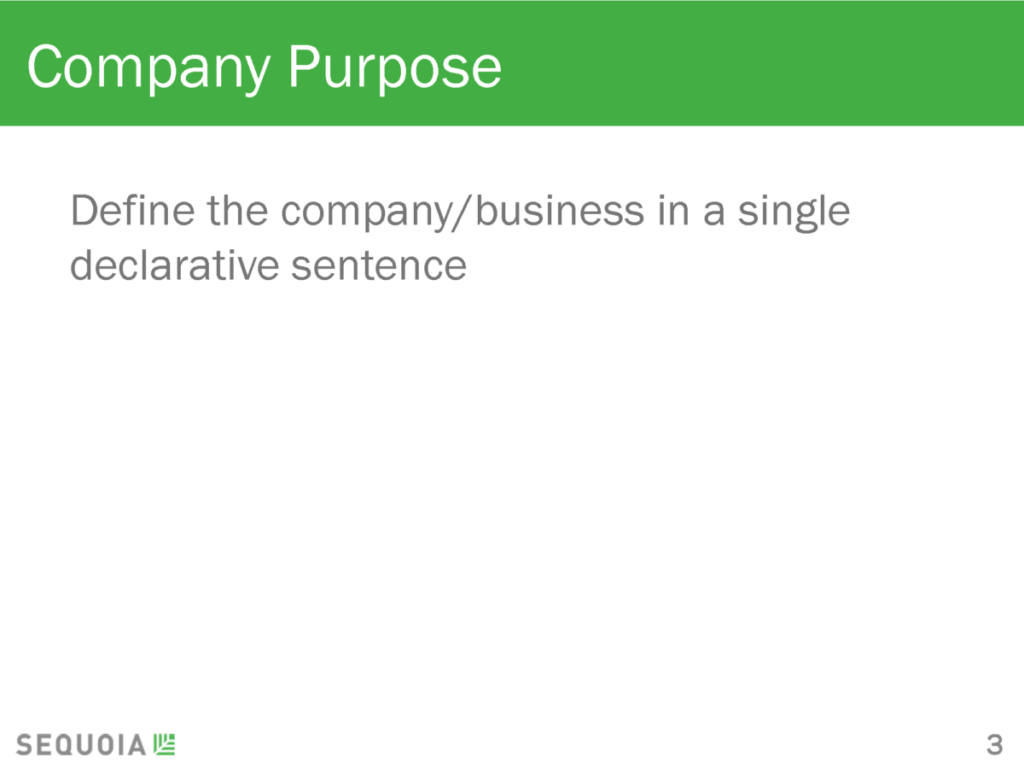
Sequoia Capital investor deck: company purpose
This slide must define what a company does in a single declarative statement. While that sounds easy, it’s often the most difficult part of the process – and also extremely important.
It shouldn’t be bogged down with explanations of features, products, or metrics; the focus should be on communicating the startup’s mission.





Stay updated on the go with our mobile app.
Get latest insights with smoother, more personalized experience through TIA mobile app.








📅 Upcoming Events
22 October 2026
Payoneer x CSPN Summit 2026