Paul Bischoff · · 6 min read
This startup buys old shipping containers and turns them into urban hydroponic farms
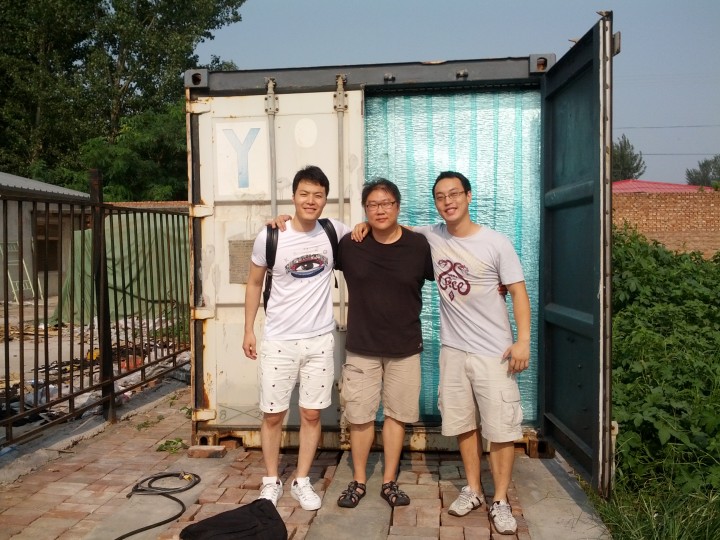
From left to right: Kazuho Komoda, Young Ha, and Stuart Oda
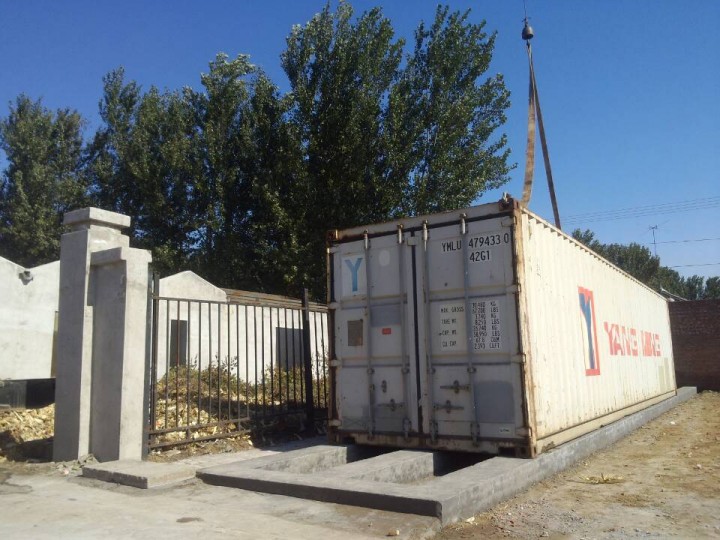
This 13-year-old shipping container in the middle of a field in Beijing’s Shunyi district might not be easy on the eyes, but it’s shaping up to be a godsend for the tongue. On the inside, it’s been completely renovated to house a fully automated hydroponic farm with 1,600 heads of lettuce, celery, and other leafy greens for human consumption.
The facility was designed and built by the three founders of Alesca Life Technologies, a Beijing-based sustainable agriculture startup. The team spent an entire year designing the unit for maximum efficiency and output. They just conducted their first full harvest about three weeks ago.
It sounds like an out-of-control school science experiment, but co-founder Stuart Oda says the idea has real market potential, and Alesca has set out to prove it.
“We want to break this notion that farming is for farmers,” Oda says. “Agriculture can be sexy.”
And it does seem pretty special. The premise is that people in urban environments – both in developing and developed countries – often don’t have easy or affordable access to fresh, healthy food. Alesca will start manufacturing facilities like these and either sell or lease them out in urban areas: under bridges, on top of buildings, and in vacant lots. “We want to make good food that people can access and afford and trust.”
Oda says there’s no shortage of old shipping containers that have surpassed their usable life aboard ships to serve as the shell. The team painstakingly designed the entire LED, nutrients, and recyclable watering systems for the plants. While Alesca is still fine-tuning the price based on a projected 24-month return on investment, Oda says one ready-to-grow unit “will cost less than a car.”
Put your money where your food goes
So far, the three founders have paid completely out of their own pockets to fund the project, and they’ve all been working on it full-time for one year. “We’re putting our money where our mouth is before we raise even a penny,” Oda says. Later this year, the team will raise a seed round from family and close friends.
“There’s a social component for what we want to do, but we’re not a charity,” he emphasizes. “We’re very serious about profitability, about manufacturing efficiency, and about not taking handouts.”
Oda says this doesn’t just save investors a bad deal should the company fail, it also prevents future investors in similar startups from getting spooked. If they were to take investor money and fail, it could spoil the industry.
Subsidies inhibit innovation
While Alesca combines a lot of cool ideas, no one aspect is exactly revolutionary. Hydroponics, for instance, predates the internet by a long shot. That begs the question, why aren’t cities already doing this, or at least something similar?
Oda blames subsidies for much of the stagnation in agriculture and other industries. Because of the market distortions that subsidies cause, they can rest on their laurels without the need to progress and compete. “A lot of innovation that could have been going into agriculture had these subsidies not existed, have not.” He points to the Netherlands’ advanced automated farming systems of an example of what can be achieved without subsidies.
One small step for China, one giant leap towards space lettuce
Sustainability has to be sustainable
In your face, mom





Stay updated on the go with our mobile app.
Get latest insights with smoother, more personalized experience through TIA mobile app.