- Insights This article was written by a TIA community member. Insights pieces undergo the same rigorous editorial process that newsroom-produced articles have.
 Andrew P. Rowan · · 5 min read
Starting up is the default economic option for Vietnam’s youth
The following is an edited excerpt from Startup Vietnam: Innovation and Entrepreneurship in the Socialist Republic by Andrew P. Rowan. You can order a copy of the newly released book here.
This is the first part of a two-part series exclusive to Tech in Asia.

Photo credit: Sasin Tipchai / Pixabay
Given the potentially high rewards, it should come as no surprise that startups are inherently risky propositions. Failure is often part of the startup experience: entrepreneurs sometimes need to go through disappointment in order to improve.
Entrepreneurship is a long-term haul, not a short-term win. Some may prefer the stability of a conventional job, especially one provided by the state. However, this option of a career in the public sector may not be as viable in the future as it has been until now.
Automation and labor
In a 2016 report issued by the United Nations Conference on Trade and Development, two-thirds of all jobs (agriculture, industry, and services) could be eliminated in developing countries due to technology automation, which “risks eroding the traditional labor-cost advantage of developing countries.”
Furthermore, according to McKinsey Global Institute (MGI), the industries with the lowest digitization rates include agriculture and hunting, construction, and hospitality. Meanwhile, the percentage of time spent on activities that can be automated using currently demonstrated technologies (i.e. the technical feasibility of automating predictable physical work) is 78%, according to MGI.
While the latter figures are for the US, this kind of work includes food preparation, welding and soldering on an assembly line, or packaging objects – and it will only be a matter of time before the unit economics of automation make even more sense for Vietnam’s economy and labor wages. Already, firms such as Foxconn have begun automating large swaths of its workforce, making next-door China the largest, fastest-growing market for industrial robots in the world, according to the Wall Street Journal.
Starting up to survive
At a 2016 event held at Vietnam National University in Hanoi, Vietnam’s prime minister, Nguyen Xuan Phuc, was asked by a Vietnam Youth Academy student, Pham Dong Hieu, “Prime minister, how can political students start a business, because politics is not like the economic sector?” This sort of question may not be that unusual, as the attractiveness of becoming a successful entrepreneur increases in Vietnam. But it may become a path more necessary for Vietnamese graduates in the future.
At the end of 2015, “about 114,000 bachelors and 135,000 associate’s degree holders have to do menial jobs, which require no certificate or diploma,” according to Tuoi Tre News. In 2016, university graduates made up “as many as 192,500 or 15% of the country’s unemployed,” according to Nikkei Asian Review.
Increasingly, college graduates are continuing with vocational training, and some high school graduates are opting to skip university altogether, according to ICEF Monitor. Thus, for some Vietnamese youth, the most promising option to invest their time in may be entrepreneurship (or it may be their only economic option to survive).
Vietnamese entrepreneurs who take a risk by starting up encounter many pitfalls along their journeys. In 2016, more than 110,000 enterprises were incorporated in Vietnam, according to the Business Registration Agency at the Ministry of Planning and Investment. Remarkably, during the first quarter of 2016, the number of troubled businesses and new businesses was almost on a parity: 22,000 businesses suspended or ceased operations, while 24,000 businesses were created, according to a Vietnam Net Bridge report.
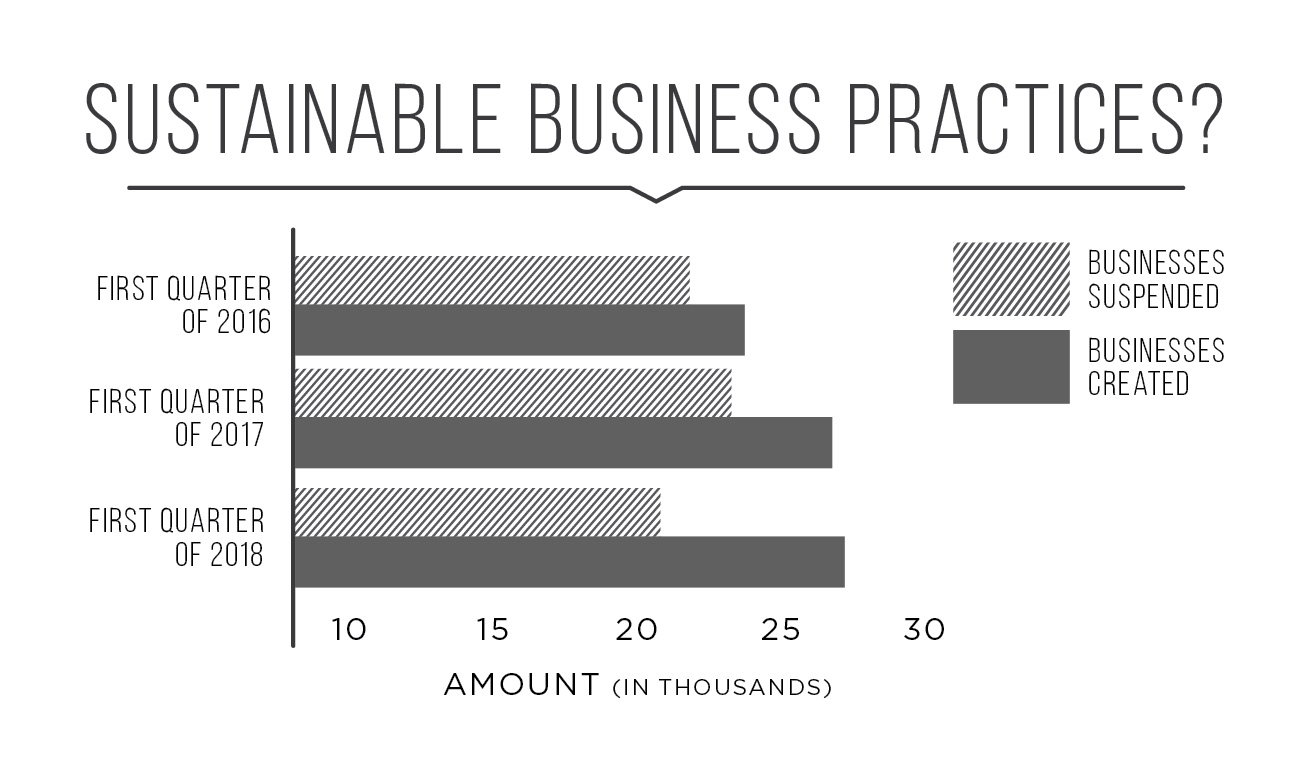
Photo credit: Startup Vietnam: Innovation and Entrepreneurship in the Socialist Republic
A positive environment





Stay updated on the go with our mobile app.
Get latest insights with smoother, more personalized experience through TIA mobile app.








📅 Upcoming Events
22 October 2026
Payoneer x CSPN Summit 2026