 Terence Lee · · 5 min read
Squiryl seeks to do for loyalty cards what Google did for ads
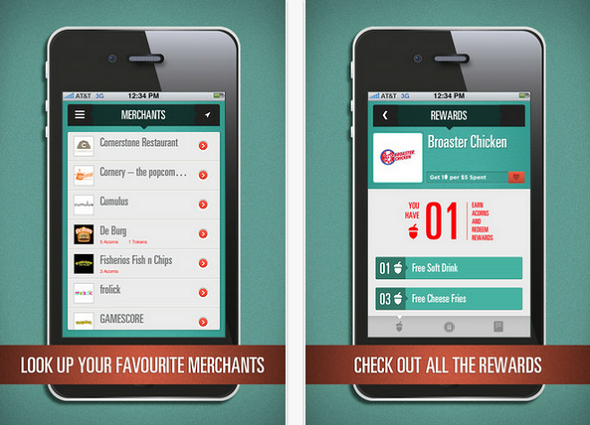
Loyalty cards are inefficient and generate a lot of waste. Even digital ones. A while ago, I was at a music shop and decided to preorder a music album for a friend.
To my delight, I received two chops on Perx, a loyalty card app I recently featured. But to my dismay, I was eight chops away from getting my reward. And it’s extremely unlikely I’ll step into the store ever again — I’m just not an avid music listener.
Here’s the problem with loyalty cards: They don’t always capture loyal customers. And when they don’t, they’re a burden to merchants.
This is a problem Singapore-based startup Squiryl hopes to solve. Unlike other loyalty card apps, it allows users to swap stamps — or acorns, in their lingo — with one another.
Suppose I have two acorns at a restaurant I’ll never visit again. I can use the Trades feature to exchange acorns with others by putting up an offer. For example, I can offer two acorns from Fisherios Fish n Chips in exchange for three acorns at a Puma store.
While critics might argue that such trades defeat the purpose of loyalty cards since it diverts customers away, Squiryl co-founder Mulyadi Syariffudin disagrees.
“We gave up the [advertising] agency because we believe in burning our boats so that we can’t turn back.”
Customers who don’t like a product are unlikely to come back to the store anyway. So, why not exchange them for another customer who willingly traded for your acorns? With some acorns in hand, customers are more likely to visit a store since rewards are more easily attainable.
“If you lose one, you get another one. That’s the worst scenario. In the best situation, customers that get acorns spread the word, resulting in more sales for merchants,” he says.
While past apps have tried universal currency, merchants revolted because consumers can effectively get points at one brand and use it to redeem rewards at another. Acorns, on the other hand, are always tied to a merchant. They can only be used on one particular brand at a time.
The net effect is greater market efficiency. Instead of taking a slice of a small pie, Squiryl hopes to enlarge it by making the concept of loyalty points more relevant for customers.
They’re essentially hoping to do what Google did with Adsense: Making an entire industry more efficient, resulting in better returns for both merchants and consumers. Except that while Google is achieving this with algorithms, Squiryl is doing it with social exchange.
This social element is at the heart of Squiryl’s vision. Ultimately, they aim to be the universal social network for loyalty points — a fundamentally different approach from their competitor Perx, which is more of a marketing tool than anything else. Squiryl is working on more social features right now.





Stay updated on the go with our mobile app.
Get latest insights with smoother, more personalized experience through TIA mobile app.









📅 Upcoming Events
22 October 2026
Payoneer x CSPN Summit 2026