- Premium Content It takes our newsroom weeks - if not months - to investigate and produce stories for our premium content. You can’t find them anywhere else.
 Aditya Hadi Pratama · · 5 min read
Mitra has flattered Bukalapak’s financials, but new challenges await
Indonesia’s Bukalapak was founded in 2010 as an ecommerce platform. But in 2017, the firm began its Mitra business, an online to offline (O2O) solution that helps small retailers in the country (called warungs) procure physical goods to sell.
Since then, Mitra has gradually replaced Bukalapak’s marketplace segment as the company’s bread and butter. It contributes 57% of the firm’s current revenue and is expected to make up 69% by the end of 2024, according to research by local brokerage BNI Sekuritas.
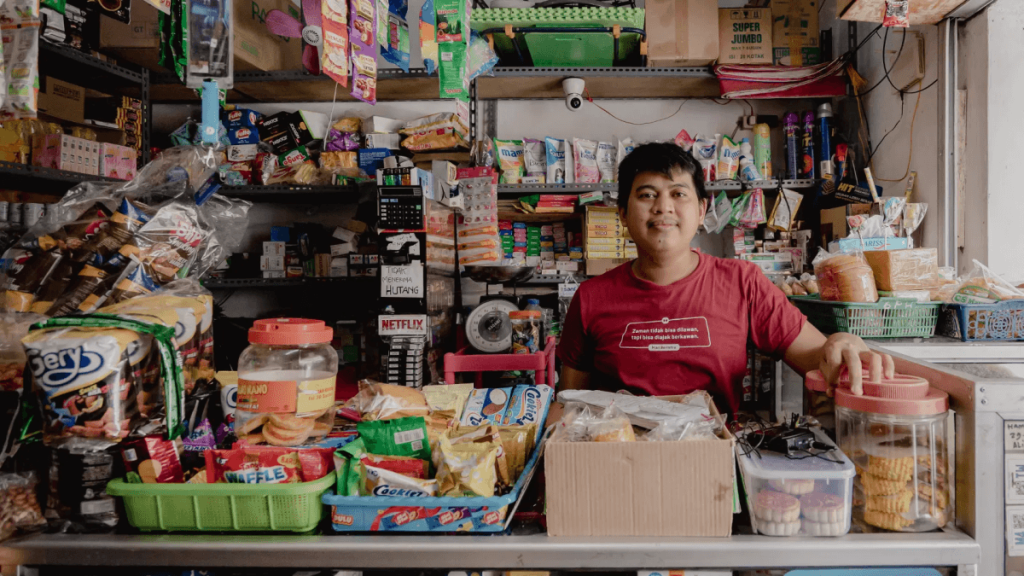
Warungs in Indonesia / Photo credit: Bukalapak
This is good news for the company, considering Bukalapak’s marketplace has lost market share compared to those of Tokopedia and Shopee. The rise of the Mitra business has also ensured that the company’s total revenue has continued to grow, climbing 105% in the second quarter of 2022 from a year ago.
On top of increasing Bukalapak’s top line, Mitra has also transformed its bottom line. The firm’s operating margin has improved from -789% in 2018 to -70% in the first half of this year, a welcome trend as investors sharpen their focus on profitability.
How did this new business model change Bukalapak’s cost structure?
A different beast
Mitra Bukalapak works with offline micro retailers to digitalize their offerings and address pain points in their businesses.
It generates revenue from commissions, which it charges when selling the physical products of FMCG merchants to Mitra partners. It also earns from fees on sales of virtual products (e.g., prepaid phone credit and data) from these partners to end consumers.
Other players like Tokopedia, Shopee, and Grab also have similar business models. But Bukalapak’s Mitra segment has shown the most rapid growth, now having 14.2 million merchants partners. It is also the dominant player in Indonesia, where 42% of warungs use its app.
It’s a totally different beast from Bukalapak’s original marketplace business, which connects online sellers directly with customers. According to BNI Sekuritas, Mitra’s B2B model has a lower burn rate, as it would not need to provide subsidies, such as free delivery, to attract warung owners.
In its financial report for the second quarter of this year, Bukalapak incurred US$83 million of operating expenses, 34% less than the previous quarter. However, this was caused by fluctuations in the cost of share-based compensation. If we omit that, the company’s expenses actually grew by 8%.
However, digging down into the individual components of those costs, Bukalapak managed to reduce its selling and marketing expenses by 17%. Most of this came from the company offering less features subsidies and vouchers as well as the lower O2O promotional costs for Mitra Bukalapak.
Targets for positive contribution margin
Stay ahead in Asia’s tech landscape
This is premium content. Subscribe to read the full story.
Bukalapak’s dependency on third parties in sourcing products and delivering goods may hinder the growth of its O2O business, analysts said.
We know this is not ideal. ⌛ Sign up in 20 seconds. Cancel anytime.
Our subscriber community includes professionals from these companies:





Stay updated on the go with our mobile app.
Get latest insights with smoother, more personalized experience through TIA mobile app.