Grace Priscilla Teo · · 5 min read
OpenAI’s Greg Brockman on AI moving from chat to action
This article summarizes an episode of Alex Kantrowitz’s video series featuring Greg Brockman, president and co-founder of OpenAI.
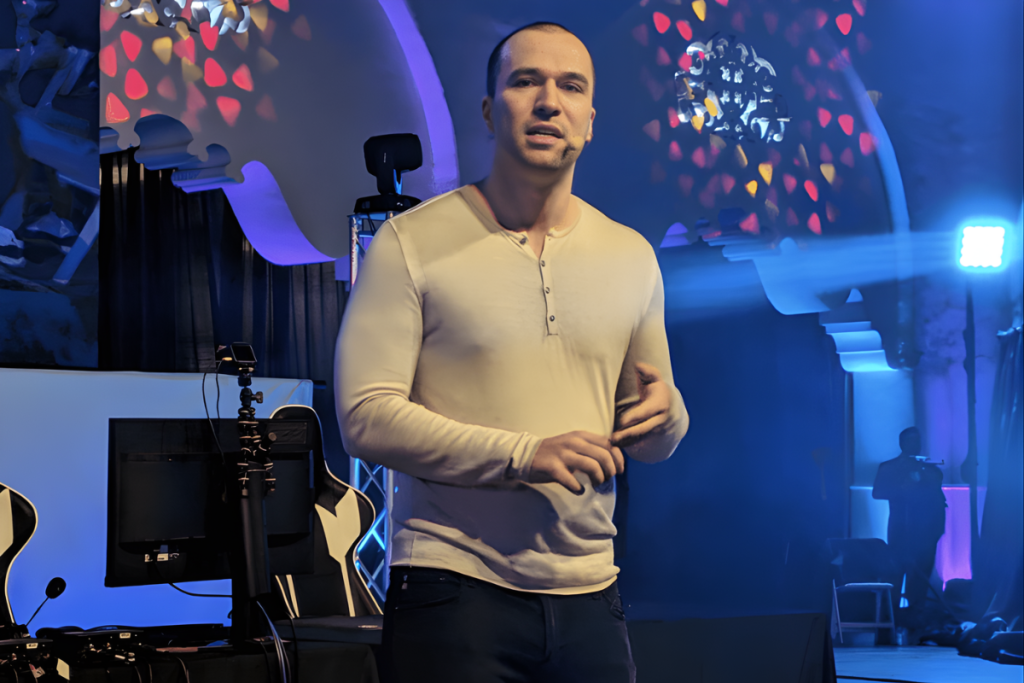
Greg Brockman, President and Co-Founder of Open AI/ Photo credit: Greg Brockman
OpenAI president and co-founder Greg Brockman says the next wave of AI will shift users from chatting with bots to assigning real tasks. This forces business leaders to rethink how companies work and bringing new rules for security, management, and costs.
Moving past the chat window
Understanding these new rules starts with changing software access. Enterprise adoption stalls when machine learning results are trapped in a separate browser window, and copying data wastes time. The next step requires AI that operates directly inside existing corporate software to solve problems independently.
Brockman argues that recent models represent a shift in this direction. Instead of just writing code, the AI has crossed the threshold of usefulness for general applications.
“It’s much better at creating slides, spreadsheets, much better at computer use, using your browser, and being able to click through applications,” he notes, highlighting its ability to solve problems end-to-end with little instruction.
However, giving the software this level of freedom introduces new operational challenges. Delegating these tasks to a machine changes corporate risk, shifting mistakes from bad emails to unauthorized database alterations.
To manage this new risk profile, the human role changes. Brockman explains that a person doing work becomes the overseer and CEO of a fleet of agents. He notes that while users remain accountable, they can step away from the details of exactly what buttons were clicked.
Giving fewer instructions
Stepping back from details depends on software understanding basic commands. Letting it run tasks tasks autonomously makes mistakes expensive, creating tension between ease of use and harder debugging when things go wrong.
Models are becoming intuitive, actively puzzling out the user’s underlying goal based on context. Brockman says, “I don’t want to have to explain [a task] step by step. I want to point it in a direction and I want it to be able to take care of the details.”
However, he notes that mastering prompt engineering still provides a multiplier, allowing users to get far more out of the AI with the same amount of effort.
Building a strong software system
Maximizing this user effort requires developers to build a stable foundation. Building dependable AI requires far more than raw computing power and basic code. Surviving the market requires mastering the following interconnected pipeline:
- Collect data on real business tasks.
- Teach basic skills before training the software to use specific tools.
- Train the software to complete tasks with clear rules.
- Connect the software to other programs using tight access controls.
- Add safety checks to prevent misuse in high-risk industries.
- Improve the system continuously using real-world user feedback.
- Manage building the software across engineering teams.
Connecting the entire development stack
Mastering this pipeline is crucial because investors mistakenly assume AI code will soon become a commodity. Brockman argues the real moat is the integrated system itself.
Managing computer limits
Watching over millions of users





Stay updated on the go with our mobile app.
Get latest insights with smoother, more personalized experience through TIA mobile app.