Yanting Sim · · 8 min read
Basketball led her to front-end engineering. Passion kept her there.
Developer Spotlight is a column where Tech in Asia features developers at the forefront of the tech community in Asia. This is the third article of the series.
“Some people write, some people paint, some people make music, and I CSS,” said Chen Hui Jing, as she began her speech at CSSConf.Asia 2016.
Better known as the co-organiser of Talk.CSS, Hui Jing currently works as a freelance front-end engineer.
But for the self-taught web designer, front-end engineering didn’t always come as easily to her as a form of self-expression.
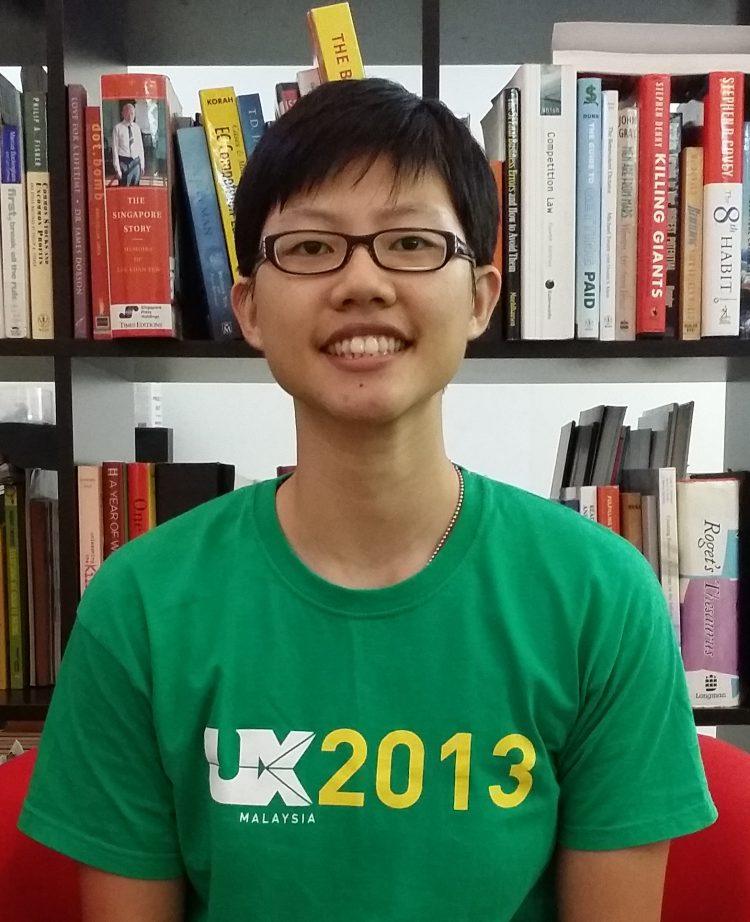
Chen Huijing.
How it all began
“I started building websites in 2008,” says the 30-year-old Malaysian-turned-Singapore permanent resident. “I was still in the Malaysia Basketball Association then, playing basketball full time. I also happened to be the token IT person within the team.”
“I used to help set up the internet, troubleshoot problems, and type documents for my coach,” says Hui Jing. “Then one day he came to me and said, ‘Hey Hui Jing, you’re quite good with computers, so you can build websites too, right? Our website hasn’t been updated for a long time, can you do something about it?’ In my head I was like, build website and fix computers are two very different things, but because I was so young and enthusiastic then, I said, ‘Sure, why not?'”
She started off by searching things up on Google, and copying off other websites by right-clicking and viewing source. “So I slapped together a very rudimentary site with some pictures,” she says. “And then they wanted to add content, but I didn’t cater for that. So I went to research about content management systems (CMS) and what they did. Of all the CMSes I could pick, I went ahead with Drupal, and I created a Drupal version of the site.”
It was then that Hui Jing, who graduated with a Finance, Accounting and Management degree from the University of Nottingham Malaysia Campus, discovered her love for software engineering.
“As I was building the website, although it was a lot of work, it didn’t feel like work to me,” she says. “I guess it felt that way because there were no formal requirements and no deadlines. I was free to do whatever I wanted. I was doing some odd jobs then as well, customizing sneakers, fixing computers. But out of everything I did, working on the website was the most fun for me.”
Finding opportunities in Singapore
Born to parents who were teachers, Hui Jing attributes much of her success to privilege. “To me, privilege is not about whether you have money or not,” she says. “Privilege is the circumstances you were born in. Although my parents were not rich, I was born in a family that valued education. Because of that, things came easily to us in school. And then my dad made the decision to work in Singapore and sent us to school here. That was the best decision ever.”
Hui Jing started her education in Singapore in Primary 1, and stayed till her graduation from Hwa Chong Junior College before heading back to Malaysia to further her studies.
“Singapore doesn’t care about your race or where you came from,” continued Hui Jing. “If you can do something, go ahead. This meritocracy is something I feel that some Singaporeans who have never lived outside of Singapore might not appreciate, which is actually a testament to how well Singapore has done.
On the developer landscape in Singapore
On being a female developer in Singapore
Outside of work
Advice for aspiring developers





Stay updated on the go with our mobile app.
Get latest insights with smoother, more personalized experience through TIA mobile app.