 Jonathan Chew · · 5 min read
How Southeast Asia’s booming recommerce market can reach the next level

In August last year, United Nations secretary general Antonio Guterres called a report by the Intergovernmental Panel on Climate Change a “code red for humanity.” Climate change is at a tipping point – go any further, and most if not all of the environmental disasters could soon be irreversible.
Amid the growing severity of the problem, consumers around the world have been looking for ways to reduce their carbon footprint. Purchasing secondhand items, otherwise known as recommerce, has emerged as a popular way to do just that.
Last year, for instance, consumers who bought secondhand items through Adevinta and Schibsted, which operate online resale marketplaces, reduced their total carbon dioxide emissions by 20.7 million tonnes.
As such, it’s no surprise that there’s a significant shift away from established industries such as fast fashion in favor of more environmentally friendly alternatives. And within Southeast Asia, which has the fastest-growing market for online retail in the world, these changes are already in motion.
Understanding Southeast Asia’s secondhand buyers
Today, many of the region’s consumers are acquainted with secondhand purchases, according to a report last year by regional classifieds platform Carousell.
Out of roughly 3,000 survey respondents, the company found that 72% of them had made secondhand purchases before, with 21% of these consumers citing environmental reasons for doing so.
According to Carousell, younger shoppers appear to be largely responsible for this phenomenon.
“We found that more and more consumers, especially the millennials and Gen Zs, are playing their part to reduce waste,” says Lucas Ngoo, co-founder of Carousell. “Supporting sustainability by buying unused or underused products that are still in good condition is a big draw, especially when these items are priced much lower and are unique treasures not available in stores.”

Lucas Ngoo, co-founder of Carousell / Photo credit: Carousell
This echoes the wider, global sentiment among younger consumers today. A report from First Insight revealed that 62% of millennial and Gen Z shoppers prefer to purchase from sustainable brands. In contrast, Gen X and baby boomer shoppers were less likely to do so, with 54% and 39% of them preferring sustainable brands, respectively.
Challenges in recommerce today
While many Southeast Asian consumers have adopted secondhand shopping, there are still some issues that the sector is grappling with.
Chief among them is that many potential recommerce consumers are still hesitant to take the first step. This is mainly because they don’t have a way to verify the authenticity of items or guarantee transactions, issues that are also present within the wider online retail space.
In fact, counterfeit goods have become such a problem that an estimated one in four products sold online are fakes, and nine out of 10 counterfeit products are sold through online platforms.
“While the stigma behind buying secondhand goods is slowly going away, [products] still have the impression of being used and untrustworthy,” says Ngoo.
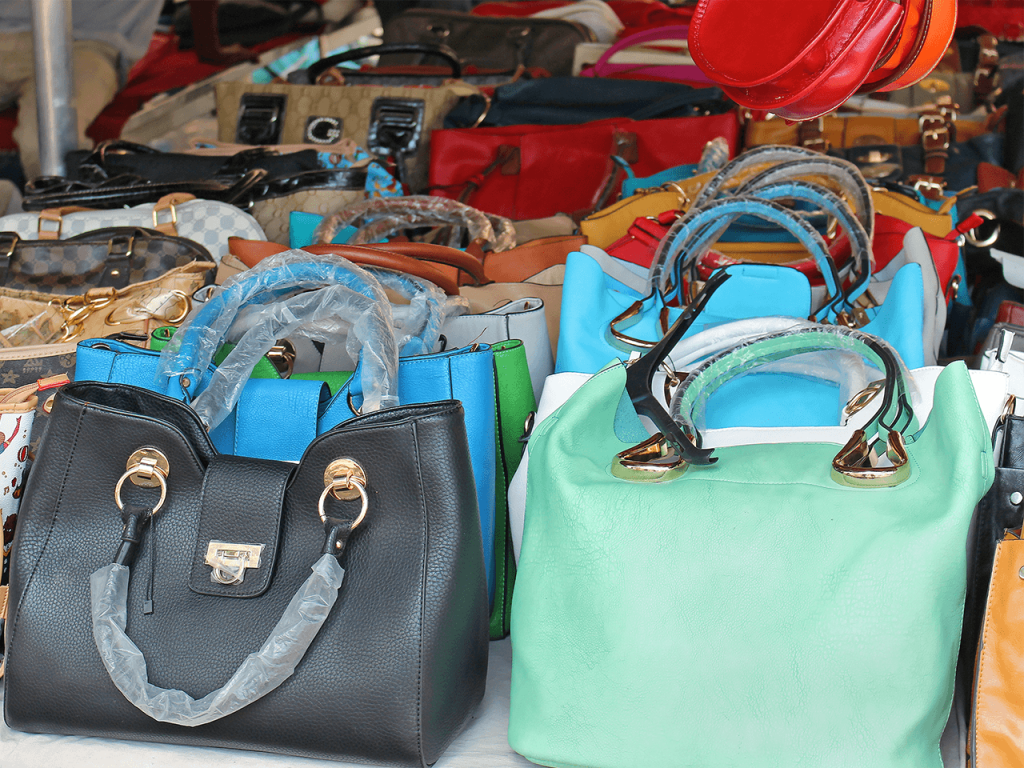
Carousell found that the unpredictability of knowing an item’s true quality is a common issue across the territories it has a presence in – 88% of consumers in the Philippines who had not made secondhand purchases before cited concerns about the quality of goods as the reason for their hesitancy. Taiwan and Hong Kong figures show a similar picture, standing at 79% and 74%, respectively.
Guarantees that transactions will be followed through is also a big deal, as consumers could fall prey to untrustworthy online sellers. In the US, for example, there were 173,000 cases of online shopping fraud reported to the Federal Trade Commission in 2019.
Check, then check again
To solve these issues, resale platforms have adopted several measures to protect and reassure consumers.
“Creating a trusted and frictionless end-to-end experience for users is one of our top priorities. Having a low barrier to entry is extremely important, especially for those who don’t see sustainability as their top priority but still want to play a part in small and manageable ways,” says Ngoo.
Carousell, for instance, introduced escrow payments in 2018 through Carousell Protection to help make sure that transactions are carried out in full.
To guarantee authenticity, it also introduced an initiative called InstantBuy, which curates sellers across various categories such as mobile phones, designer bags, and luxury watches, among others. By taking this step, the platform is able to give its consumers quality assurance, says Ngoo. Under the initiative, full refunds will also be provided if the items received are not as described.

Apart from this, a significant number of consumers also want authentication and inspection services. In the Philippines, 72% of Carousell’s respondents in its report said that having authentication or warranty on products would help them make their first secondhand purchase, a sentiment echoed by respondents in Singapore and Malaysia.
As such, large resale platforms such as eBay have already made the move to introduce these types of services. The US ecommerce company launched eBay Authenticate, which relies on a network of professional authenticators to guarantee the originality of a product.
As for Carousell, it introduced certified inspections for car listings on its platforms. It’s also targeting other sectors such as the sneaker resale market through its acquisition of Ox Street, a platform for authentic sneakers and streetwear.
These measures appear to have made noticeable progress. According to a report from Entrupy, an authentication platform, the sale of counterfeit goods by resellers fell by 5% from 2017 to 2019.
The future of recommerce
Should the recommerce industry successfully overcome these hurdles, the future of the sector is bright. The global secondhand clothing market, for instance, is set to overtake and double the size of the fast fashion market by 2030, reaching an overall valuation of US$84 billion.
As more consumers take to secondhand buying, resale platforms and marketplaces will inevitably have a bigger role to play in making the purchase journey a smooth one. In this regard, leveraging new technologies, such as deep learning, is crucial for platforms to continuously improve authentication and enable consumers to make informed purchases. More trust will most certainly lead to greater growth.
“This, in turn, will help solve the meaningful problem of overconsumption with recommerce and further our vision of making secondhand the first choice for consumers,” shares Ngoo.
Carousell is a classifieds platform for users to sell or buy items in categories such as fashion, electronics, automotives, and furniture. It’s celebrating a decade of sustainability through its Earth Day campaign.
To find out more about its campaign, visit its website.
This content was produced by Tech in Asia Studios, which connects brands with Asia’s tech community. Learn more about partnering with Tech in Asia Studios.
Stay updated on the go with our mobile app.
Get latest insights with smoother, more personalized experience through TIA mobile app.
Recommended reads
 Takeaways from Temu’s tell-all lawsuit against Shein
 Indonesia’s QRIS launches feature for fund transfers, ATM withdrawals
 No profit, no problem: Singapore’s digital banks in 6 charts
 Ant Group expands Alipay+ integrations in the Philippines
 Vietnam mulls VAT on imported goods sold on ecommerce sites: report
 Indonesia rolls out international QR payments link-up with Thailand
 GoTyme Bank gets go signal to set up Philippine digital bank
 The SME opportunity for Singapore’s digibank hopefuls
 Funding Societies swipes right on payments in SEA
 Can Xendit shrug off growing competition in digital payments?




Editing by Nathaniel Fetalvero and Jaclyn Tiu
(And yes, we’re serious about ethics and transparency. More information here.)




📅 Upcoming Events
22 October 2026
Payoneer x CSPN Summit 2026