- Premium Content It takes our newsroom weeks - if not months - to investigate and produce stories for our premium content. You can’t find them anywhere else.
 Jofie Yordan · · 6 min read
Southeast Asia poses a tough test for AI shopping agents
Relying on AI for gift selection this holiday season may be a stretch, but the ecommerce industry’s move toward AI shopping agents now looks inevitable as OpenAI, Perplexity, Google, and Amazon race to build their own.
Southeast Asia doesn’t have a fully fledged AI shopping agent yet, but companies are already laying the groundwork.
Shopee has been working with OpenAI since early this year to explore how AI agents could be used on its platform. Lazada, meanwhile, claimed that its AI chatbot, Lazzie, has already helped drive sales.

Image credit: Arsal Ysfin
Paul Srivorakul, co-founder and CEO of ec0mmerce enabler aCommerce, believes AI shopping agents will “gradually” become mainstream in the region. He expects a phased rollout, starting with simpler tasks – such as reorders and finding deals – before moving on to more complex and higher-value purchases.
“Think of AI agents as the new search bar,” Srivorakul says. “Eventually, every platform needed search; now, every platform needs an agent.”
However, many marketplaces are under pressure to become – and remain – profitable, and investments in AI agents don’t come cheap. If consumers increasingly depend on these tools to hunt for the best deals, it will be hard to avoid the risk of renewed price competition.
Tech in Asia reached out to Shopee and Lazada for this story but did not receive a response, while TikTok declined to comment.
Who’s leading the charge?
Srivorakul says an AI shopping agent must be deeply integrated into a platform’s back end – spanning inventory, delivery, and returns – to deliver better recommendations, faster service, and ultimately higher sales.
He adds that Shopee has an advantage in the race to build AI shopping agents, thanks to its scale of data and mature APIs. AI agents require vast data sets to learn pricing patterns and evaluate logistics reliability. As of 2024, the company controls about 52% of Southeast Asia’s ecommerce marketplace.
Srivorakul also points out that while “Lazada has better structured data with LazMall” – which asks sellers to provide detailed product information upon joining – “Shopee has the volume agents needed to predict availability and pricing trends accurately.”
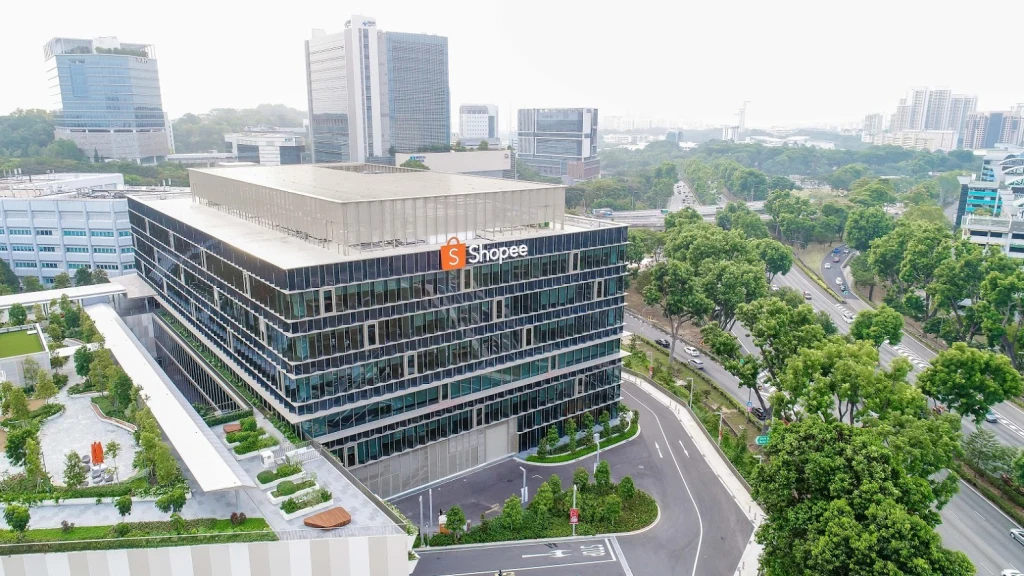
Shopee’s office in Singapore / Photo credit: Shopee
However, Simon Torring, co-founder of insights firm Cube Asia, disagrees. He argues that Lazada may be better positioned than Shopee, having adopted AI features earlier and more aggressively. Cube Asia recently released a report on authenticity-driven ecommerce sponsored by Lazada.
AI agent or AI feature?
Another price war coming?
Stay ahead in Asia’s tech landscape
This is premium content. Subscribe to read the full story.
AI shopping agents promise convenience. But in this region, they raise tough questions about margins, price wars, and how people actually shop.
We know this is not ideal. ⌛ Sign up in 20 seconds. Cancel anytime.
Our subscriber community includes professionals from these companies:





Stay updated on the go with our mobile app.
Get latest insights with smoother, more personalized experience through TIA mobile app.