 Stefanie Yeo · · 5 min read
Why this South Korean accelerator is bringing its expertise to SEA

Go back 12 years to 2010. Asia’s tech and startup scene was still relatively nascent, and South Korea’s economy was largely driven by exports from its manufacturing and electronics industries. Conglomerates like Samsung and LG – big names in the consumer electronics space – were supporting much of the nation’s growth.

Photo credit: sepavo / 123RF
However, things were already starting to change. Exciting tech innovations and new business models were coming out of places such as Silicon Valley, and it was clear that South Korea, too, would need to develop new tech and products in order to move away from its export-driven industries and further its economic growth.
The Banks Foundation for Young Entrepreneurs – a non-profit organization funded by 19 of South Korea’s major financial institutions – saw that the country needed innovative companies.
“The banks hoped to create a virtuous cycle of job creation and economic development by supporting startups in the earlier stages of their growth,” shares Youngduk Kim, executive director of South Korean startup accelerator Dcamp.
As such, the foundation decided to launch Dcamp in 2013.
Building up South Korea’s startups
As an early-stage accelerator, Dcamp supports young companies through investments, demo days, and growth programs.
Dcamp has invested over US$570 million in seed capital in startups over the last decade, backing companies across different verticals, ranging from fintech to ecommerce to data analytics. It also runs demo days known as “Ddays,” where companies can pitch their ideas and demonstrate their products to potential investors and business partners.

Youngduk Kim, executive director of Dcamp (center) / Photo credit: Dcamp
It also offers growth programs for startups, creating opportunities for founders to tackle challenges by connecting with experts in areas like human resources, finance, and even law.
And Dcamp’s efforts have certainly borne fruit: The organization has seen several notable startups emerge from its programs, such as food delivery firm Woowa Brothers, which was acquired by Delivery Hero in 2019, and GoPizza, a tech-enabled pizza delivery chain that has expanded into Singapore, Hong Kong, and India. It also backed Viva Republica, the company behind Toss, a fintech super app that’s now valued at US$7.4 billion.
Dcamp’s support of startups has also indirectly contributed to South Korea’s economic growth, adding 109,000 new jobs and creating US$28 billion in economic value , according to Kim.
Going beyond the homeland
Having seen success in its homeland, Dcamp is now looking to expand outside of South Korea into other parts of Asia.
In 2021, the accelerator conducted a survey to understand how startups felt about expanding overseas. It found that 18.1% of startups already had revenue from foreign sales and that 4.5% of those startups considered foreign sales to be more important than domestic sales. That’s where Dcamp saw an opportunity to be a bridge between South Korea and other parts of the region.
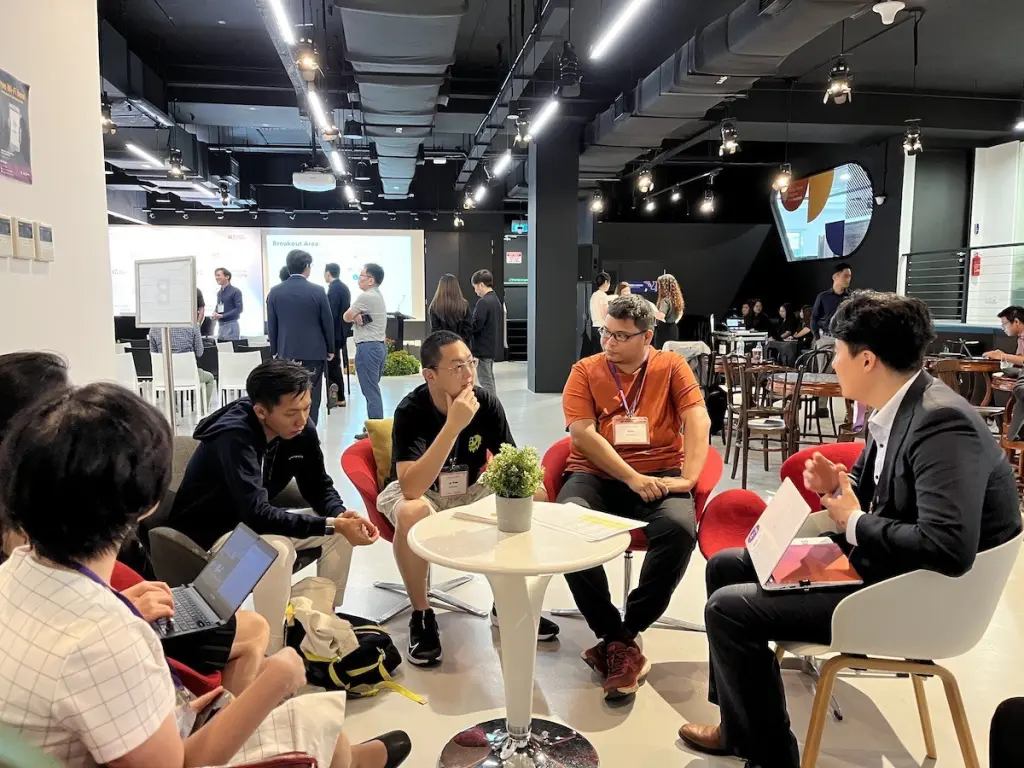
Photo credit: Dcamp
“More and more startups are aiming for global success, and many of them are looking towards a larger market outside of just South Korea,” says Kim. “We realize this growing need among entrepreneurs, and we want to create an environment where startups can reach their growth potential in overseas markets.”
Southeast Asia, in particular, has been a key area of interest for many South Korean tech companies. Governments in the region are leading initiatives to digitalize traditional sectors such as agriculture and are building up their IT infrastructure to support this push. Additionally, Southeast Asia is home to lots of young tech talent that can help address the talent gap that South Korean firms are facing.
“This provides the perfect opportunity for Korean startups to support these initiatives, and we believe Dcamp can create a win-win situation by matching companies with talent in the region,” says Kim.
At the same time, Dcamp is also aware of the market opportunity that South Korea presents for startups outside the country that may be looking to tap into the country’s 51.8 million-strong tech-savvy population.
“We want to see how these startups can maximize their growth potential with the help of Dcamp’s resources and network,” Kim adds. “The name ‘Dcamp’ comes from the idea of base camps for mountain climbers – we want to become a beacon and a safe house for early-stage startups – regardless of nationality – that want to explore new waters and succeed.”
A base camp in Southeast Asia
To that end, Dcamp has set up an office in Singapore, where it offers business advisory services to entrepreneurs looking to expand internationally and to potential investors interested in supporting regional startups. It acts as a hub for both South Korean founders and investors looking to go into Southeast Asia, and for Southeast Asian entrepreneurs and investors keen on entering the South Korean market.
The firm recognizes that expanding into South Korea can be a difficult process, given regulatory requirements and language barriers. The company tries to make it easier through initiatives such as its ‘Meet Korea’ program, which introduces the Korean market to foreign startups looking for new opportunities and draws on its network of business connections and investors to help startups enter the market.
“In this way, we help these global startups enter the Korean market more smoothly, and provide the necessary resources for them to succeed,” Kim shares.
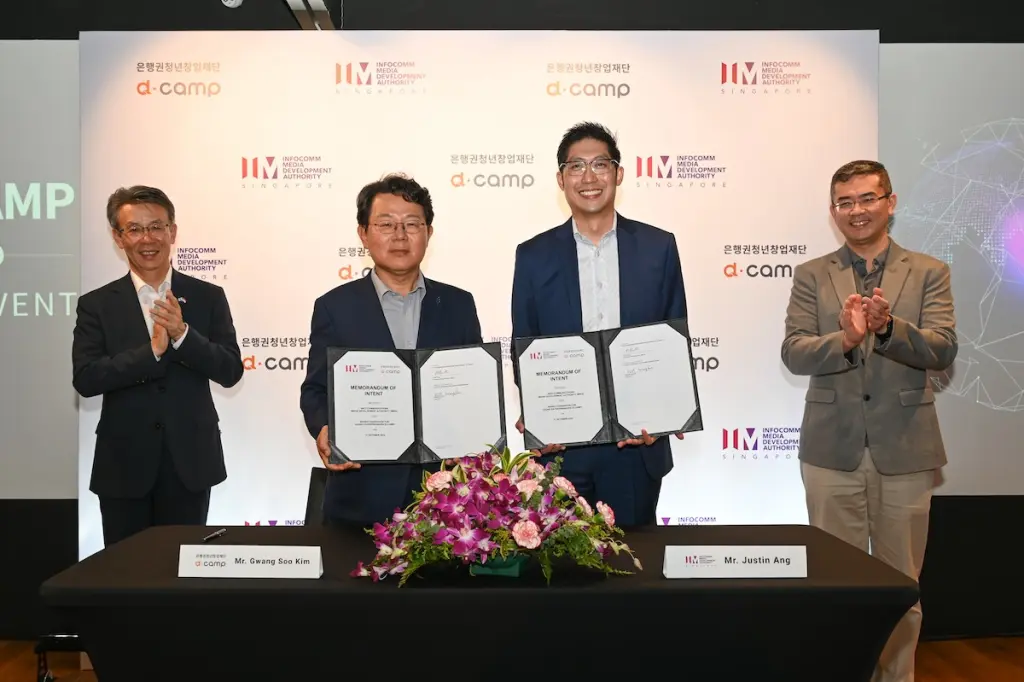
Dcamp’s memorandum of intent signing with IMDA / Photo credit: Dcamp
Dcamp is also currently in the process of establishing partnerships with venture capitalists in Singapore and Japan to form and co-manage venture funds. It is also working on connecting with local partner institutions to help other startups enter South Korea.
Dcamp recently signed a memorandum of intent with Singapore’s Infocomm Media Development Authority (IMDA) to become the government agency’s Landing Pad partner in South Korea. The deal will give selected Singaporean startups access to Dcamp’s venture funds and matchmaking opportunities with large corporations in the country. South Korean startups in Dcamp’s portfolio will also have the opportunity to enter Singapore with IMDA’s support.
Ultimately, Dcamp wants to help startups succeed on the international stage.
“Managing your business globally is no longer an option, but a necessity,” says Kim. “It is Dcamp’s goal to support and provide the necessary resources for startups wanting to go global.”
Dcamp is Korea’s first ever startup hub created in 2013. It actively invests in early-stage startups and helps entrepreneurs realize their business goals through its vast network of CEOs, investors, field experts and mentors, and business partners.
Learn more about Dcamp on its website here.
This content was produced by Tech in Asia Studios, which connects brands with Asia’s tech community. Learn more about partnering with Tech in Asia Studios.
Stay updated on the go with our mobile app.
Get latest insights with smoother, more personalized experience through TIA mobile app.
Recommended reads
 Regional Founders Meetups: how it went and what’s next
 Flourish Ventures strengthens Asia investment team with key hire
 Living Lab Ventures to help global startups enter Indonesia with new launchpad
 Founder-focused VC offers hope to startups facing end of the runway
 Malaysia’s new tech hub plan rehashes old ideas. Here’s what it needs to do instead
 I know what you’ll do this summer: join Tech in Asia’s Saigon Summit
 Golden Gate Ventures elevates partner to COO
 Why the VC arena is the new playground for Asian sports stars
 From equity to ESOP: a guide to incentivizing founders
 Unicorn watch: Keeping up with SEA’s startup stars





Editing by Nathaniel Fetalvero and Arpit Nayak
(And yes, we’re serious about ethics and transparency. More information here.)




📅 Upcoming Events
22 October 2026
Payoneer x CSPN Summit 2026