Leighton Cosseboom · · 6 min read
10 things you need to consider before investing in Indonesia
So you want to invest in an emerging market? We can’t blame you. It’s an attractive idea. As you browse through the world’s most promising economies with the critical eye of a venture capitalist, you will invariably arrive at China and India before finally focusing your gaze on the world’s largest archipelago, Indonesia.
Until recently, there weren’t any giant internet companies coming out of Indonesia, but that looks to be changing, as Japan’s SoftBank and India’s Sequoia Capital recently invested a whopping US$100 million in Indonesia’s online marketplace website Tokopedia. It’s a big bet, to say the least. The announcement came immediately after the inauguration ceremony of the country’s new president, Joko “Jokowi” Widodo, who has promised to make his nation friendlier to foreign investors.
It’s fair to say that things are moving fast in Indonesia, the fourth-most populated country in the world with a rapid internet adoption rate and an online market that is still relatively untapped and unformed. But before you decide to take the leap as a new investor, there are some things you’d better know about the archipelago before putting your money in. In no particular order, here are ten items to consider.
1. The Negative Investment List
Indonesia has what’s called a Negative Investment List. It specifies sectors of the Indonesian economy in which foreign investment is limited or even prohibited completely.
It imposes limits and investment caps across a variety of industries. These limits range anywhere from zero percent to 95 percent ownership allowance. An important one that is relevant to Indonesia’s tech entrepreneurs and investors is online retail, since ecommerce will likely lead the growth in online businesses. Foreign investors are blocked from putting their money in online businesses in Indonesia that hold inventory or execute direct sales.
However, foreigners can get around this by investing in companies classified as web portal companies that serve only as a platform for connecting merchants and buyers – that’s what Tokopedia is doing. Investors who are interested in Indonesian ecommerce would do well to take note of the difference when vetting prospects.
2. Talent pool
As a potential investor, it’s important to know that if you’re investing in or building a company in Jakarta, the odds are that bottlenecks will arise when it comes to recruiting the high quality talent your business needs.
The Boston Consulting Group says that by 2020, top companies in Indonesia will only be able to fill about half of their entry-level jobs with fully qualified candidates. The shortage will be less severe if companies are willing to train and develop new hires. At senior levels, more modest shortages will emerge, but many of the candidates will lack the global exposure and leadership skills needed to succeed. Investors will need to not only provide capital, but also consider how to implement effective employee training programs.
3. Inadequate infrastructure
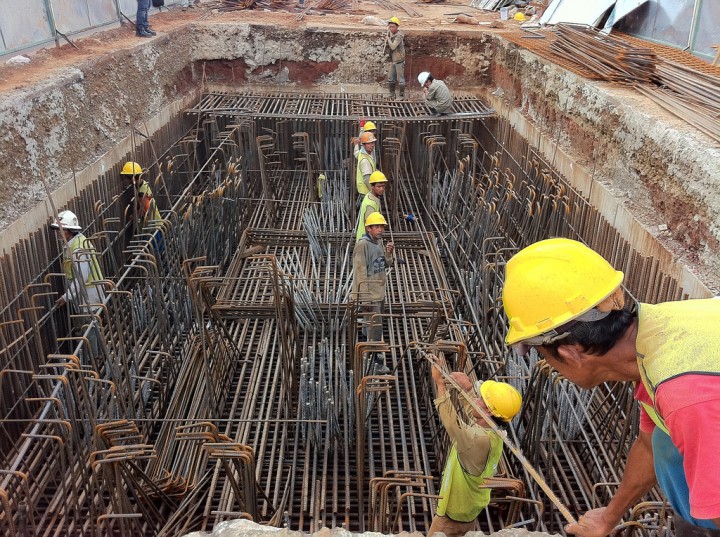
Local business and investment news portal Indonesia-Investments claims a lack of adequate infrastructure causes Indonesia’s logistics costs to rise steeply, thus reducing the country’s competitiveness and attractiveness for investors.
According to the Indonesian Chamber of Commerce and Industry, roughly 17 percent of any given local company’s total expenditures is eaten up by logistics costs. That is huge. Jakarta also often experiences blackouts caused by shortages in the country’s electricity supply that are a result of one company’s monopoly on electricity, and that company’s dependency on government subsidies. Additionally, a lack of quality physical infrastructure, like roads and drainage systems, often causes flooding, which hampers the flow of goods and services.
4. Good news: There are plenty of problems to be solved
Unlike Silicon Valley, where entrepreneurs are solving conundrums like how to make chat apps more private or how to do faster on-demand laundry services, Indonesia has more fundamental challenges that have obvious and lucrative solutions.
According to CNN, the world is watching Indonesia as one of the “fragile five” emerging economies. One of the main reasons investors become attracted to Indonesia in the first place is that there are so many problems that need to be solved, and therein lies a bundle of opportunities to back ventures that will solve these problems.
The Indonesian Investment Coordinating Board says that Indonesia has several key sectors that require investment attention, including infrastructure, food and agriculture, and energy.
5. Fragmented target audiences
6. The role of social media
7. The inability to enforce contracts
8. The inconsistent bankruptcy laws
9. The demographic dividend
10. The huge market potential for internet companies





Stay updated on the go with our mobile app.
Get latest insights with smoother, more personalized experience through TIA mobile app.