This article is brought to you by Studios, Tech in Asia’s advertising arm which connects brands with Asia’s tech community through the power of storytelling.
In the noisy and oversaturated online marketing world, banner ads are everywhere.
While they can be effective in helping businesses reach their goals, the sheer amount of such ads in the market have resulted in a phenomenon called “banner blindness.” In fact, people find banner ads so annoying that 47% of consumers use third-party ad blockers to avoid seeing them at all.
Here’s where native advertising comes in.
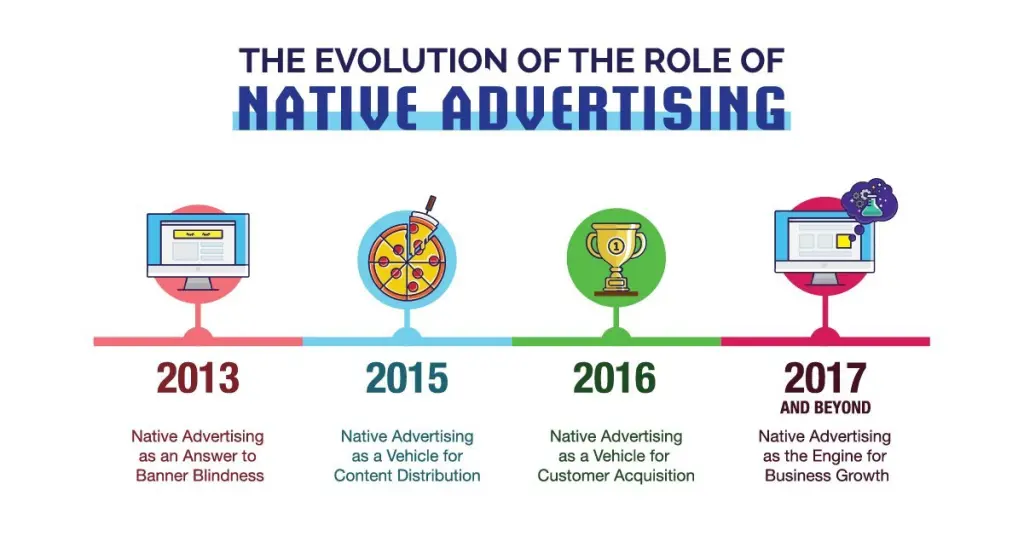
Source: Neil Patel
Simply put, native advertising is paid content that matches the look, feel, and function of its media environment. This form of paid advertising has been growing in popularity over the years precisely because it does not look like a traditional display ad.
Branded content as a form of native advertising
Native advertising can come in two main formats: native display ads and branded content.

It should be noted that there is a distinction between native display ads and branded content. The former still focuses mainly on touting a product, although less blatantly than a traditional banner ad. As such, people usually gloss over in-feed native ads on Facebook. On the other hand, after viewing branded content, audiences often feel entertained or feel they’ve learned something interesting – which is good news for the advertiser.
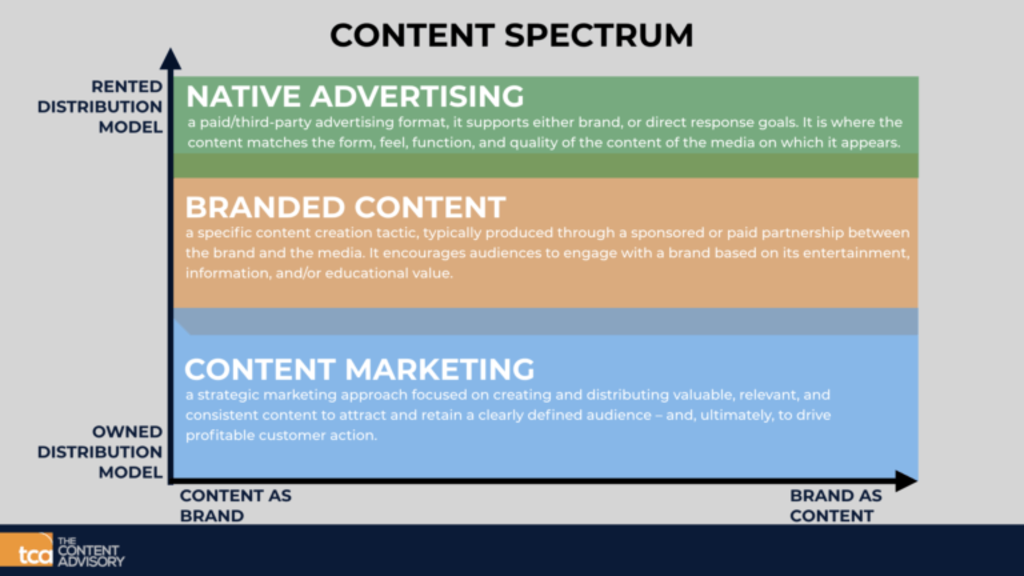
Source: Content Marketing Institute
According to The Drum, 2021 is the year of branded content because it is a “highly creative marketing technique” that works. Hence, in this article, we will be focusing on branded content as a native advertising format.
What do native ads look like?
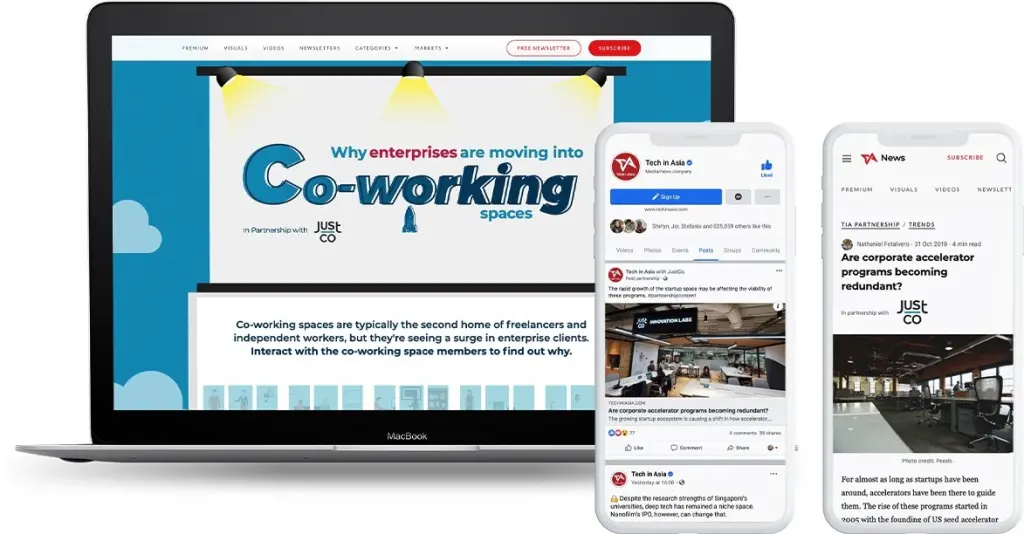
For publishers, native advertising and branded content work hand in hand. The branded content they produce is distributed natively in a way that looks and functions the same way as its other editorial pieces.
They are usually differentiated from the rest of the content through tags like “Partnership content” or “Sponsored by.” Since native ads don’t appear like regular banner ads that scream for attention, they are less disruptive to the user experience.
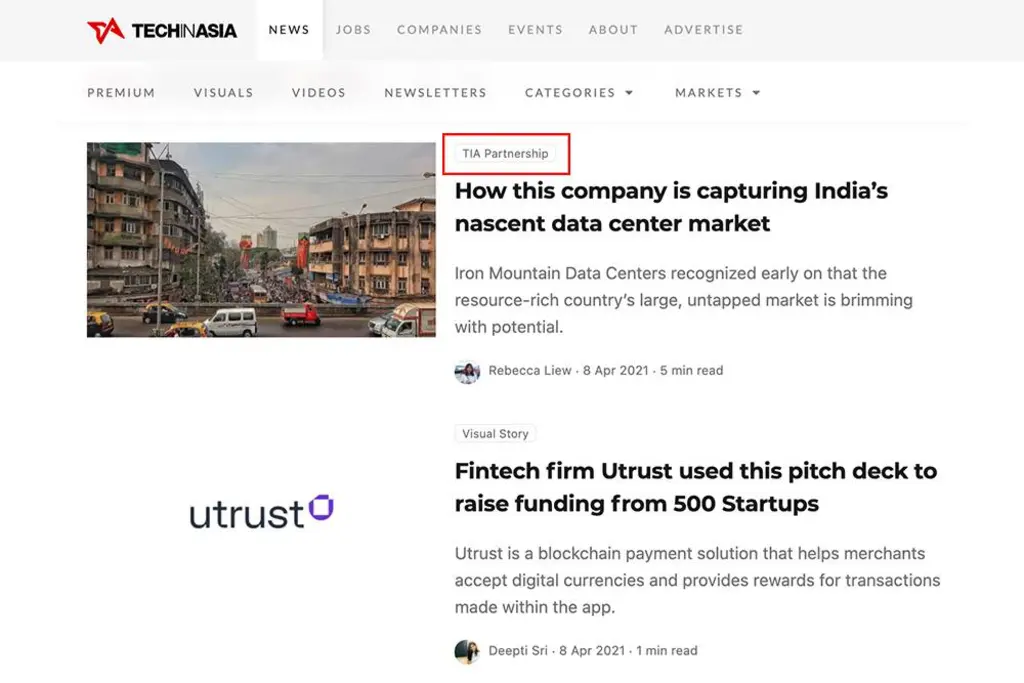
On Tech in Asia’s site, all branded articles are labelled as “TIA partnership.”
Usually crafted by a dedicated team of writers, branded content is also highly relevant to the readers and provides actual value. As such, they enjoy higher click-through rates and retention rates, especially when they are placed alongside related material.
According to a study by Nielsen and Mode Media, consumers spend 2.5 minutes reading a sponsored article, which is basically the same amount of time spent on a standard editorial piece. Hence, by lending their storytelling tools and editorial expertise, publishers can help brands reach their intended audience at scale.
According to The Drum, 2021 is the year of branded content because it is a “highly creative marketing technique” that works.
Here are some branded content formats:
- Videos
- Articles
- Infographics
- Podcasts
Why should I use native advertising?
1. Associating with an established brand boosts your credibility
Since it takes up a lot of time and resources to produce quality branded content, many marketers work with established publishers to come up with compelling stories instead – and for good reason. According to Nielsen, marketers see a 50% higher brand lift when they sponsor content from a trusted publisher, as compared to making their own content.
But why is this the case? It all boils down to trust. Take branded content on Tech in Asia, for instance. With the company’s reputation as the largest publisher in Asia’s tech community, Tech in Asia enjoys a great deal of user trust. Working with the company means the branded content produced in conjunction will be regarded in the same way. By associating with prominent opinion leaders in the industry that shares your values, your brand will instantly enjoy a boost in credibility.
2. Quality content paints your brand in a positive light
With a strong focus on storytelling and adding value, branded content usually makes your brand more memorable and trustworthy in the eyes of the audience. In fact, it’s been found that brand recall for such content is 59% higher than that of display ads.
Here’s the truth: People don’t like to be bombarded with sales pitches. When the content doesn’t revolve around selling a product and instead seeks to provide value, the audience is more likely to trust the brand and may even come back for more relevant content. Counterintuitively, when you try less hard to tout a product, it results in an 18% higher lift in purchase intent.
3. Native ads have higher click-through rates than banner ads
While banner ads are still used to achieve certain marketing objectives, its average click-through rate (CTR) can be as low as 0.06%. In comparison, native ads receive up to 6x more, at 0.38%.
When it comes to retention rates, branded content also wins by a landslide – 150 seconds spent reading a sponsored article versus less than 2 seconds on a banner ad.
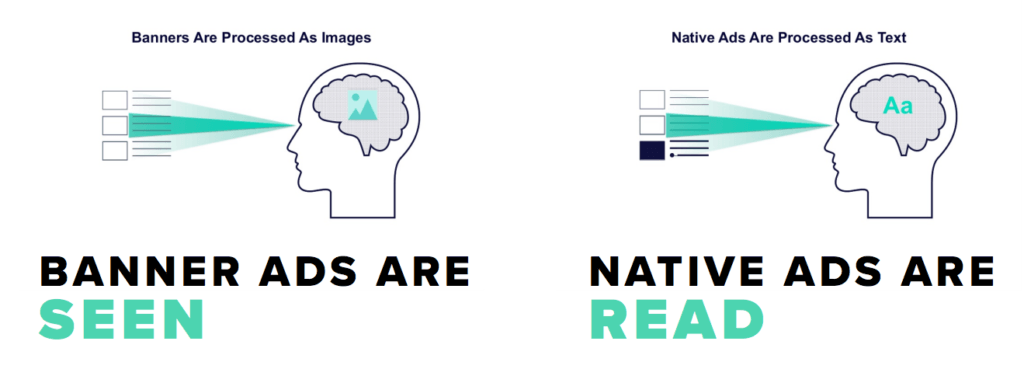
Source: Marwick Marketing
And native advertising can circumvent ad-blockers as well. Unlike display ads, native ads are often created with quality in mind. As such, they fit seamlessly with the rest of the publisher’s content, leading to higher chances of reaching the intended audience.
4. Branded content can improve your SEO performance
From a search engine optimization (SEO) point of view, working with established publishers on branded content can help you generate quality backlinks and improve your domain authority. You will also enjoy an inflow of higher quality traffic.
According to SEO platform Moz, backlinks are extremely valuable because they indicate a “vote of confidence” from one site to another, signalling to search engines that your content is useful and recommended. When you get such a vote from a reputable media outlet, your site performance and business will definitely enjoy a boost.
When is native advertising effective?
1. When a strong and compelling title is used
All content creators know that coming up with a title is the most difficult but crucial step in the process. Even if it’s common knowledge not to judge a book by its cover, most people decide whether or not to click on an article or video based on its title. If you can’t even get the audience to click, you can’t get them to be moved by the content that you spent hours creating.
That being said, it is just as important not to use clickbait or misleading titles which erodes trust. Although it may be hard, your header needs to strike the right balance between being true to the essence of the piece and being interesting enough to click.
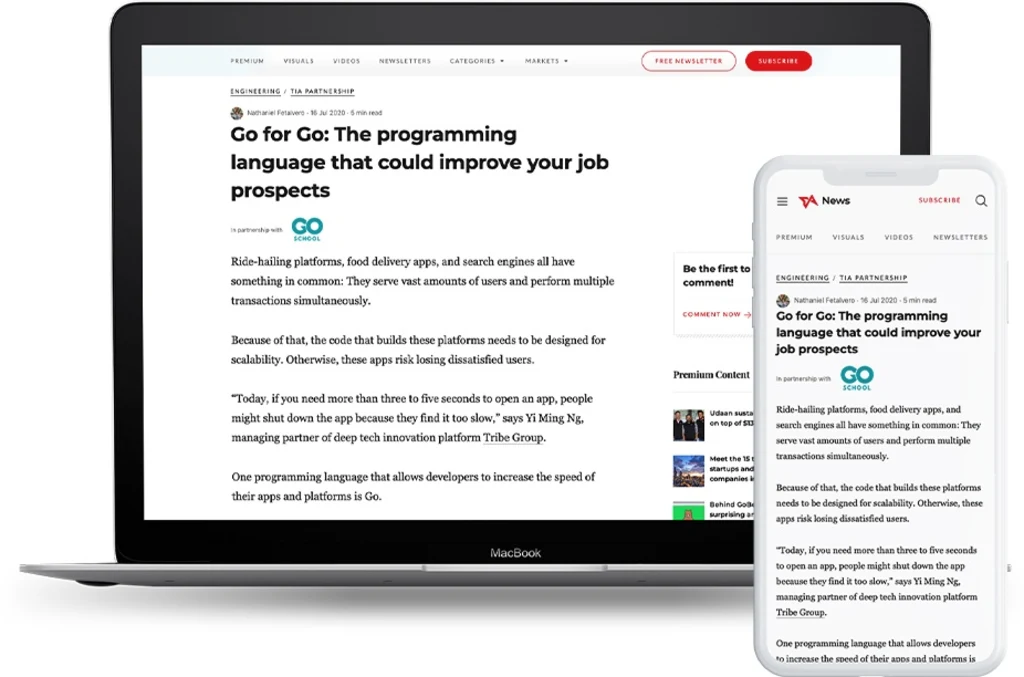
Branded content Tech in Asia created for GoSchool. View case studies here.
2. When the content delivers its promise
Content is king. After you write an eye-catching, irresistible title, you must also make sure that the content meets the expectations of the reader. Audiences should come away with a sense that they’ve gained something after reading sponsored content – as opposed to feeling like they’ve just read a sales pitch.
Hence, creating branded content often involves editorial skills that allow you to tell a great and engaging story. Only when the content has substance and value, will it make your brand appear more memorable and trustworthy.
3. When you select a publisher that already engages with your core audience
Branded content works best when you create it with a media owner or influencer that has the same target audience as you and is already discussing topics that are related to your brand. Remember, the key to effective native advertising is relevancy. And creating relevant and compelling content means aligning with the target audience’s interests and tapping into their pain points.
The right publishers – having a good understanding of what their audience likes – can create content that makes your brand a natural fit rather than an invasive advertisement.
4. When you clearly label branded content as “branded content”
Do you remember watching those sappy, tear-jerking Thai commercials only to realize at the end that they were sponsored by an insurance company? While these were engaging to watch, it’s needless to say that people don’t like to be tricked.
When a piece of content is sponsored, it is crucial to let the audience know beforehand. While it may increase drop-off rates, it is way more important to build and maintain trust with your audience.
Should your business invest in native ads?
Simply put, yes. But only after you have done your research and know your goals.
Effective native advertising is a joint effort between companies and publishers. It is paramount to choose a publisher that aligns with your business’ audience, goals, and values in order to produce branded content that engages and converts. It is also important to do prior research on the reputable media outlets that have a strong understanding of their industry and audience so you know they’re capable of producing quality content for your brand.
Whether native advertising is relevant or not also depends on your marketing goals. If your goal is to build brand awareness, increase brand engagement, or drive traffic, branded content works wonders. But if your aim is to generate leads in the short-term, other marketing tactics such as virtual events may be more effective.
If your organization wants to reach the tech and startup community in Southeast Asia, Tech in Asia has the storytelling tools and loyal audience base to help you reach your goals. You can get in touch with us here or download our media kit here.
Stay updated on the go with our mobile app.
Get latest insights with smoother, more personalized experience through TIA mobile app.
Recommended reads
 Life’s a game, and AI agents are Animoca’s new play
 Indonesian AI startup goes global
 Forrest Li on scaling Sea, building smarter bots, and founder grit
 An AI assistant that joins sales calls and scores team skills
 Beyond the check: Why VCs need more than capital
 SGX’s CEO says it doesn’t need a unicorn to win
 SMEs want AI too, but not the kind Big Tech is selling
 Oatside’s alt-milk rise hits a profitable gear
 Alibaba’s financial health in 12 charts
 Asia’s telcos bundle AI into mobile plans. Will it pay off?





Editing by Jaclyn Teng
(And yes, we’re serious about ethics and transparency. More information here.)









