 Colin Moreshead · · 6 min read
Our prayers are answered. Finally, an Amazon for used construction equipment
Sometimes you find yourself tossing and turning at night, trying to remember what you might have forgotten to do. You’ve made those dinner reservations and you’ve emailed your boss with an update on that new account. And of course you remembered to buy the bulldozer, right? Oh, no. You forgot the bulldozer.
We’ve all been there.
Well, maybe we haven’t all been there, but the founders of Japanese startup Sorabito think that enough of us have been to justify their online marketplace, Allstocker. On the marketplace, you can buy just about anything that warning labels tell you to avoid while taking cold medicine, from agricultural tractors to heavy-lift cranes.
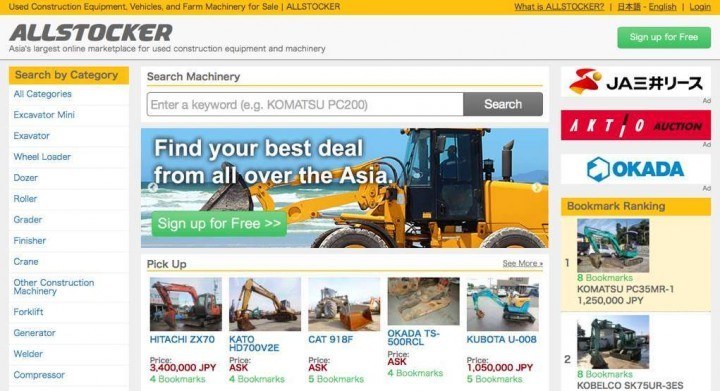
That’s a huge business in Asia, which currently accounts for nearly half of the world’s construction. There is massive disparity in equipment prices and availability between countries with construction industry saturation like Japan, and countries with rapidly expanding markets, like the Philippines. Selling used equipment made by the likes of Komatsu or Hitachi to companies in other Asian countries has become a billion dollar industry.
Allstocker, currently in its beta run, is similar to Amazon in the way it provides buyers with categories and filters to help them find a seller with the products they need. Such a well-worn model hardly seems revolutionary from a layman’s perspective, but those who understand the inside baseball world of used construction equipment sales are justifiably excited. So are we – Sorabito wowed judges and won our Tech in Asia Tour Tokyo pitch competition last month.
Trust us, it’s a game changer
Outsiders who remain unconvinced of Allstocker’s innovative potential have clearly never attended Asia’s live construction equipment auctions. Sorabito COO Nakayama Ryosuke tells Tech in Asia that pitching his company’s service is simple once you’ve seen the existing alternative.
“Plenty of investors have been skeptical because our service seems too straightforward to be considered ‘disruptive,’” says Nakayama. “But when I take them to the auctions and show them how things are still done in this industry, they change their minds within five minutes of arrival – they can’t believe this can be real.”
Nakayama likens the live auctions to a dysfunctional version of the Olympic Games, during which buyers from all over the world travel together from event to event, competing with each other for the equipment they need. Auctions are often scheduled over the course of a week, so that the same representatives can bid in several different cities for a few days at a time. Employing professional bidders and paying for their airfare and accommodations can add tens of thousands of dollars to a company’s outlay each round.
Bidding takes place as equipment is paraded by the representatives while performing simple tasks. All sales are finalized while the parade is moving, and it’s not uncommon for bidders to find that the product they purchased broke down just moments later. Buyer’s remorse is a constant refrain.
This isn’t meant to imply that sellers have it much better. Since they need to bring their equipment from far and wide to appear at centrally-located auctions, a huge chunk of their revenue goes toward transportation costs. It also means failing to sell a piece of equipment could result in a net loss; in some cases, the cost of transporting equipment to and from multiple auctions is greater than the sale price. As a result, sellers resort to bargain-basement prices to ensure that more than 80 percent of their equipment is sold at any given auction.
Industry experts
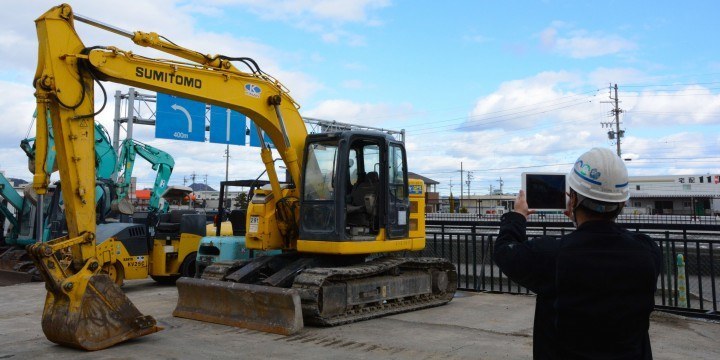
Sorabito’s founders Aoki Takayuki and Yoshido Sho know all about this. Aoki is the eighth-generation scion of a family-owned construction company and Yoshida is an equipment expert. Earlier businesses of theirs, like Mikata, attempted to address the grievances they had experienced firsthand as auction bidders, but they were closed networks that simply introduced buyers and sellers to each other for a fee.
Little fish, big pond





Stay updated on the go with our mobile app.
Get latest insights with smoother, more personalized experience through TIA mobile app.








📅 Upcoming Events
22 October 2026
Payoneer x CSPN Summit 2026