J.T. Quigley · · 3 min read
Can a robot baby curb loneliness among Japan’s senior citizens?
It’s no secret that aging, shrinking Japan is looking at robotics to help ease its burgeoning elder care crisis. With 40 percent of the country on track to be 65 or older by 2060 and a government that’s unwilling to ease strict regulations on immigration, the island nation is simply unable to provide enough human caretakers for its steadily increasing number of senior citizens.
SoftBank’s hotly-anticipated robot companion, Pepper, touted as being capable of recognizing and responding to human emotions, won’t go on sale at the telco’s retail outlets until next month. But a decidedly more low-tech “baby robot,” designed to curb the loneliness faced by many seniors who live away from their families, is slated to hit the market next week.
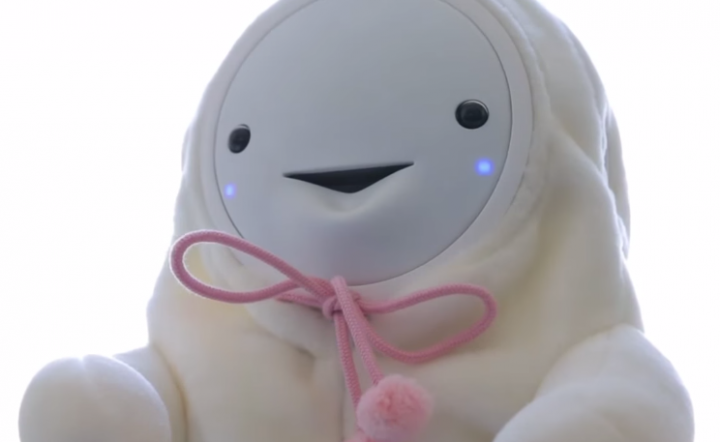
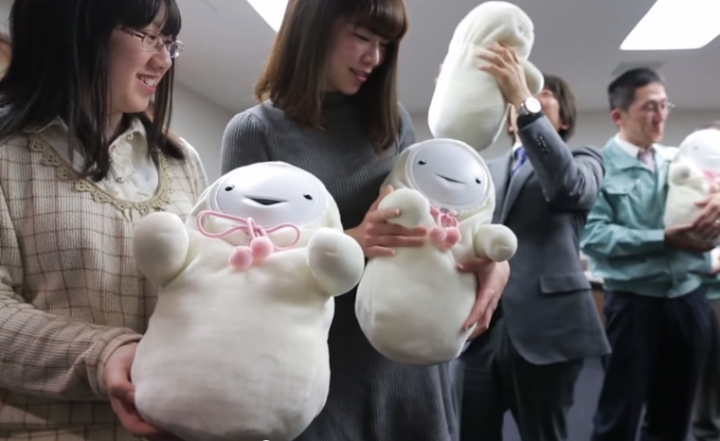
Smiby, jointly developed by Chukyo University’s robotics department and Togo Seisakusyo Corporation, requires “parents” to attend to it as if it were an infant child. If left alone for too long, the white plastic and silicone robot will cry. According to The Asahi Shimbun, motion sensors detect when a parent picks Smiby up and rocks it in their arms. When happy, the 44-centimeter long, 1.2-kilogram robot will display pink LED cheeks and coo like a real baby. Rocking it too hard or – gasp – dropping it will cause blue LEDs to light up, indicating tears.
Researchers at Chukyo University spent six months recording more than 500 sounds from one-year-old babies to make Smiby feel as human as possible. In additional to the LED indicator lights, the robot can blink its eyes and open its mouth. It even comes wearing a cute fleece sweater. With a full charge, Smiby can provide a sense of companionship for about 10 hours. It all sounds very much like a robotic Tamagotchi crossed with one of those dolls from home economics class that gave feedback to the teacher based on how well you took care of it.
Smiby marks Togo Seisakusyo’s first venture into robotics, but is not its first product targeting Japan’s lucrative elder care market. The manufacturing firm is known for making auto parts, such as brakes, springs, and components for hybrid vehicles, but also released a mechanical seat back that helps seniors change their body position easily for getting out of bed or off the couch.
While not designed explicitly for the elderly, Pepper’s ability to converse and pick up on emotional cues could make it a perfect low-maintenance companion for seniors who live alone. It surely provides deeper interaction than pink cheeks and a pre-recorded baby giggle. Chapit, a tiny desktop robot that can also engage in basic conversation, might not respond to being cradled in a user’s arms – but it can be programmed for home automation, such as changing the channel on the TV or turning up the air conditioner.
Feature-wise, Smiby pales in comparison to Pepper and Chapit. However, their gift of gab comes at a price: both retail for nearly US$2,000. Smiby, on the other hand, will cost only US$570. Togo Seisakusyo will also loan samples of the robot to nursing homes free of charge – a kind gesture toward the people who helped build Japan into an advanced enough country to produce the very robots being sent to help them.
See: Cute or just creepy? 5 of Japan’s most human-like talking robots
(Source: The Asahi Shimbun)
Editing by Paul Bischoff





Stay updated on the go with our mobile app.
Get latest insights with smoother, more personalized experience through TIA mobile app.