Michael Tegos · · 3 min read
Loop wants to connect the world’s co-working spaces
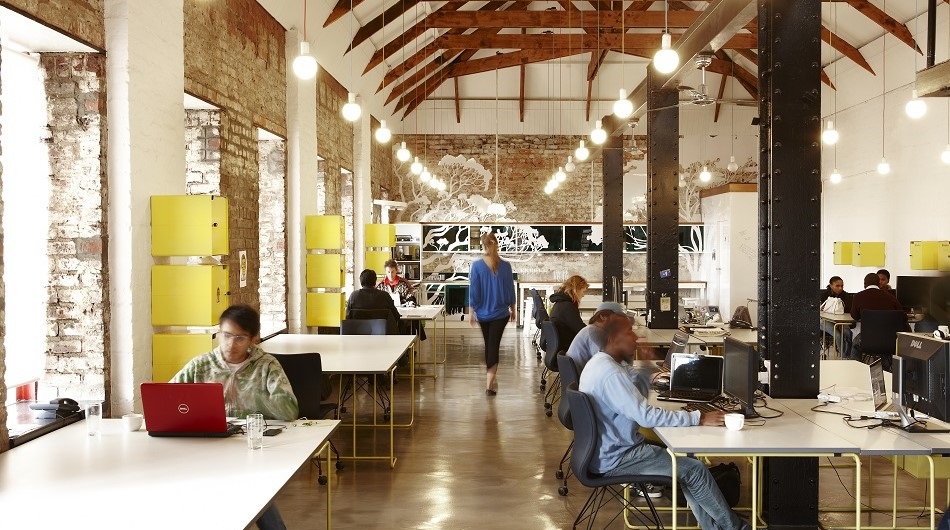
Photo credit: Loop will give entrepreneurs access to markets they previously had no easy way into.
Whichever it is, a new company wants to solve that problem for you. Loop hopes to offer a seamless experience across multiple co-working spaces and startup hubs in Asia and beyond. Its members will have access to spaces and, more importantly, communities anywhere they travel.
“You can work anywhere, but what you value is the connections,” Loop co-founder and CEO Chi Tran tells Tech in Asia. What Loop wants to do, he says, is not just make workspaces available but create networks of professionals that go beyond a single ecosystem or market.
Work from anywhere
Loop plans to soft-launch the service this month across the world, including locations in Australia, China, Southeast Asia, Korea, Japan, and the US. It has beta-tested its offering in Singapore and Shanghai (at the Working Capitol and X-Node respectively), and has already partnered with many other co-working spaces, accelerators, and agencies like Impact Hub, the Hive, InspirAsia, and Havas Worldwide.
Chi describes most co-working spaces today as “walled gardens,” closed-off communities that don’t foster networking and communication beyond their doors. Loop wants to bring down those walls. Its cross-border network will let an entrepreneur from Singapore walk into a co-working space in Sydney and have instant access to its facilities and a community of like-minded people to collaborate with.
See: I bought an agency in China when I was 26 and turned it into a digital juggernaut. AMA!
In practice, this will be possible through a subscription and managed by a web and mobile app. The app will help users connect with spaces and people in the cities they travel through. The mobile web and Android versions of the app are ready to use, says Loop’s brand agent Dave Patnaik, while the iOS version should be ready by August.
Chi hopes this will give entrepreneurs and digital nomads access to markets they previously had no easy way into. That way, relationships can be built without having to know local influencers and connectors.
The co-founders want to leverage these networks and communities for more than just offering workplaces to digital nomads. They hope to be able to connect startups to investors and mentors, freelancers to projects, and entrepreneurs to teams. “It’s the infinite loops in the connections that you make,” Chi says. “That’s the movement we want to create.”
The more the merrier
Loop was co-founded by Chi, who was a regional CTO for OgilvyOne and head of the Singapore branch of Europe-based accelerator Rockstart before this.
The focus on community building is reminiscent of WeWork’s strategy.
His co-founder is Andrew Collins, an Australian entrepreneur who was named one of the country’s top entrepreneurs under 30 in 2009. He spent the last decade in China building up businesses like sports and digital tourism agency Mailman.
FlySpaces, available in Singapore, the Philippines, and Malaysia, similarly styles itself as “an Airbnb for co-working spaces.” The focus on community building through a collaborative workplace is reminiscent of US-based WeWork’s strategy. Although Loop doesn’t lease its own workplaces, the network aspect is key to both companies’ missions – which could be a problem if WeWork decides to expand in this region, as was rumored earlier this year.
Chi doesn’t feel too threatened by that, though. “If WeWork does come over, it’s a validation of what we are trying to do,” he says. “Besides, they don’t have the connections we do out here.”





Stay updated on the go with our mobile app.
Get latest insights with smoother, more personalized experience through TIA mobile app.