 Jack Ellis · · 4 min read
SmartHR’s $13m round marks first series B lead for 500 Startups
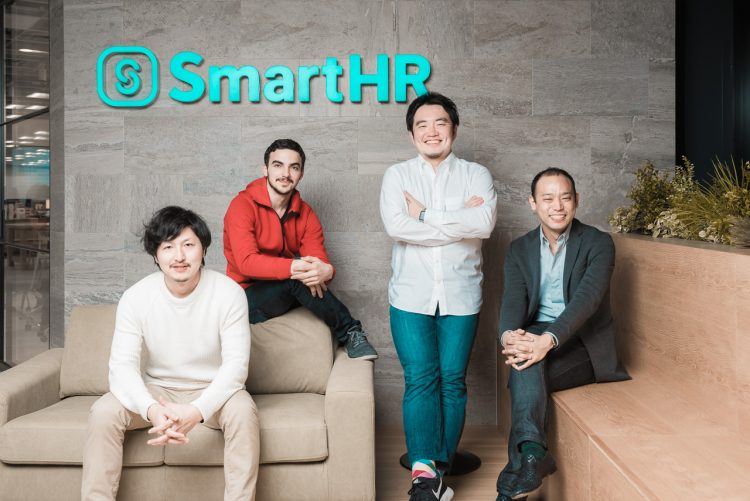
Photo credit: SmartHR
It’s not often that seed capital specialist 500 Startups takes part in a series B fundraise. For it to lead one is unheard of.
That changed today with the announcement that Tokyo-based SmartHR has raised US$13.3 million in the first-ever series B round globally to be led by the US firm.
Founded in early 2013 and originally known as Kufu, SmartHR is a cloud-based system that helps businesses to manage and streamline their HR processes. Among other things, it is able to automate employee benefit and insurance programs, which traditionally require copious amounts of paperwork and many tedious man-hours to handle. Enterprises sign up for a subscription the the service.
Similar companies elsewhere in the world include US players Zenefits, Gusto, and Namely, said James Riney, head of 500 Startups in Japan.
Companies like this just don’t come around very often.
Riney told Tech in Asia that SmartHR’s as-yet unassailed position as a provider of these services in Japan is what attracted the firm to make a rare mid-stage investment and lead its first-ever series B fundraise.
“What they’re doing is replacing paper and people, so there’s not any existing software they are replacing.” Around 7,000 companies are signed up to SmartHR, including a few companies with more than 10,000 employees, he added.
Riney continued, “So it’s not just something startups use – and traditional industries are using it, not just IT. Restaurant chains, karaoke chains – the sweet spot is companies that might have a lot of employees that come and go, a lot of people they need to onboard every year.”
Special purpose vehicle
500 Startups previously backed SmartHR’s series A fundraise in August 2016. The startup’s rapid rise since then – with an average 16 percent marginal revenue growth month-on-month – encouraged Riney and his team to think not just about investing again, but also to lead the next round.
However, since 500 Startups Japan is structured for seed investments, it wasn’t in the best position to provide the kind of capital SmartHR would need.
“Companies like this just don’t come around very often,” said Riney. “So we were trying to figure out how to participate in its series B. We’re a US$35 million fund, and if we were to invest US$10 million in [one company’s] series B, our LPs probably wouldn’t be too happy about that!”
The solution was to effectively put together a separate fund in the form of a special purpose vehicle (SPV), through which 500 Startups and partner investors could join the series B round.
“When you want to raise a larger round [in Japan], your sources of capital are pretty limited,” Riney explained. “Then, each firm will invest one or two million, so the cap table gets really crowded, and [the startup] has to communicate with a lot of investors.”
Later-stage investments on the horizon





Stay updated on the go with our mobile app.
Get latest insights with smoother, more personalized experience through TIA mobile app.








📅 Upcoming Events
22 October 2026
Payoneer x CSPN Summit 2026