Justin Yek · · 5 min read
Is ecommerce beating retailers in Asia? We studied 20 companies to find out
Who’s winning the hearts of consumers online? Pure-play ecommerce businesses or e-tailers, (traditional retailers who have entered the online arena)?
In this article, we compare 10 leading ecommerce companies against 10 leading e-tailers in the Asia Pacific region to see how they shape up in terms of growth, engagement, and traffic sources.
This analysis is based on our market reports, where we analyzed over 400 of the largest ecommerce websites in Asia. To see the full list of companies that are included in this analysis, you can check out our reports.
The traffic and engagement data you see here was sourced from a third-party, independent source called SimilarWeb. SimilarWeb uses sources such as local internet service providers, monitored devices, web crawlers, and direct measurement sources to estimate traffic data, time on site, bounce rate, and other metrics.
E-tailers and ecommerce businesses
In our analysis, we looked at Asia Pacific traffic and engagement data for the following companies:
- E-tailers: Woolworths, Coles Online, Tesco, Sephora, Watsons, Nguyen Kim, Harvey Norman, JIB, Adidas, and Louis Vuitton
- Ecommerce: Sociolla, Althea, Hermo, Bhinneka, Orami, Berrybenka, Sales Stock, Zalora, My Sale, and Reebonz
For ease of reference, the chart below lays out their size, industry vertical, and country of headquarters:
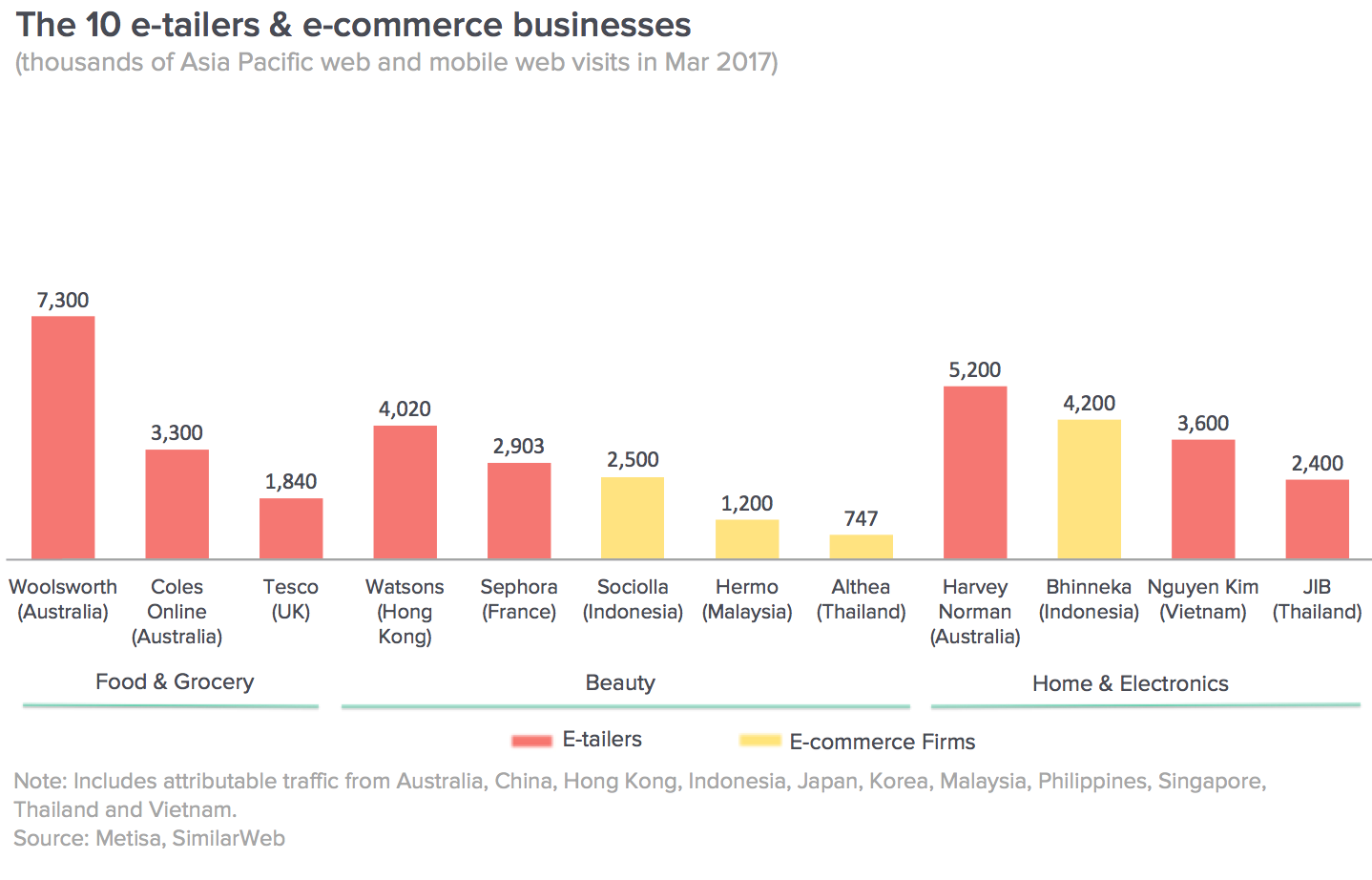
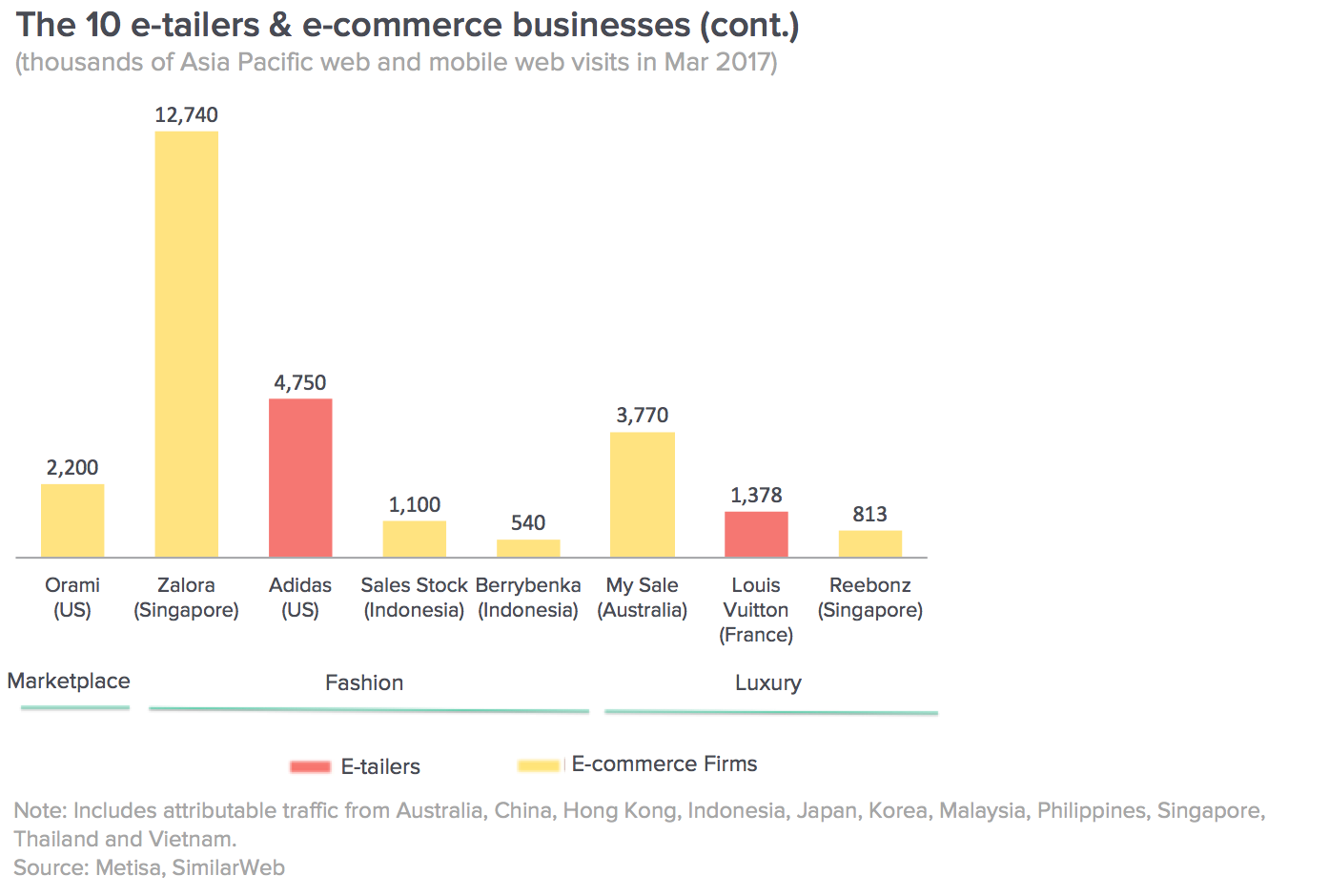
We observed that ecommerce players tended to do better in the fashion and beauty verticals. This strength reflects how these players source their goods.
Many of the biggest ecommerce firms use marketplace models where they list and aggregate brands. Most e-tailers, on the other hand, use vertically integrated models where they produce their own products.
This means that ecommerce firms tend to have more traction in verticals where they can easily collect and then sell a wider range of goods at lower prices than their e-tailer counterparts.
It is more difficult for them to do well in industries like home, food, and luxury because the goods in these verticals are either difficult for third parties to buy and store in large quantities and ranges (such as in food and home) or are highly limited in quantity (such as in luxury).
Ecommerce players who use marketplaces also tend to have thinner margins. Because they aggregate products from third-party sellers, they make less from sales than they would have if they produced their own goods.
Engagement metrics across business models
How does each vertical draw web traffic?





Stay updated on the go with our mobile app.
Get latest insights with smoother, more personalized experience through TIA mobile app.